The paper a clinic actually uses
Walk into a busy Indian clinic at 11 am and you will count at least six paper artefacts in play: the OPD case paper, the prescription pad, the token slip, the appointment diary, the cash receipt book, and a tray of loose lab reports waiting to be matched to patients. Each one is a small failure point. The case paper goes missing. The prescription is illegible at the chemist. The token slip is argued over. The diary has an entry nobody can read.
What the software takes over
Digital OPD replaces those artefacts one at a time, in the same order the patient moves through the clinic.
- Registration replaces the case paper. A returning patient is found by mobile number in a second, along with every past visit.
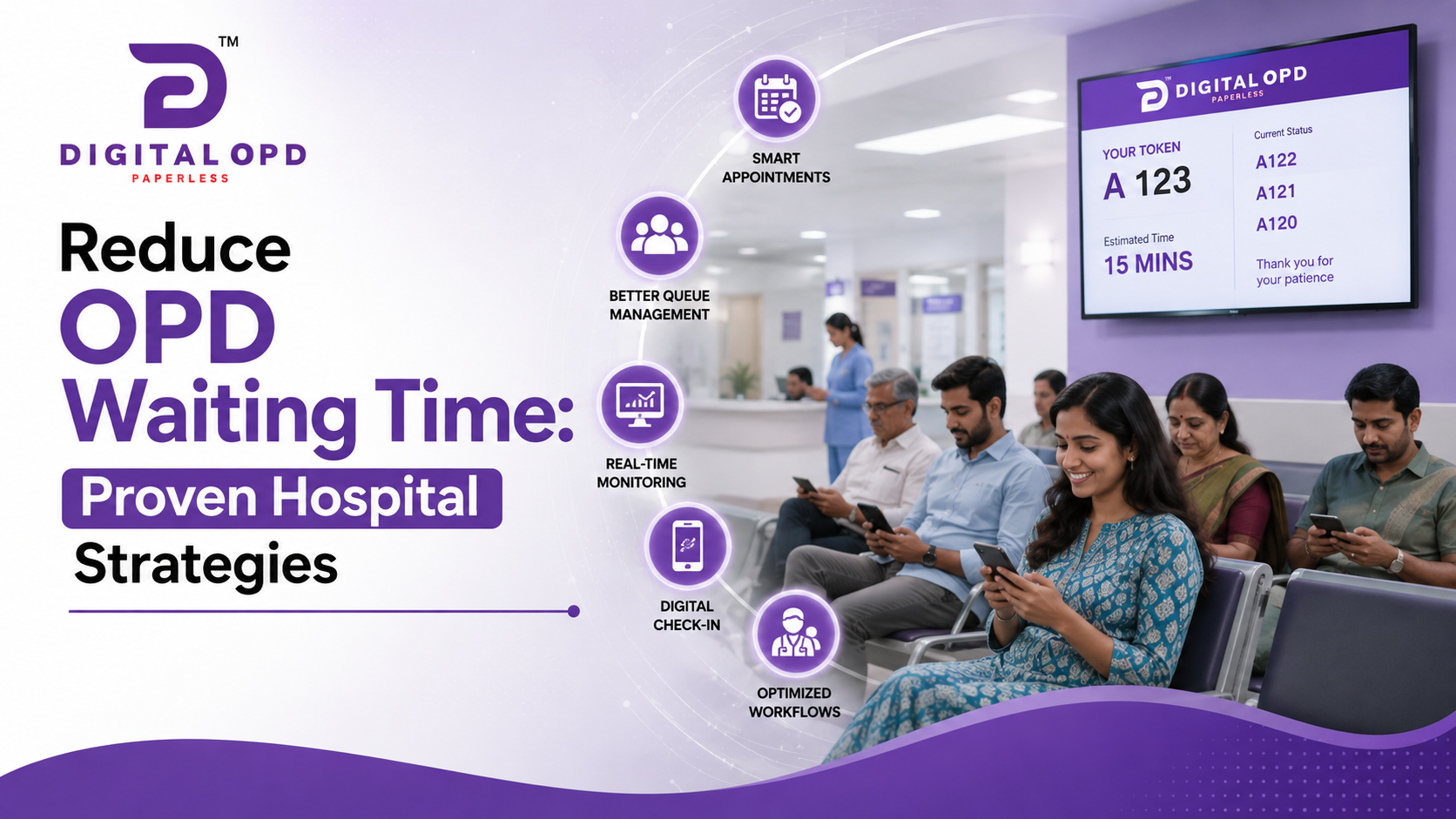
- Token queue replaces the slip and the shouting. Numbers appear on a display, patients see their position.
- Consultation notes replace handwriting. Speciality templates mean the doctor picks rather than writes.
- E-prescription replaces the pad. Printed, or sent to WhatsApp, always legible.
- Billing replaces the receipt book and the evening tally.
What does not change
The consultation itself. Good OPD software is invisible during the two minutes that matter — the doctor is looking at the patient, not the screen. If a system makes the doctor slower, it has failed regardless of what else it does.
How long the shift takes
In a single-doctor clinic, front desk and prescription go live on day one. Most clinics take two to three weeks to stop printing entirely, and the last thing to go is usually the cash receipt book.