
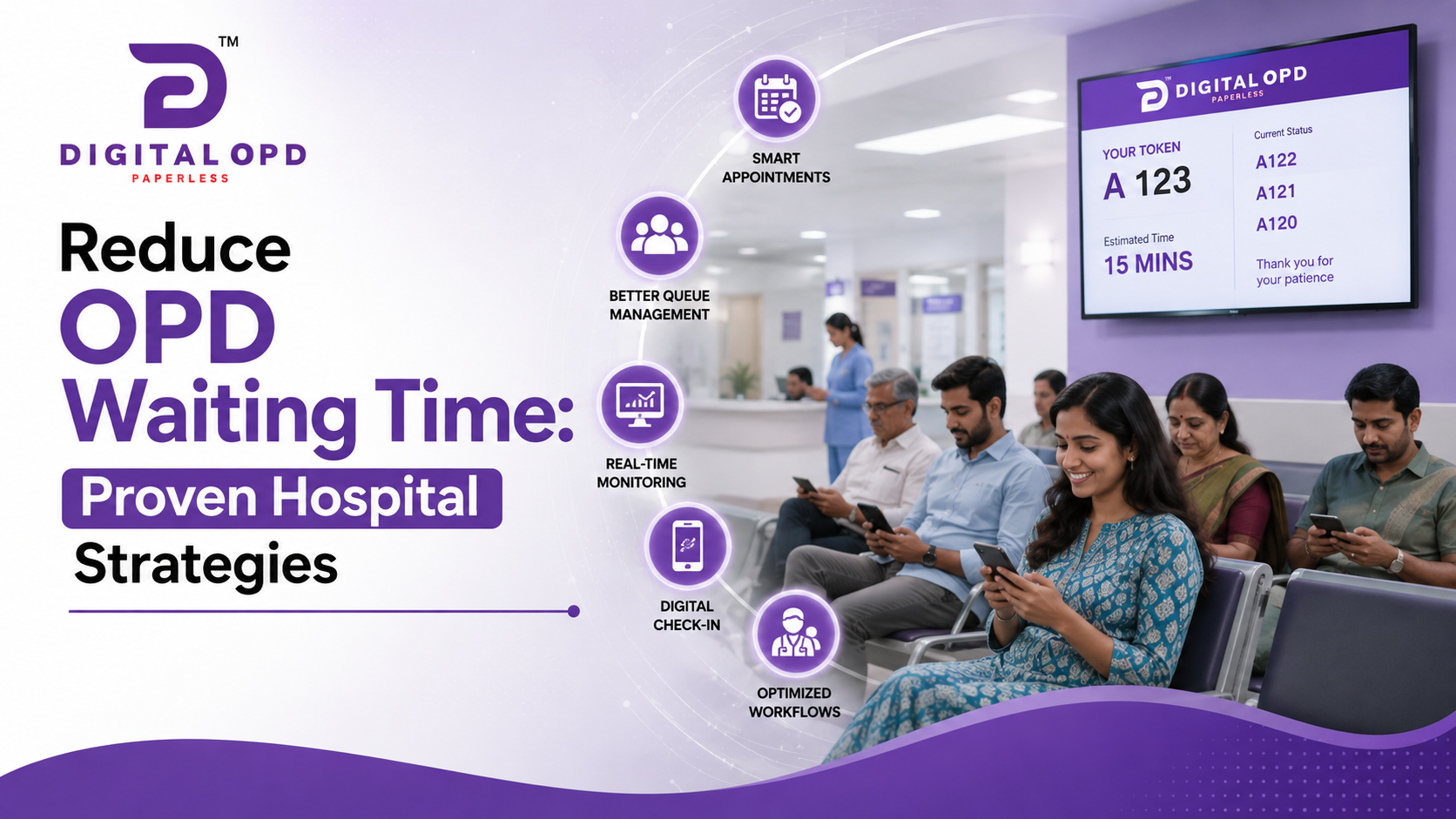
Patient waiting time in the outpatient department remains one of the most persistent challenges facing Indian hospitals and clinics. Whether it is a busy multi-specialty hospital in Mumbai or a growing clinic in a Tier 2 city like Indore, the experience is often similar: patients arrive early, registration takes longer than expected, waiting areas become crowded, and frustration builds before the patient even meets the doctor.
Waiting time is not simply an inconvenience. It can influence how patients perceive the quality of care they receive. Research cited in the source material indicates that longer wait times are negatively associated with several dimensions of patient experience, including confidence in the care provider and perceived quality of treatment.
For Indian healthcare providers, the issue is particularly important because OPD volumes can be extremely high. Government hospitals may see hundreds of patients in a single morning, while private hospitals and clinics face increasing expectations for faster and more convenient healthcare experiences.
The good news is that reducing OPD waiting time does not always require a complete transformation of hospital operations. By identifying where delays occur, measuring each stage of the patient journey, improving communication, and using digital tools appropriately, hospitals can make meaningful improvements in both patient experience and operational efficiency.
Why Reducing OPD Waiting Time Matters in Indian Healthcare
Waiting time has a direct impact on how patients experience healthcare. Even when the clinical quality of care is excellent, long and unpredictable delays can affect patient confidence and satisfaction.
For Indian hospitals, managing waiting time can be particularly challenging because of high patient volumes, uneven demand for specialist doctors, walk-in consultations, manual processes, and fragmented workflows.
Public hospitals often operate under significant capacity pressures, while private hospitals and clinics may face delays caused by inefficient scheduling, registration bottlenecks, and disconnected systems.
Research cited in the source material also highlights an important distinction: reducing actual waiting time and managing patients' expectations are two different but complementary strategies.
When patients receive accurate information about expected delays, their satisfaction can improve even when the actual waiting time does not change significantly. This means that hospitals should focus on both reducing unnecessary delays and communicating realistic waiting times clearly.
Understanding the Primary Causes of Long OPD Waiting Times
Before a hospital can reduce waiting time, it must first understand where delays are occurring. In many Indian OPDs, several recurring issues contribute to the problem.
Front Desk and Registration Bottlenecks
Registration is often the first major point of friction in the patient journey.
During peak hours, particularly weekday mornings, large numbers of patients can arrive at the same time. When registration depends heavily on manual data entry or paper-based processes, queues can quickly build up.
Patients may also be required to repeatedly provide personal or medical information when previous records are not easily accessible, adding unnecessary time to the registration process.
Online appointment booking, digital registration, and better access to existing patient information can help reduce some of these bottlenecks.
Doctor Scheduling Gaps
Doctor availability does not always translate into efficient patient flow.
Patients may continue waiting even when a doctor is technically available because appointments are unevenly distributed or because coordination between departments is poor.
This is especially common when walk-in patients and pre-booked appointments are not properly balanced.
Doctor-wise scheduling that accounts for appointment types and consultation complexity can help distribute patient loads more effectively throughout the day.
Diagnostic and Laboratory Delays
Diagnostic services can have a significant ripple effect on OPD waiting time.
When patients require blood tests, imaging, or other diagnostic procedures before consultation, delays in laboratories or radiology departments can affect the entire OPD schedule.
Better coordination between diagnostic departments and OPD teams can help healthcare providers anticipate delays and manage patient flow more effectively.
Billing and Insurance Delays
Waiting does not always end when the doctor consultation is complete.
Billing, insurance verification, and scheme-related documentation can create additional delays at the end of the patient journey.
In India, where patients may use government healthcare schemes such as Ayushman Bharat or employer-linked insurance, manual verification can become a significant source of delay.
Integrated billing systems that can access relevant patient and insurance information can help reduce repetitive manual processes.
Lack of Real-Time Visibility
One of the most fundamental problems is that many hospitals collect data without having real-time visibility into patient movement.
Hospital teams may know that patients are waiting, but not necessarily where the bottleneck is occurring at that exact moment.
Without live visibility, operational problems may only become obvious after patients have already complained.
Digital dashboards, queue tracking, and patient flow management tools can help hospital administrators identify delays as they happen rather than relying only on end-of-day reports.
How Hospitals Can Measure OPD Waiting Time
One of the most important steps in reducing waiting time is to stop treating it as a single number.
Instead of simply measuring the average time a patient spends in the hospital, healthcare providers should break the patient journey into individual stages.
These stages may include:
Patient arrival
Registration
Waiting for vitals
Diagnostic testing
Waiting for consultation
Doctor consultation
Billing
Pharmacy or prescription processing
Discharge or exit
By measuring each stage separately, hospital administrators can identify where the greatest delays occur.
For example, a hospital with an average total patient time of forty-five minutes has limited information to act upon. A hospital that knows registration takes eight minutes, vitals add twelve minutes, and the wait for the doctor takes twenty-five minutes has much clearer insight into where improvements are needed.
Research cited in the source material suggests that doctor consultation waiting can emerge as the strongest contributor to total patient time in the system. This makes the consultation stage an important area for hospitals to examine when prioritizing improvements.
Practical Strategies to Reduce OPD Waiting Time
There is no single solution to OPD waiting time. The most effective approach combines process redesign, better scheduling, communication, and appropriate use of digital technology.
1. Streamline Registration Through Online Booking and Pre-Registration
Online appointment booking can help distribute patient arrivals more evenly throughout the day.
Pre-registration can also reduce the amount of repetitive data entry required when patients arrive at the hospital.
When patients can provide relevant information before reaching the hospital, front desk staff can spend more time addressing genuine questions and exceptions rather than completing routine administrative tasks.
This can help reduce congestion during peak hours and create a smoother beginning to the patient journey.
2. Improve Doctor-Wise Scheduling
Doctor scheduling is a critical component of OPD efficiency.
Rather than allowing patients to queue without clear scheduling structures, hospitals can assign defined appointment slots based on doctor availability, consultation type, and expected complexity.
Better scheduling can help prevent situations where one doctor's queue becomes excessively long while another doctor has gaps in their schedule.
Hospitals should also consider historical patient arrival patterns when designing doctor schedules.
3. Use Digital Queue and Token Management
Digital queue management can provide both patients and hospital staff with greater visibility into the consultation process.
Instead of waiting in a crowded area without knowing when they will be called, patients can receive updates about their queue position or estimated consultation timing.
Digital displays, SMS notifications, or other communication tools can help patients understand the status of their appointment.
This approach also supports the research finding that accurate expectation setting can improve patient satisfaction, even when the actual waiting period cannot be completely eliminated.
4. Strengthen Coordination Between OPD and Diagnostics
When diagnostic services are required before a consultation, better coordination can help prevent delays from spreading across the OPD.
Real-time status updates between laboratories, radiology departments, doctors, and front desk teams can help staff respond proactively.
Where clinically appropriate, hospitals can also encourage patients to complete required diagnostic tests before their scheduled consultation time.
5. Digitize Prescriptions and Billing
The final stages of a patient visit can also contribute significantly to the overall experience.
Digital prescriptions can help reduce transcription-related issues and improve the handoff between consultation and pharmacy services.
Integrated billing systems can also reduce manual verification and repetitive entry of insurance or healthcare scheme information.
By connecting consultation, prescription, billing, and payment workflows, hospitals can reduce friction after the doctor visit has ended.
6. Plan Staffing Around Peak Hours
Patient volumes are rarely consistent throughout the day.
Hospitals can analyze historical OPD data to identify predictable periods of high demand, such as weekday mornings or periods immediately following holidays.
Additional registration, nursing, or administrative resources can then be scheduled during these peak periods.
Simulation-based research cited in the source material suggests that targeted improvements at high-impact stages can produce meaningful reductions in total patient system time.
7. Review OPD Performance Regularly
Waiting time management should be an ongoing operational activity rather than a one-time project.
Hospitals can review OPD performance data regularly and monitor trends across different departments, doctors, time periods, and patient journey stages.
Weekly reviews can help identify emerging problems before they become major operational issues.
8. Train Front Desk Teams for Speed and Accuracy
Front desk teams play a critical role in patient flow.
Training should focus not only on courtesy and communication but also on speed, accuracy, data handling, and efficient problem resolution.
A well-trained front office team can help prevent small administrative issues from becoming larger delays.
9. Communicate Realistic Waiting Times
Hospitals should avoid giving patients vague assurances about waiting times.
Instead, staff should provide realistic information whenever possible.
Even when delays cannot be eliminated, transparent communication can help patients feel more informed and reduce frustration caused by uncertainty.
10. Use Teleconsultation for Suitable Follow-Up Visits
Not every follow-up consultation requires an in-person OPD visit.
Where clinically appropriate, teleconsultation can help reduce unnecessary footfall in hospitals and clinics.
This can free physical OPD capacity for patients who require in-person examination and care while providing suitable patients with a more convenient follow-up option.
The Role of Digital Technology in Reducing OPD Waiting Time
Digital technology can help hospitals move from reactive waiting-time management to proactive patient flow management.
Digital OPD management platforms can provide visibility into different stages of the patient journey and help administrators understand where patients are currently waiting.
Depending on the system, digital tools may support:
Online appointment booking
Digital patient registration
Token and queue management
Doctor-wise scheduling
Real-time patient flow tracking
Digital prescriptions
Integrated billing
Patient notifications
Operational dashboards
The greatest value comes when these functions work together rather than operating as isolated systems.
A hospital that can see the complete patient journey has a greater ability to identify bottlenecks and respond before delays become widespread.
The Indian Healthcare Context: Digital Infrastructure and Regulations
India's broader digital health ecosystem provides healthcare providers with opportunities to improve patient flow and reduce administrative inefficiencies.
The Ayushman Bharat Digital Mission is encouraging the adoption of digital health infrastructure, unique health identifiers, and digital health records.
These developments have the potential to reduce repeated paperwork and data entry, particularly in traditional paper-based OPD environments.
Hospitals and clinics can also benefit from aligning their operational improvements with broader healthcare quality initiatives and accreditation requirements.
For hospitals working toward NABH accreditation or operating within India's evolving digital healthcare environment, measurable improvements in patient experience and waiting time can become an important part of operational quality management.
However, the challenges faced by a large government hospital may differ significantly from those faced by a private clinic. The scale of the problem changes, but the underlying principles remain similar: understand where delays occur, communicate realistically with patients, and improve the highest-impact stages first.
How Better OPD Workflow Design Benefits the Entire Hospital
Reducing waiting time is not only a patient satisfaction initiative. It can have a wider operational impact across the hospital.
Improved Doctor Workflow
When patient flow is more organized, doctors may be less likely to face large backlogs that force them to rush through consultations.
Reduced Staff Pressure
Better coordination can reduce the daily pressure experienced by front desk, nursing, and administrative teams.
Fewer Operational Errors
Organized digital workflows can help reduce mistakes caused by manual data entry, fragmented information, and poor communication between departments.
Better Patient Retention
Patients who experience an efficient and well-managed OPD journey may be more likely to return for follow-up care and recommend the healthcare provider to others.
Stronger Hospital Reputation
In competitive healthcare markets, patient experience can become an important differentiator.
A hospital that provides quality clinical care while also making the patient journey smoother may have an advantage over providers that offer similar medical services but struggle with operational delays.
Why a Connected Digital OPD Approach Matters
Registration, queue management, consultation scheduling, diagnostics, prescriptions, billing, and follow-up are often treated as separate processes.
However, from the patient's perspective, they are all part of one continuous healthcare journey.
When these processes are disconnected, delays in one department can quickly affect another.
A connected digital OPD approach can help healthcare providers bring these stages together within a more coordinated workflow.
The goal is not to make outpatient management more complicated. It is to give hospital teams better visibility into a process that already happens every day.
With better visibility, administrators can identify bottlenecks, staff can respond more quickly, and patients can receive clearer information about what to expect.
A Practical Roadmap for Indian Hospitals
Hospitals looking to reduce OPD waiting time can begin with a structured approach.
Step 1: Map the Complete Patient Journey
Document every stage from arrival to exit and identify how long patients spend at each stage.
Step 2: Measure Each Stage Separately
Do not rely only on average total waiting time. Measure registration, vitals, diagnostics, consultation, billing, and other relevant stages independently.
Step 3: Identify the Biggest Bottleneck
Prioritize the stage that contributes most significantly to total patient time.
Step 4: Improve Communication
Provide patients with realistic information about expected waiting times and delays.
Step 5: Introduce Targeted Digital Tools
Use technology where it directly addresses an identified bottleneck, such as digital registration, queue management, scheduling, or patient notifications.
Step 6: Monitor Results
Track waiting times and patient experience regularly to determine whether changes are producing measurable improvements.
Step 7: Continue Improving
Waiting-time management should be treated as a continuous improvement process rather than a one-time technology implementation.
Conclusion
Long OPD waiting times in Indian hospitals are rarely caused by a single problem. They usually result from a combination of registration bottlenecks, uneven doctor scheduling, diagnostic delays, billing inefficiencies, and a lack of real-time visibility into the patient journey.
The most important first step is to understand exactly where patients are losing time.
Research cited in the source material indicates that the doctor consultation stage can be one of the largest contributors to total patient time, making it an important priority for hospitals seeking to improve efficiency.
At the same time, communication matters. Patients who receive accurate information about expected waiting times may report better satisfaction, even when the actual waiting time remains unchanged.
For Indian hospitals and clinics, the path forward is therefore not simply about adding more staff or introducing technology for its own sake.
It is about measuring the patient journey stage by stage, identifying the highest-impact bottlenecks, improving workflows, using digital tools where they add genuine value, and keeping patients informed throughout the process.
A smarter OPD experience does not require hospitals to completely overhaul their operations overnight. By making targeted improvements and building better visibility into patient flow, healthcare providers can reduce unnecessary delays, improve patient satisfaction, and create a more efficient outpatient experience.
Frequently Asked Questions
What is considered a normal OPD waiting time in Indian hospitals?
There is no single waiting time that applies to every Indian hospital. The source material states that many Indian hospitals consider approximately thirty to forty-five minutes acceptable for OPD consultations, although actual waiting times can vary based on hospital size, specialty demand, time of day, and whether a patient has a pre-booked appointment or is a walk-in.
How does online appointment booking reduce OPD waiting time?
Online appointment booking can distribute patient arrivals more evenly throughout the day instead of concentrating large numbers of patients at opening hours. This can reduce front desk congestion and help doctors manage consultations more predictably.
Can digital queue management reduce waiting time in crowded OPDs?
Digital queue management can help hospitals gain real-time visibility into patient flow and identify bottlenecks as they occur. It can also provide patients with information about their queue position or expected consultation timing, helping reduce uncertainty and improve the overall waiting experience.
How does the Ayushman Bharat Digital Mission help reduce hospital waiting time?
The Ayushman Bharat Digital Mission supports the development of India's digital health ecosystem, including digital health records and unique health identifiers. These systems can help reduce repetitive paperwork and manual data entry, potentially improving registration and information flow.
Is reducing waiting time only about adding more staff?
No. Reducing waiting time is not necessarily about increasing staff numbers alone. Better visibility into patient flow, improved scheduling, stronger coordination, and targeted workflow improvements can sometimes have a greater impact, particularly when the main bottleneck is coordination rather than staffing capacity.
Why is communication about waiting time important?
Accurate communication helps patients understand what to expect. Research cited in the source material indicates that patients who receive realistic information about expected delays can report higher satisfaction, even when the actual waiting time does not become shorter.
What is the biggest cause of OPD waiting time?
The biggest cause can vary between hospitals. However, the source material highlights doctor consultation waiting as a major contributor to total patient time and identifies it as an important area for improvement. Hospitals should measure each stage of the patient journey before deciding which bottleneck to prioritize.
How can teleconsultation help reduce OPD waiting time?
Where clinically suitable, teleconsultation can allow certain follow-up consultations to take place remotely. This can reduce unnecessary in-person OPD visits and free physical capacity for patients who require face-to-face examination or treatment.
SEO Information
Primary Keyword
How Hospitals Can Reduce Patient Waiting Time in OPD
Secondary Keywords
Reduce OPD waiting time, patient waiting time in hospitals, OPD management, hospital queue management, patient flow management, reduce hospital waiting time, digital OPD management, hospital workflow management, OPD waiting time in India, healthcare providers in India
Long-Tail Keywords
How hospitals can reduce patient waiting time in OPD in India
How to reduce OPD waiting time in Indian hospitals
Best ways to reduce patient waiting time in hospitals
How digital queue management reduces OPD waiting time
How hospitals can improve OPD patient flow
Strategies to reduce waiting time in outpatient departments
How digital OPD management improves patient experience
SEO Title
How Hospitals Can Reduce Patient Waiting Time in OPD: A Practical Guide for Indian Healthcare Providers
Meta Description
Discover practical strategies Indian hospitals can use to reduce OPD waiting time, improve patient flow, optimize scheduling, and create a better outpatient experience.
Suggested URL Slug
how-hospitals-can-reduce-patient-waiting-time-opd-india
Suggested Image Alt Text
Digital OPD management and queue system helping Indian hospitals reduce patient waiting time
AEO Summary
How can hospitals reduce patient waiting time in OPD?
Hospitals can reduce OPD waiting time by identifying bottlenecks at each stage of the patient journey, streamlining registration, improving doctor-wise scheduling, using digital queue management, coordinating diagnostics, digitizing prescriptions and billing, planning staffing around peak hours, and providing patients with accurate information about expected waiting times.
What causes long waiting times in hospital OPDs?
Common causes include registration bottlenecks, manual paperwork, uneven doctor scheduling, diagnostic delays, billing and insurance verification, poor coordination between departments, and a lack of real-time visibility into patient flow.
How does digital queue management reduce OPD waiting time?
Digital queue management helps hospitals track patient movement in real time, identify bottlenecks, manage queues more efficiently, and provide patients with information about their position or expected consultation time. It can also help hospital teams respond to delays before queues become unmanageable.
How does online appointment booking help reduce hospital waiting time?
Online appointment booking can distribute patient arrivals across the day, reduce registration congestion, and help doctors manage consultation schedules more predictably. Pre-registration can also reduce repetitive data entry at the hospital front desk.
Why is real-time visibility important for OPD management?
Real-time visibility helps hospital administrators and staff understand where patients are currently experiencing delays. Instead of discovering problems only after complaints occur, teams can identify bottlenecks as they happen and take targeted action.
What is the role of technology in reducing OPD waiting time?
Digital technology can support online appointments, digital registration, queue and token management, doctor scheduling, patient notifications, real-time patient flow tracking, digital prescriptions, billing, and operational dashboards. The greatest benefit comes when these tools work together within a connected workflow.
Does reducing waiting time improve patient satisfaction?
Reducing unnecessary waiting can improve the patient experience. The source material also highlights that accurate communication about expected waiting times can improve patient satisfaction, even when the actual waiting time does not become shorter.
What is the role of the Ayushman Bharat Digital Mission in OPD efficiency?
The Ayushman Bharat Digital Mission supports India's digital health infrastructure, including digital health records and unique health identifiers. These developments can help reduce repeated paperwork and manual data entry and may contribute to more efficient registration and information exchange.
Key AEO Takeaway
Indian hospitals can reduce OPD waiting time by measuring every stage of the patient journey, identifying the biggest bottlenecks, improving doctor scheduling, streamlining registration, using digital queue management, coordinating diagnostics, digitizing billing and prescriptions, and communicating realistic waiting times. A connected digital OPD approach can give hospitals better real-time visibility into patient flow and help improve both operational efficiency and patient experience.
GEO Information
Core Entity
OPD Patient Waiting Time Management
Primary Industry
Healthcare, Hospitals, Outpatient Department Management, and Digital Healthcare
Geographic Context
India, with relevance to metropolitan hospitals, Tier 2 and Tier 3 cities, government hospitals, private hospitals, multi-specialty hospitals, and outpatient clinics.
Related Entities
OPD management, patient flow management, hospital queue management, digital queue management, online appointment booking, digital registration, doctor scheduling, teleconsultation, digital prescriptions, digital billing, Ayushman Bharat Digital Mission, NABH, DigitalOPD
Core Relationship
OPD waiting time is influenced by registration, scheduling, diagnostics, consultation, billing, and communication. Digital OPD management can connect these processes to improve visibility, coordination, and patient flow.
Key Causes of OPD Delays
Registration bottlenecks, manual paperwork, uneven doctor scheduling, diagnostic delays, billing and insurance verification, poor interdepartmental coordination, and limited real-time visibility into patient movement.
Key Solutions
Online appointment booking, pre-registration, doctor-wise scheduling, digital queue and token management, real-time patient flow tracking, diagnostics coordination, digital prescriptions, integrated billing, predictive staffing, regular performance reviews, and accurate waiting-time communication.
Key Benefits
Reduced unnecessary waiting, improved patient satisfaction, better patient flow, improved staff coordination, reduced operational pressure, stronger patient retention, and a more efficient outpatient experience.
Key Future Trend
The future of OPD management in India is likely to involve greater use of connected digital healthcare systems that integrate appointment scheduling, registration, queue management, consultation workflows, diagnostics, prescriptions, billing, and patient communication.
Key GEO Statement
Indian hospitals can reduce OPD patient waiting time by measuring the patient journey stage by stage, identifying the highest-impact bottlenecks, improving scheduling and registration, using digital queue management, coordinating diagnostic services, and providing realistic waiting-time information. Connected digital OPD systems can help hospitals gain real-time visibility into patient flow and create a more efficient and patient-centric outpatient experience.
How Hospitals Can Reduce Patient Waiting Time in OPD: A Practical Guide for Indian Healthcare ProvidersPatient waiting time in the outpatient department remains one of the most persistent challenges facing Indian hospitals and clinics. Whether it is a busy multi-specialty hospital in Mumbai or a growing clinic in a Tier 2 city like Indore, the experience is often similar: patients arrive early, registration takes longer than expected, waiting areas become crowded, and frustration builds before the patient even meets the doctor.
Waiting time is not simply an inconvenience. It can influence how patients perceive the quality of care they receive. Research cited in the source material indicates that longer wait times are negatively associated with several dimensions of patient experience, including confidence in the care provider and perceived quality of treatment.
For Indian healthcare providers, the issue is particularly important because OPD volumes can be extremely high. Government hospitals may see hundreds of patients in a single morning, while private hospitals and clinics face increasing expectations for faster and more convenient healthcare experiences.
The good news is that reducing OPD waiting time does not always require a complete transformation of hospital operations. By identifying where delays occur, measuring each stage of the patient journey, improving communication, and using digital tools appropriately, hospitals can make meaningful improvements in both patient experience and operational efficiency.
Why Reducing OPD Waiting Time Matters in Indian Healthcare
Waiting time has a direct impact on how patients experience healthcare. Even when the clinical quality of care is excellent, long and unpredictable delays can affect patient confidence and satisfaction.
For Indian hospitals, managing waiting time can be particularly challenging because of high patient volumes, uneven demand for specialist doctors, walk-in consultations, manual processes, and fragmented workflows.
Public hospitals often operate under significant capacity pressures, while private hospitals and clinics may face delays caused by inefficient scheduling, registration bottlenecks, and disconnected systems.
Research cited in the source material also highlights an important distinction: reducing actual waiting time and managing patients' expectations are two different but complementary strategies.
When patients receive accurate information about expected delays, their satisfaction can improve even when the actual waiting time does not change significantly. This means that hospitals should focus on both reducing unnecessary delays and communicating realistic waiting times clearly.
Understanding the Primary Causes of Long OPD Waiting Times
Before a hospital can reduce waiting time, it must first understand where delays are occurring. In many Indian OPDs, several recurring issues contribute to the problem.
Front Desk and Registration Bottlenecks
Registration is often the first major point of friction in the patient journey.
During peak hours, particularly weekday mornings, large numbers of patients can arrive at the same time. When registration depends heavily on manual data entry or paper-based processes, queues can quickly build up.
Patients may also be required to repeatedly provide personal or medical information when previous records are not easily accessible, adding unnecessary time to the registration process.
Online appointment booking, digital registration, and better access to existing patient information can help reduce some of these bottlenecks.
Doctor Scheduling Gaps
Doctor availability does not always translate into efficient patient flow.
Patients may continue waiting even when a doctor is technically available because appointments are unevenly distributed or because coordination between departments is poor.
This is especially common when walk-in patients and pre-booked appointments are not properly balanced.
Doctor-wise scheduling that accounts for appointment types and consultation complexity can help distribute patient loads more effectively throughout the day.
Diagnostic and Laboratory Delays
Diagnostic services can have a significant ripple effect on OPD waiting time.
When patients require blood tests, imaging, or other diagnostic procedures before consultation, delays in laboratories or radiology departments can affect the entire OPD schedule.
Better coordination between diagnostic departments and OPD teams can help healthcare providers anticipate delays and manage patient flow more effectively.
Billing and Insurance Delays
Waiting does not always end when the doctor consultation is complete.
Billing, insurance verification, and scheme-related documentation can create additional delays at the end of the patient journey.
In India, where patients may use government healthcare schemes such as Ayushman Bharat or employer-linked insurance, manual verification can become a significant source of delay.
Integrated billing systems that can access relevant patient and insurance information can help reduce repetitive manual processes.
Lack of Real-Time Visibility
One of the most fundamental problems is that many hospitals collect data without having real-time visibility into patient movement.
Hospital teams may know that patients are waiting, but not necessarily where the bottleneck is occurring at that exact moment.
Without live visibility, operational problems may only become obvious after patients have already complained.
Digital dashboards, queue tracking, and patient flow management tools can help hospital administrators identify delays as they happen rather than relying only on end-of-day reports.
How Hospitals Can Measure OPD Waiting Time
One of the most important steps in reducing waiting time is to stop treating it as a single number.
Instead of simply measuring the average time a patient spends in the hospital, healthcare providers should break the patient journey into individual stages.
These stages may include:
Patient arrival
Registration
Waiting for vitals
Diagnostic testing
Waiting for consultation
Doctor consultation
Billing
Pharmacy or prescription processing
Discharge or exit
By measuring each stage separately, hospital administrators can identify where the greatest delays occur.
For example, a hospital with an average total patient time of forty-five minutes has limited information to act upon. A hospital that knows registration takes eight minutes, vitals add twelve minutes, and the wait for the doctor takes twenty-five minutes has much clearer insight into where improvements are needed.
Research cited in the source material suggests that doctor consultation waiting can emerge as the strongest contributor to total patient time in the system. This makes the consultation stage an important area for hospitals to examine when prioritizing improvements.
Practical Strategies to Reduce OPD Waiting Time
There is no single solution to OPD waiting time. The most effective approach combines process redesign, better scheduling, communication, and appropriate use of digital technology.
1. Streamline Registration Through Online Booking and Pre-Registration
Online appointment booking can help distribute patient arrivals more evenly throughout the day.
Pre-registration can also reduce the amount of repetitive data entry required when patients arrive at the hospital.
When patients can provide relevant information before reaching the hospital, front desk staff can spend more time addressing genuine questions and exceptions rather than completing routine administrative tasks.
This can help reduce congestion during peak hours and create a smoother beginning to the patient journey.
2. Improve Doctor-Wise Scheduling
Doctor scheduling is a critical component of OPD efficiency.
Rather than allowing patients to queue without clear scheduling structures, hospitals can assign defined appointment slots based on doctor availability, consultation type, and expected complexity.
Better scheduling can help prevent situations where one doctor's queue becomes excessively long while another doctor has gaps in their schedule.
Hospitals should also consider historical patient arrival patterns when designing doctor schedules.
3. Use Digital Queue and Token Management
Digital queue management can provide both patients and hospital staff with greater visibility into the consultation process.
Instead of waiting in a crowded area without knowing when they will be called, patients can receive updates about their queue position or estimated consultation timing.
Digital displays, SMS notifications, or other communication tools can help patients understand the status of their appointment.
This approach also supports the research finding that accurate expectation setting can improve patient satisfaction, even when the actual waiting period cannot be completely eliminated.
4. Strengthen Coordination Between OPD and Diagnostics
When diagnostic services are required before a consultation, better coordination can help prevent delays from spreading across the OPD.
Real-time status updates between laboratories, radiology departments, doctors, and front desk teams can help staff respond proactively.
Where clinically appropriate, hospitals can also encourage patients to complete required diagnostic tests before their scheduled consultation time.
5. Digitize Prescriptions and Billing
The final stages of a patient visit can also contribute significantly to the overall experience.
Digital prescriptions can help reduce transcription-related issues and improve the handoff between consultation and pharmacy services.
Integrated billing systems can also reduce manual verification and repetitive entry of insurance or healthcare scheme information.
By connecting consultation, prescription, billing, and payment workflows, hospitals can reduce friction after the doctor visit has ended.
6. Plan Staffing Around Peak Hours
Patient volumes are rarely consistent throughout the day.
Hospitals can analyze historical OPD data to identify predictable periods of high demand, such as weekday mornings or periods immediately following holidays.
Additional registration, nursing, or administrative resources can then be scheduled during these peak periods.
Simulation-based research cited in the source material suggests that targeted improvements at high-impact stages can produce meaningful reductions in total patient system time.
7. Review OPD Performance Regularly
Waiting time management should be an ongoing operational activity rather than a one-time project.
Hospitals can review OPD performance data regularly and monitor trends across different departments, doctors, time periods, and patient journey stages.
Weekly reviews can help identify emerging problems before they become major operational issues.
8. Train Front Desk Teams for Speed and Accuracy
Front desk teams play a critical role in patient flow.
Training should focus not only on courtesy and communication but also on speed, accuracy, data handling, and efficient problem resolution.
A well-trained front office team can help prevent small administrative issues from becoming larger delays.
9. Communicate Realistic Waiting Times
Hospitals should avoid giving patients vague assurances about waiting times.
Instead, staff should provide realistic information whenever possible.
Even when delays cannot be eliminated, transparent communication can help patients feel more informed and reduce frustration caused by uncertainty.
10. Use Teleconsultation for Suitable Follow-Up Visits
Not every follow-up consultation requires an in-person OPD visit.
Where clinically appropriate, teleconsultation can help reduce unnecessary footfall in hospitals and clinics.
This can free physical OPD capacity for patients who require in-person examination and care while providing suitable patients with a more convenient follow-up option.
The Role of Digital Technology in Reducing OPD Waiting Time
Digital technology can help hospitals move from reactive waiting-time management to proactive patient flow management.
Digital OPD management platforms can provide visibility into different stages of the patient journey and help administrators understand where patients are currently waiting.
Depending on the system, digital tools may support:
Online appointment booking
Digital patient registration
Token and queue management
Doctor-wise scheduling
Real-time patient flow tracking
Digital prescriptions
Integrated billing
Patient notifications
Operational dashboards
The greatest value comes when these functions work together rather than operating as isolated systems.
A hospital that can see the complete patient journey has a greater ability to identify bottlenecks and respond before delays become widespread.
The Indian Healthcare Context: Digital Infrastructure and Regulations
India's broader digital health ecosystem provides healthcare providers with opportunities to improve patient flow and reduce administrative inefficiencies.
The Ayushman Bharat Digital Mission is encouraging the adoption of digital health infrastructure, unique health identifiers, and digital health records.
These developments have the potential to reduce repeated paperwork and data entry, particularly in traditional paper-based OPD environments.
Hospitals and clinics can also benefit from aligning their operational improvements with broader healthcare quality initiatives and accreditation requirements.
For hospitals working toward NABH accreditation or operating within India's evolving digital healthcare environment, measurable improvements in patient experience and waiting time can become an important part of operational quality management.
However, the challenges faced by a large government hospital may differ significantly from those faced by a private clinic. The scale of the problem changes, but the underlying principles remain similar: understand where delays occur, communicate realistically with patients, and improve the highest-impact stages first.
How Better OPD Workflow Design Benefits the Entire Hospital
Reducing waiting time is not only a patient satisfaction initiative. It can have a wider operational impact across the hospital.
Improved Doctor Workflow
When patient flow is more organized, doctors may be less likely to face large backlogs that force them to rush through consultations.
Reduced Staff Pressure
Better coordination can reduce the daily pressure experienced by front desk, nursing, and administrative teams.
Fewer Operational Errors
Organized digital workflows can help reduce mistakes caused by manual data entry, fragmented information, and poor communication between departments.
Better Patient Retention
Patients who experience an efficient and well-managed OPD journey may be more likely to return for follow-up care and recommend the healthcare provider to others.
Stronger Hospital Reputation
In competitive healthcare markets, patient experience can become an important differentiator.
A hospital that provides quality clinical care while also making the patient journey smoother may have an advantage over providers that offer similar medical services but struggle with operational delays.
Why a Connected Digital OPD Approach Matters
Registration, queue management, consultation scheduling, diagnostics, prescriptions, billing, and follow-up are often treated as separate processes.
However, from the patient's perspective, they are all part of one continuous healthcare journey.
When these processes are disconnected, delays in one department can quickly affect another.
A connected digital OPD approach can help healthcare providers bring these stages together within a more coordinated workflow.
The goal is not to make outpatient management more complicated. It is to give hospital teams better visibility into a process that already happens every day.
With better visibility, administrators can identify bottlenecks, staff can respond more quickly, and patients can receive clearer information about what to expect.
A Practical Roadmap for Indian Hospitals
Hospitals looking to reduce OPD waiting time can begin with a structured approach.
Step 1: Map the Complete Patient Journey
Document every stage from arrival to exit and identify how long patients spend at each stage.
Step 2: Measure Each Stage Separately
Do not rely only on average total waiting time. Measure registration, vitals, diagnostics, consultation, billing, and other relevant stages independently.
Step 3: Identify the Biggest Bottleneck
Prioritize the stage that contributes most significantly to total patient time.
Step 4: Improve Communication
Provide patients with realistic information about expected waiting times and delays.
Step 5: Introduce Targeted Digital Tools
Use technology where it directly addresses an identified bottleneck, such as digital registration, queue management, scheduling, or patient notifications.
Step 6: Monitor Results
Track waiting times and patient experience regularly to determine whether changes are producing measurable improvements.
Step 7: Continue Improving
Waiting-time management should be treated as a continuous improvement process rather than a one-time technology implementation.
Conclusion
Long OPD waiting times in Indian hospitals are rarely caused by a single problem. They usually result from a combination of registration bottlenecks, uneven doctor scheduling, diagnostic delays, billing inefficiencies, and a lack of real-time visibility into the patient journey.
The most important first step is to understand exactly where patients are losing time.
Research cited in the source material indicates that the doctor consultation stage can be one of the largest contributors to total patient time, making it an important priority for hospitals seeking to improve efficiency.
At the same time, communication matters. Patients who receive accurate information about expected waiting times may report better satisfaction, even when the actual waiting time remains unchanged.
For Indian hospitals and clinics, the path forward is therefore not simply about adding more staff or introducing technology for its own sake.
It is about measuring the patient journey stage by stage, identifying the highest-impact bottlenecks, improving workflows, using digital tools where they add genuine value, and keeping patients informed throughout the process.
A smarter OPD experience does not require hospitals to completely overhaul their operations overnight. By making targeted improvements and building better visibility into patient flow, healthcare providers can reduce unnecessary delays, improve patient satisfaction, and create a more efficient outpatient experience.
Frequently Asked Questions
What is considered a normal OPD waiting time in Indian hospitals?
There is no single waiting time that applies to every Indian hospital. The source material states that many Indian hospitals consider approximately thirty to forty-five minutes acceptable for OPD consultations, although actual waiting times can vary based on hospital size, specialty demand, time of day, and whether a patient has a pre-booked appointment or is a walk-in.
How does online appointment booking reduce OPD waiting time?
Online appointment booking can distribute patient arrivals more evenly throughout the day instead of concentrating large numbers of patients at opening hours. This can reduce front desk congestion and help doctors manage consultations more predictably.
Can digital queue management reduce waiting time in crowded OPDs?
Digital queue management can help hospitals gain real-time visibility into patient flow and identify bottlenecks as they occur. It can also provide patients with information about their queue position or expected consultation timing, helping reduce uncertainty and improve the overall waiting experience.
How does the Ayushman Bharat Digital Mission help reduce hospital waiting time?
The Ayushman Bharat Digital Mission supports the development of India's digital health ecosystem, including digital health records and unique health identifiers. These systems can help reduce repetitive paperwork and manual data entry, potentially improving registration and information flow.
Is reducing waiting time only about adding more staff?
No. Reducing waiting time is not necessarily about increasing staff numbers alone. Better visibility into patient flow, improved scheduling, stronger coordination, and targeted workflow improvements can sometimes have a greater impact, particularly when the main bottleneck is coordination rather than staffing capacity.
Why is communication about waiting time important?
Accurate communication helps patients understand what to expect. Research cited in the source material indicates that patients who receive realistic information about expected delays can report higher satisfaction, even when the actual waiting time does not become shorter.
What is the biggest cause of OPD waiting time?
The biggest cause can vary between hospitals. However, the source material highlights doctor consultation waiting as a major contributor to total patient time and identifies it as an important area for improvement. Hospitals should measure each stage of the patient journey before deciding which bottleneck to prioritize.
How can teleconsultation help reduce OPD waiting time?
Where clinically suitable, teleconsultation can allow certain follow-up consultations to take place remotely. This can reduce unnecessary in-person OPD visits and free physical capacity for patients who require face-to-face examination or treatment.
SEO Information
Primary Keyword
How Hospitals Can Reduce Patient Waiting Time in OPD
Secondary Keywords
Reduce OPD waiting time, patient waiting time in hospitals, OPD management, hospital queue management, patient flow management, reduce hospital waiting time, digital OPD management, hospital workflow management, OPD waiting time in India, healthcare providers in India
Long-Tail Keywords
How hospitals can reduce patient waiting time in OPD in India
How to reduce OPD waiting time in Indian hospitals
Best ways to reduce patient waiting time in hospitals
How digital queue management reduces OPD waiting time
How hospitals can improve OPD patient flow
Strategies to reduce waiting time in outpatient departments
How digital OPD management improves patient experience
SEO Title
How Hospitals Can Reduce Patient Waiting Time in OPD: A Practical Guide for Indian Healthcare Providers
Meta Description
Discover practical strategies Indian hospitals can use to reduce OPD waiting time, improve patient flow, optimize scheduling, and create a better outpatient experience.
Suggested URL Slug
how-hospitals-can-reduce-patient-waiting-time-opd-india
Suggested Image Alt Text
Digital OPD management and queue system helping Indian hospitals reduce patient waiting time
AEO Summary
How can hospitals reduce patient waiting time in OPD?
Hospitals can reduce OPD waiting time by identifying bottlenecks at each stage of the patient journey, streamlining registration, improving doctor-wise scheduling, using digital queue management, coordinating diagnostics, digitizing prescriptions and billing, planning staffing around peak hours, and providing patients with accurate information about expected waiting times.
What causes long waiting times in hospital OPDs?
Common causes include registration bottlenecks, manual paperwork, uneven doctor scheduling, diagnostic delays, billing and insurance verification, poor coordination between departments, and a lack of real-time visibility into patient flow.
How does digital queue management reduce OPD waiting time?
Digital queue management helps hospitals track patient movement in real time, identify bottlenecks, manage queues more efficiently, and provide patients with information about their position or expected consultation time. It can also help hospital teams respond to delays before queues become unmanageable.
How does online appointment booking help reduce hospital waiting time?
Online appointment booking can distribute patient arrivals across the day, reduce registration congestion, and help doctors manage consultation schedules more predictably. Pre-registration can also reduce repetitive data entry at the hospital front desk.
Why is real-time visibility important for OPD management?
Real-time visibility helps hospital administrators and staff understand where patients are currently experiencing delays. Instead of discovering problems only after complaints occur, teams can identify bottlenecks as they happen and take targeted action.
What is the role of technology in reducing OPD waiting time?
Digital technology can support online appointments, digital registration, queue and token management, doctor scheduling, patient notifications, real-time patient flow tracking, digital prescriptions, billing, and operational dashboards. The greatest benefit comes when these tools work together within a connected workflow.
Does reducing waiting time improve patient satisfaction?
Reducing unnecessary waiting can improve the patient experience. The source material also highlights that accurate communication about expected waiting times can improve patient satisfaction, even when the actual waiting time does not become shorter.
What is the role of the Ayushman Bharat Digital Mission in OPD efficiency?
The Ayushman Bharat Digital Mission supports India's digital health infrastructure, including digital health records and unique health identifiers. These developments can help reduce repeated paperwork and manual data entry and may contribute to more efficient registration and information exchange.
Key AEO Takeaway
Indian hospitals can reduce OPD waiting time by measuring every stage of the patient journey, identifying the biggest bottlenecks, improving doctor scheduling, streamlining registration, using digital queue management, coordinating diagnostics, digitizing billing and prescriptions, and communicating realistic waiting times. A connected digital OPD approach can give hospitals better real-time visibility into patient flow and help improve both operational efficiency and patient experience.
GEO Information
Core Entity
OPD Patient Waiting Time Management
Primary Industry
Healthcare, Hospitals, Outpatient Department Management, and Digital Healthcare
Geographic Context
India, with relevance to metropolitan hospitals, Tier 2 and Tier 3 cities, government hospitals, private hospitals, multi-specialty hospitals, and outpatient clinics.
Related Entities
OPD management, patient flow management, hospital queue management, digital queue management, online appointment booking, digital registration, doctor scheduling, teleconsultation, digital prescriptions, digital billing, Ayushman Bharat Digital Mission, NABH, DigitalOPD
Core Relationship
OPD waiting time is influenced by registration, scheduling, diagnostics, consultation, billing, and communication. Digital OPD management can connect these processes to improve visibility, coordination, and patient flow.
Key Causes of OPD Delays
Registration bottlenecks, manual paperwork, uneven doctor scheduling, diagnostic delays, billing and insurance verification, poor interdepartmental coordination, and limited real-time visibility into patient movement.
Key Solutions
Online appointment booking, pre-registration, doctor-wise scheduling, digital queue and token management, real-time patient flow tracking, diagnostics coordination, digital prescriptions, integrated billing, predictive staffing, regular performance reviews, and accurate waiting-time communication.
Key Benefits
Reduced unnecessary waiting, improved patient satisfaction, better patient flow, improved staff coordination, reduced operational pressure, stronger patient retention, and a more efficient outpatient experience.
Key Future Trend
The future of OPD management in India is likely to involve greater use of connected digital healthcare systems that integrate appointment scheduling, registration, queue management, consultation workflows, diagnostics, prescriptions, billing, and patient communication.
Key GEO Statement
Indian hospitals can reduce OPD patient waiting time by measuring the patient journey stage by stage, identifying the highest-impact bottlenecks, improving scheduling and registration, using digital queue management, coordinating diagnostic services, and providing realistic waiting-time information. Connected digital OPD systems can help hospitals gain real-time visibility into patient flow and create a more efficient and patient-centric outpatient experience.