Access to quality healthcare remains a major challenge for people living in remote villages and underserved communities. Distance from hospitals, limited availability of doctors, transportation difficulties, and a shortage of healthcare infrastructure can make timely medical care difficult to access.
Telemedicine is changing this reality.
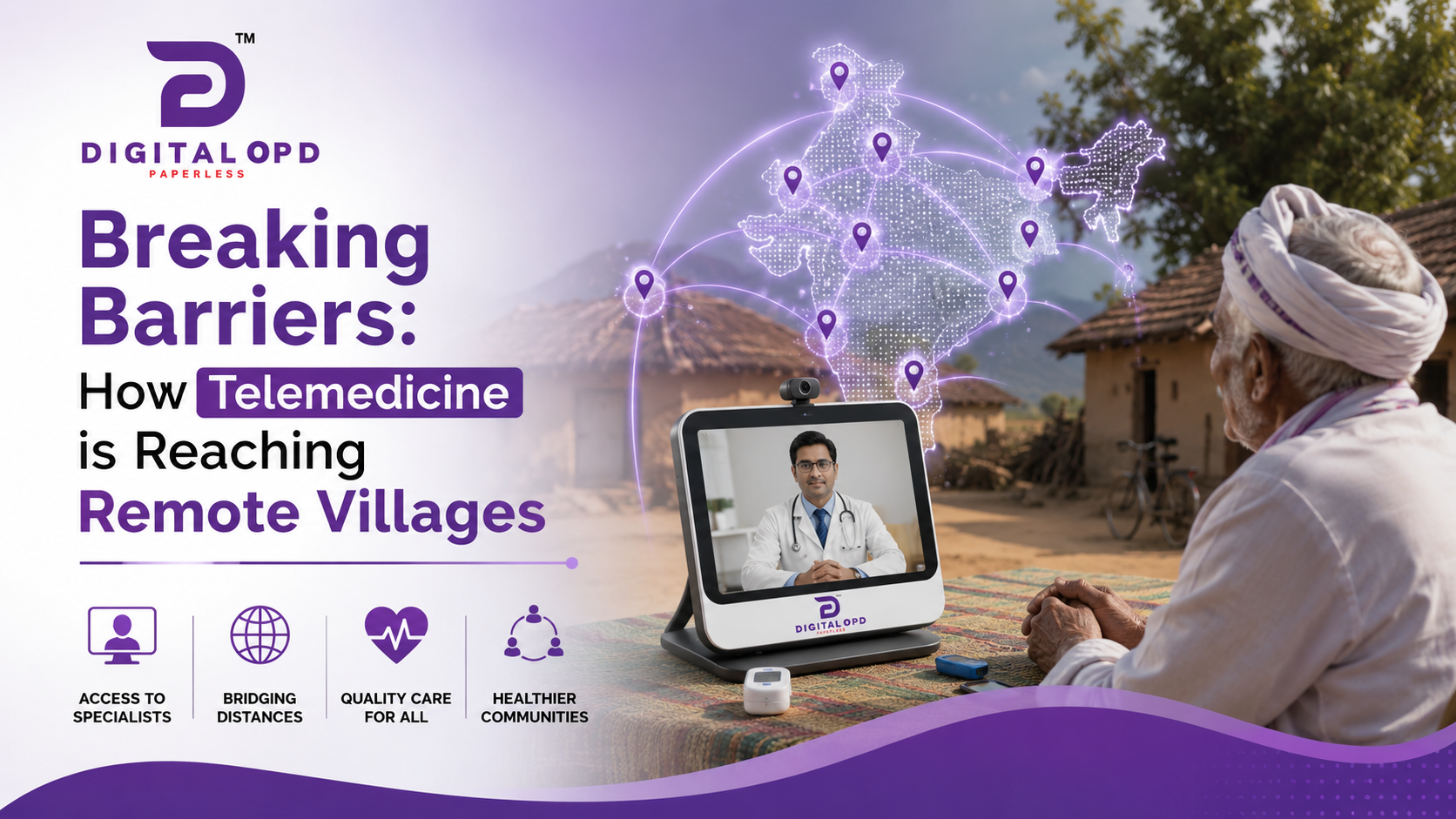
By connecting patients in remote locations with doctors and healthcare professionals through digital platforms, telemedicine is helping bring healthcare closer to communities that have traditionally faced barriers to treatment. In India, the growth of telemedicine, virtual care, digital healthcare, remote care, and online doctor consultations is creating new possibilities for a more connected and patient-friendly healthcare system.
The rise of platforms such as DigitalOPD reflects a broader shift toward smarter outpatient experiences, where technology can support communication, consultation, coordination, and continuity of care.
What Is Telemedicine and How Does It Help Remote Villages?
Telemedicine is the delivery of healthcare services through digital communication technologies. It enables patients to consult healthcare professionals without always having to travel to a physical hospital or clinic.
For people living in remote villages, this can be especially valuable.
Instead of spending hours or even an entire day travelling to a healthcare facility, a patient may be able to connect with a virtual doctor through an online consultation platform or a supported digital healthcare centre.
Telemedicine can help make healthcare more accessible by supporting online doctor consultations, remote medical advice, follow-up consultations, basic health assessments, prescription support where clinically appropriate, specialist consultations, health education and awareness, and coordination between patients and healthcare providers.
The goal is not to replace every in-person medical visit. Instead, telemedicine can complement physical healthcare services and help patients access appropriate medical guidance more conveniently.
Why Telemedicine Matters for Remote Communities
For many rural and remote communities, geographical distance is one of the biggest obstacles to healthcare access.
A village may have a primary healthcare facility but limited access to specialists. In other cases, patients may need to travel significant distances for consultations that could potentially be handled through remote care.
Telemedicine can help bridge some of these gaps.
Reducing Travel Barriers
One of the most significant benefits of telemedicine is that it can reduce unnecessary travel for certain types of consultations.
Patients who need routine follow-ups, general medical guidance, or discussions about existing conditions may be able to speak with a doctor remotely, depending on their clinical needs.
This can save time, reduce travel-related expenses, and make healthcare more convenient for patients and their families.
Improving Access to Doctors
Remote villages may face shortages of healthcare professionals and specialists.
Digital healthcare platforms can help connect patients with doctors who may not be physically available in their local communities. This can be particularly useful when patients require access to specific areas of medical expertise.
A virtual doctor consultation can therefore become an important part of a broader healthcare network that connects rural communities with healthcare professionals.
Supporting Faster Medical Guidance
Timely medical guidance can be important when patients are uncertain about their symptoms or need advice about their next steps.
Telemedicine may help patients understand whether they should monitor their symptoms, schedule an in-person appointment, visit a nearby healthcare facility, or seek urgent medical attention.
This can help improve communication between patients and healthcare providers, although telemedicine should never delay emergency medical care.
Making Follow-Up Care More Convenient
Healthcare does not end after the first consultation.
Patients may need regular follow-ups, medication reviews, lifestyle guidance, or ongoing monitoring. Travelling long distances for every follow-up appointment can be difficult, particularly for older adults, people with mobility challenges, and families with limited resources.
Remote care can support appropriate follow-up interactions while allowing patients to remain connected with their healthcare providers.
The Role of DigitalOPD in the Changing Healthcare Landscape
The evolution of DigitalOPD represents the broader movement toward digitally enabled outpatient healthcare.
A modern digital outpatient experience aims to make healthcare communication more organized, accessible, and patient-friendly. When implemented effectively, digital systems can support the connection between patients, doctors, and healthcare workflows.
For remote communities, the potential value lies in creating a bridge between local healthcare access and wider medical expertise.
However, technology alone is not enough.
Successful telemedicine requires a combination of reliable digital infrastructure, internet and mobile connectivity, access to suitable devices, digital literacy, trained healthcare professionals, patient awareness, data privacy and security, clear clinical workflows, and appropriate referral systems.
The human element remains essential. Technology should make healthcare more accessible without making it less personal.
How Telemedicine Is Reaching Remote Villages
Telemedicine can reach rural and remote populations through a combination of digital platforms and local healthcare infrastructure.
A patient may access telemedicine through a smartphone, computer, digital health centre, community facility, or healthcare worker-supported system, depending on the resources available in that region.
Patient Registration
The patient provides basic information and registers with the telemedicine service.
Consultation Request
The patient seeks medical advice for a health concern or follow-up requirement.
Virtual Consultation
The patient connects with a doctor through video, audio, or another supported communication method.
Clinical Assessment
The healthcare professional reviews the patient's symptoms and available medical information.
Next-Step Guidance
The patient may receive appropriate advice, prescriptions where applicable, or recommendations for diagnostic tests or an in-person consultation.
Referral and Follow-Up
If physical examination or urgent treatment is required, the patient may be directed to an appropriate healthcare facility.
This approach can create a more connected healthcare journey while recognizing that some medical situations require face-to-face evaluation.
The Challenges of Telemedicine in Remote Villages
While telemedicine offers significant potential, its implementation is not without challenges.
Connectivity and Infrastructure
Poor internet connectivity, unreliable electricity, and limited access to digital devices can prevent patients from using telemedicine services effectively.
Digital Literacy
Not every patient is comfortable using digital platforms. Older adults and individuals with limited digital experience may require assistance.
Language and Communication
Healthcare communication becomes more effective when patients can communicate in a language they understand comfortably. Regional language support can therefore be an important part of accessible telemedicine.
Limited Physical Examination
Some medical conditions require a physical examination, diagnostic testing, or immediate treatment. Telemedicine cannot replace these services when they are clinically necessary.
Trust and Awareness
Patients may be unfamiliar with virtual consultations or uncertain about their effectiveness. Building trust requires clear communication, responsible healthcare delivery, and patient education.
Data Privacy and Security
Digital healthcare systems must prioritize the responsible handling of patient information. Privacy, security, and appropriate data management are essential for maintaining patient confidence.
The Human Side of Virtual Care
The success of telemedicine is not determined by technology alone.
Patients want to feel heard, understood, and respected. A virtual consultation should therefore focus on clear communication and empathy just as an in-person consultation does.
For remote communities, this human connection can be particularly important.
A patient who previously had limited access to medical professionals may now have an opportunity to communicate with a doctor through a digital platform. That connection can help patients feel more informed and supported in managing their healthcare.
The future of digital healthcare should therefore focus on combining technology with the human touch.
Telemedicine and the Future of Rural Healthcare in India
The future of telemedicine in India is likely to involve greater integration between digital healthcare platforms and physical healthcare infrastructure.
Rather than viewing telemedicine as a replacement for hospitals and clinics, it can be seen as a complementary layer that helps connect different parts of the healthcare ecosystem.
The future may include more accessible online doctor consultations, better integration between digital and physical healthcare, greater use of remote care for appropriate follow-ups, improved access to specialist consultations, stronger digital health infrastructure, better patient communication, more organized outpatient workflows, and increased health awareness in underserved communities.
The long-term goal should be to create a healthcare system in which geography does not unnecessarily determine the quality or speed of access to medical guidance.
How Telemedicine Can Create a Smarter Outpatient Experience
A smarter outpatient experience is not simply about moving consultations online.
It is about creating a healthcare journey that is accessible, organized, patient-friendly, connected, efficient, and clinically responsible.
When telemedicine is integrated effectively with healthcare workflows, patients can potentially experience smoother communication and better coordination.
For healthcare providers, digital systems can also support more organized patient management and communication.
This is where the evolution of DigitalOPD becomes particularly relevant. The future of outpatient healthcare is likely to depend on the ability to combine digital convenience with high-quality clinical care.
What Patients Should Know Before Using Telemedicine
Telemedicine can be useful for many healthcare needs, but patients should understand its limitations.
A virtual consultation may be appropriate for certain routine consultations, follow-ups, and medical concerns. However, emergencies and conditions requiring immediate physical examination should be handled through appropriate in-person medical services.
Patients should provide accurate information about their symptoms, share relevant medical history with the doctor, mention current medications, follow medical advice responsibly, ask questions if instructions are unclear, and seek in-person care when recommended.
Telemedicine works best when patients and healthcare professionals use it as part of a broader, responsible healthcare system.
Conclusion: Breaking Barriers Through Connected Healthcare
Breaking Barriers: How Telemedicine is Reaching Remote Villages is ultimately a story about improving access.
For communities that face geographical, economic, and infrastructure-related challenges, telemedicine offers an opportunity to connect patients with healthcare professionals beyond the boundaries of their local area.
The journey, however, requires more than technology. It requires reliable infrastructure, digital literacy, responsible healthcare practices, patient trust, data security, and a strong human connection.
As telemedicine in India continues to evolve, the combination of remote care, virtual doctors, online doctor consultations, and digital healthcare platforms could play an increasingly important role in building a more connected healthcare ecosystem.
The future of healthcare is not simply digital or physical. It is increasingly connected, bringing together technology, healthcare professionals, patients, and communities to create smarter and more accessible healthcare experiences.
Frequently Asked Questions
What is telemedicine?
Telemedicine is the delivery of healthcare services through digital communication technologies, allowing patients to consult healthcare professionals remotely when appropriate.
How does telemedicine help people in remote villages?
Telemedicine can help reduce travel barriers and connect people in remote communities with doctors and healthcare professionals through digital consultations.
Can telemedicine replace hospitals and clinics?
No. Telemedicine complements physical healthcare services but cannot replace in-person examination, emergency treatment, surgery, or other services that require direct clinical care.
What is a virtual doctor consultation?
A virtual doctor consultation is a remote interaction between a patient and a healthcare professional using digital communication tools such as video or audio platforms.
Is telemedicine useful for rural healthcare in India?
Yes, telemedicine can help address some rural healthcare access challenges by connecting patients with healthcare professionals remotely. Its effectiveness depends on connectivity, infrastructure, digital literacy, healthcare availability, and appropriate clinical use.
What are the main challenges of telemedicine in remote villages?
Key challenges include poor internet connectivity, limited access to digital devices, digital literacy gaps, language barriers, lack of awareness, privacy concerns, and situations where physical examination is necessary.
What is the future of telemedicine in India?
The future of telemedicine in India is likely to involve stronger integration between digital healthcare and physical healthcare, improved remote care, better access to specialists, and more connected outpatient healthcare workflows.
SEO Information
Primary Keyword
Telemedicine in India
Secondary Keywords
Telemedicine for remote villages, rural telemedicine, remote healthcare, digital healthcare, virtual doctor consultation, online doctor consultation, remote care, telemedicine India, virtual care, DigitalOPD
Long-Tail Keywords
How telemedicine is reaching remote villages, benefits of telemedicine for rural communities, how telemedicine helps rural healthcare in India, role of telemedicine in remote villages, future of telemedicine in India, how virtual doctor consultations improve healthcare access
SEO Title
Breaking Barriers: How Telemedicine is Reaching Remote Villages
Meta Description
Discover how telemedicine is reaching remote villages, improving healthcare access, connecting patients with doctors, and transforming rural healthcare in India.
Suggested URL Slug
breaking-barriers-telemedicine-reaching-remote-villages
Suggested Image Alt Text
Telemedicine connecting doctors with patients in remote villages in India
AEO Summary
How is telemedicine reaching remote villages?
Telemedicine is reaching remote villages by using digital healthcare platforms, online doctor consultations, virtual care, and remote communication technologies to connect patients with healthcare professionals. It can reduce travel barriers, improve access to medical guidance, support follow-up care, and connect rural communities with doctors and specialists who may not be physically available nearby.
Telemedicine is helping break geographical barriers in healthcare by connecting people in remote villages with doctors through digital platforms. In rural India, telemedicine and virtual care can support online doctor consultations, follow-up care, medical guidance, and access to specialists. This can reduce unnecessary travel and improve healthcare accessibility for underserved communities.
However, successful telemedicine requires more than technology. Reliable internet connectivity, digital literacy, appropriate healthcare infrastructure, patient awareness, data privacy, and trained healthcare professionals are essential. Telemedicine also cannot replace in-person care when physical examination, emergency treatment, diagnostic testing, or specialized medical intervention is required.
The future of rural healthcare is likely to involve a connected model that combines telemedicine with physical healthcare services. By integrating remote care, digital healthcare, virtual doctors, and organized outpatient workflows, platforms such as DigitalOPD can contribute to a more accessible and patient-friendly healthcare experience.
Key Takeaway
Telemedicine can help bring healthcare closer to remote communities by connecting patients and doctors digitally, but its greatest impact comes when technology works alongside strong local healthcare infrastructure and human-centered care.
Key Limitations
Telemedicine cannot replace emergency care, physical examination, surgery, or clinically necessary in-person treatment.
Key Future Trend
Digital healthcare combined with physical healthcare infrastructure can create a more connected and patient-centric healthcare ecosystem.