Introduction
The way hospitals function in India is changing rapidly. Across metro cities like Mumbai, Delhi, and Bengaluru, and increasingly in Tier 2 cities like Nashik, Coimbatore, and Bhopal, healthcare providers are investing in automation to solve problems that have persisted for decades. Long queues at registration counters, misplaced paper files, billing delays, and overburdened front-desk staff are no longer acceptable in an era where patients expect faster, more organized care.
Hospital automation is the process of using digital tools, software platforms, and technology-driven workflows to replace or reduce manual tasks across clinical and administrative functions. It spans everything from automated patient registration and digital prescription writing to smart queue management, AI-assisted diagnosis, and real-time OPD analytics. When implemented well, automation does not just make hospitals faster. It makes them fundamentally better.
This article explores the full scope of hospital automation in India, including its benefits, the real challenges that hospitals face during adoption, and the future trends that will shape how outpatient and inpatient care is delivered over the coming decade.
Understanding Hospital Automation in the Indian Healthcare Context
India's healthcare system is one of the most complex in the world. It serves over 1.4 billion people across vastly different geographies, income levels, and infrastructure conditions. According to the National Health Policy 2017, India spends approximately 1.15 percent of its GDP on public health, which places enormous pressure on both government hospitals and private facilities to do more with less.
In this environment, automation is not a luxury. It is a practical response to a very real operational burden. A typical government district hospital in India may handle hundreds of outpatients every day, most of whom are registered manually, wait in disorganized queues, and receive handwritten prescriptions that are sometimes difficult to read or track. Private hospitals fare better in infrastructure but still struggle with front-desk efficiency, billing accuracy, and patient communication.
Hospital automation in India covers several key areas:
Administrative automation: patient registration, appointment scheduling, queue management, and billing
Clinical automation: electronic health records (EHR), digital prescriptions, and diagnostic report integration
Communication automation: appointment reminders, follow-up alerts, and patient feedback systems
Operational automation: inventory management, staff scheduling, and OPD analytics
Understanding these layers is essential before evaluating the benefits and the challenges.
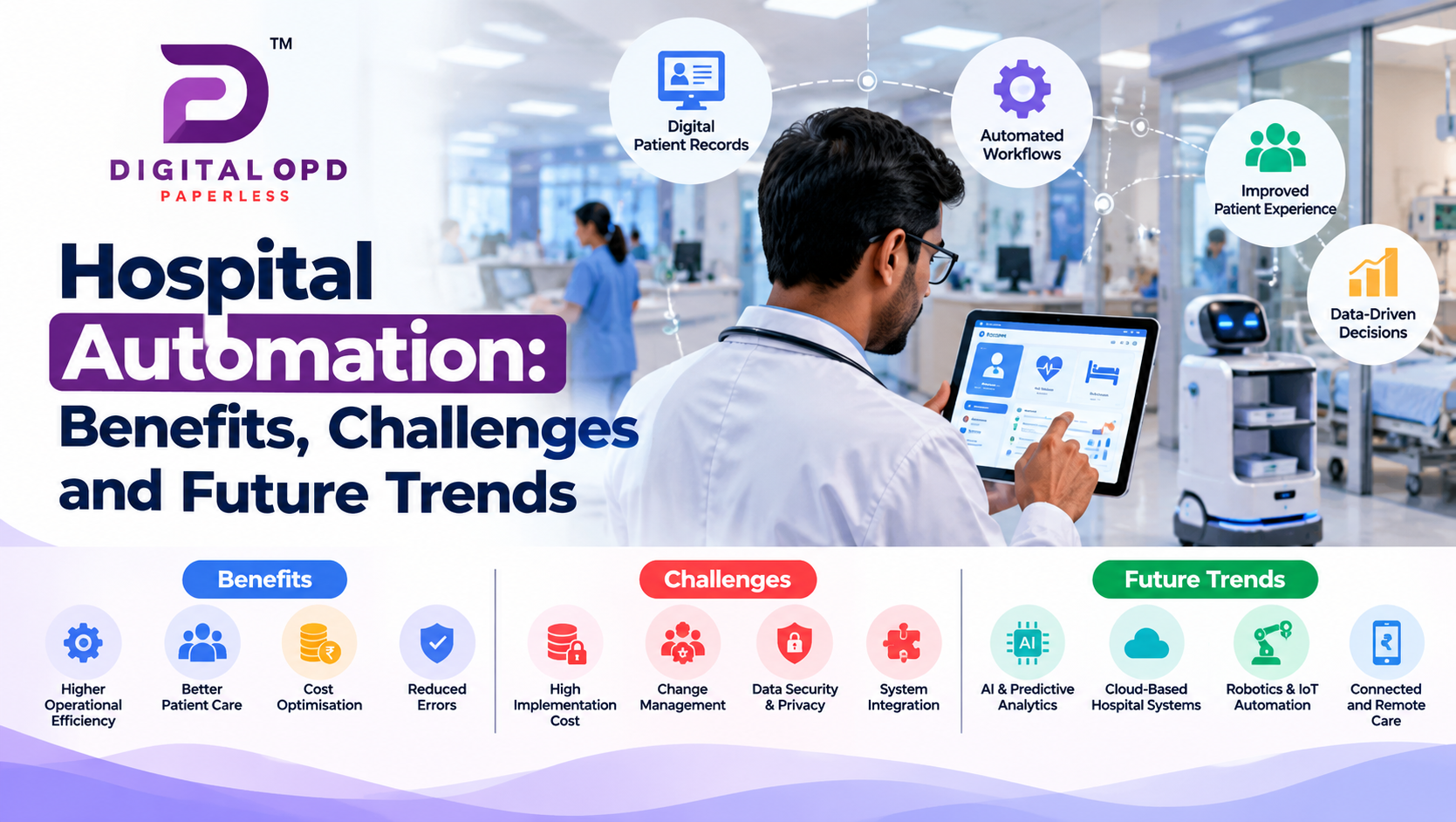
Core Benefits of Hospital Automation
Faster and More Organized OPD Flow
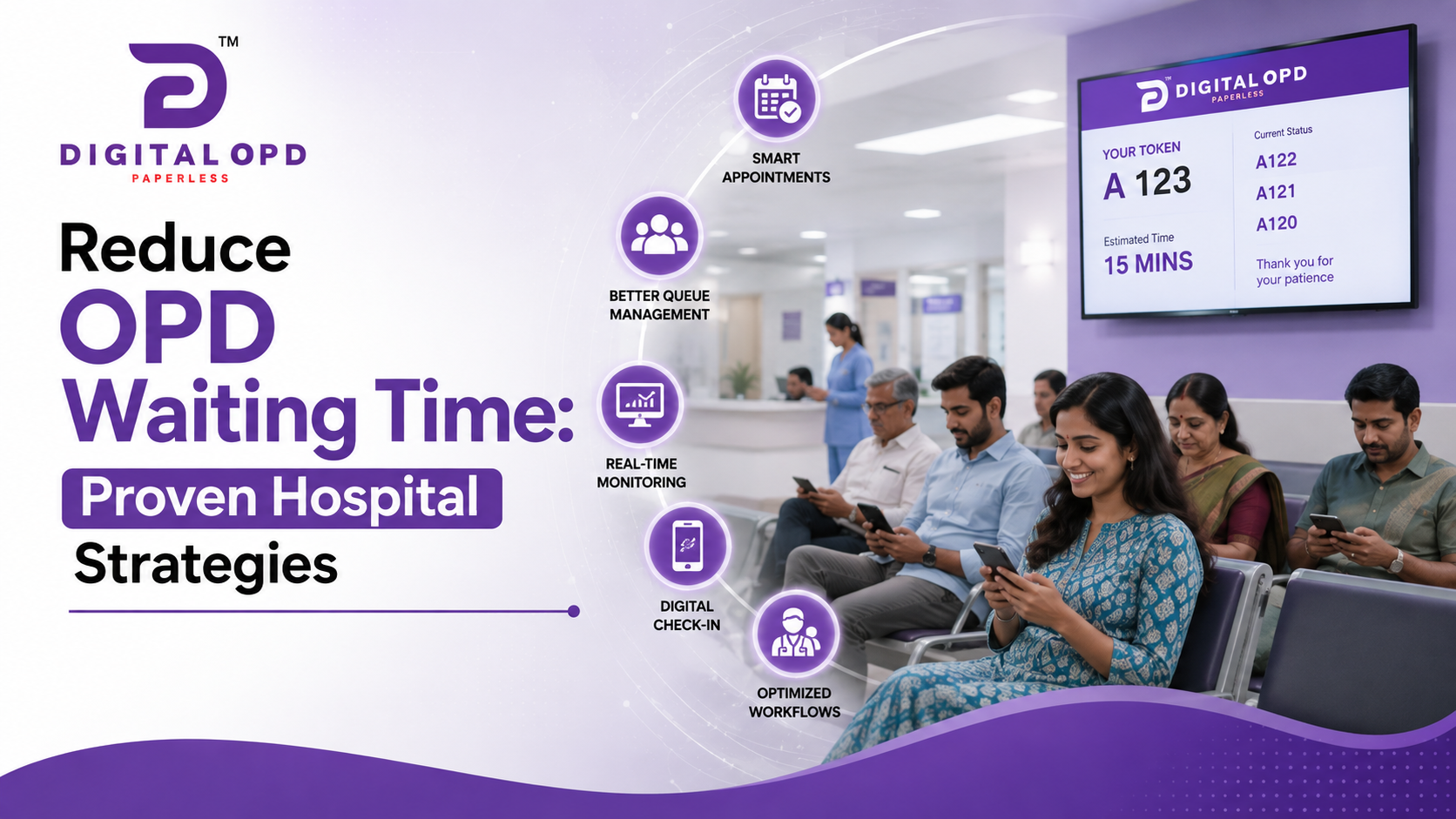
The outpatient department is the first and most frequent touchpoint between a hospital and its patients. In most Indian hospitals, OPD operations are still heavily manual, which creates bottlenecks. Automation directly addresses this. When patients can book appointments online, receive digital tokens, and complete pre-registration through a mobile form or kiosk, the crowd at the front desk reduces dramatically.
Hospitals that have implemented smart OPD management systems report significant reductions in average patient waiting time. Platforms designed specifically for outpatient workflow management, such as Digital OPD, enable hospitals to organize patient flow from the point of appointment booking all the way through consultation, billing, and follow-up scheduling. This creates a seamless, faster, and more professional outpatient experience.
Reduction in Administrative Errors
Manual data entry is a well-known source of errors in healthcare. A mistyped patient ID, an incorrect drug name on a handwritten prescription, or a duplicate billing entry can have serious consequences. Automation significantly reduces these risks by standardizing data entry, enabling validation checks, and linking patient information across modules such as registration, pharmacy, and billing.
In the Indian context, this is especially important because many patients visit multiple departments during a single hospital visit. A connected automated system ensures that information entered once at registration flows accurately through every subsequent step, reducing the need for repeated data entry and lowering the risk of errors.
Better Patient Experience and Engagement
Indian patients today are more informed and more demanding than any previous generation. They compare hospitals based on wait time, communication quality, and overall experience. Automated systems that send appointment reminders via SMS or WhatsApp, provide real-time queue updates, and deliver digital prescriptions directly to a patient's phone create a noticeably better experience.
This is not just about convenience. Patient engagement tools built into automation platforms help hospitals manage follow-ups more effectively, ensuring patients return for scheduled consultations rather than dropping out of the care cycle. For chronic disease management, this continuity is especially valuable.
Improved Operational Visibility for Hospital Management
One of the most underappreciated benefits of hospital automation is the data it generates. When workflows are automated, every step produces structured data that can be analyzed. Hospital administrators can track how many patients were seen each day, how long each consultation took, which doctors had the highest appointment volume, and where bottlenecks occurred in the patient journey.
This visibility allows management to make evidence-based decisions rather than relying on estimates or informal observations. OPD analytics dashboards can reveal patterns that would be invisible in a paper-based system, enabling hospitals to allocate resources more effectively and continuously improve performance.
Revenue Cycle Efficiency
Billing delays and revenue leakage are persistent problems in Indian hospitals, particularly in facilities that still manage billing manually or across disconnected systems. Automation links the clinical and billing modules so that services rendered are automatically captured, priced, and invoiced without requiring a manual transfer of information.
Faster and more accurate billing improves cash flow, reduces disputes, and builds patient trust. For hospitals offering services under government schemes like Ayushman Bharat or state-level health insurance programs, automated pre-authorization and claims processing can significantly reduce administrative burden and turnaround time.
Challenges of Implementing Hospital Automation in India
High Initial Investment and Infrastructure Gaps
For many small and mid-sized hospitals, especially in Tier 2 and Tier 3 cities, the upfront cost of implementing an automation platform is a genuine barrier. Hardware, software licensing, server infrastructure or cloud migration, and staff training all require capital investment. Without a clear understanding of return on investment, hospital owners are understandably cautious.
Beyond cost, infrastructure gaps are a real concern. Reliable internet connectivity, which is essential for cloud-based healthcare software, is still inconsistent in several parts of India. Power outages and connectivity interruptions can disrupt automated workflows, which is why hospitals in smaller towns often prefer hybrid systems that can function offline and sync when connectivity is restored.
Resistance to Change Among Staff
Technology adoption in any organization requires a cultural shift, and hospitals are no exception. Front-desk staff, nurses, and even doctors who have worked with paper-based systems for years may feel uncertain or resistant when automation is introduced. In some cases, this resistance stems from a fear of job displacement. In others, it is simply discomfort with learning new workflows.
Successful automation programs invest as much in change management and training as they do in the technology itself. Staff who understand why the system is being introduced, how it makes their work easier, and what support is available during the transition are far more likely to adopt it fully and sustain its use.
Data Privacy and Cybersecurity Concerns
As hospitals digitize patient records and move data to cloud platforms, the risk of unauthorized access and data breaches becomes a serious concern. India's healthcare sector has faced incidents of data exposure, and patients have a legitimate right to expect that their medical information is kept secure.
The Personal Data Protection framework in India is still evolving, and healthcare organizations must stay updated on compliance requirements. Any hospital automation platform should offer end-to-end data encryption, role-based access controls, audit trails, and compliance with relevant national data protection norms. Choosing a vendor that takes security seriously is not optional. It is a fundamental requirement.
Interoperability and Integration Challenges
Many hospitals in India have implemented different software systems at different points in time, often from different vendors. A hospital might have one system for billing, another for pharmacy, and a third for laboratory management. When these systems do not communicate with each other, the benefits of automation are significantly limited.
Interoperability, the ability of different systems to exchange and use information seamlessly, is one of the most important and most difficult challenges in hospital automation. India's Ayushman Bharat Digital Mission (ABDM) is working to address this at a national level by establishing standards for health data exchange, but adoption at the facility level is still a work in progress.
Future Trends Shaping Hospital Automation in India
Artificial Intelligence and Predictive Analytics
Artificial intelligence is moving from being an experimental technology to a practical tool in Indian healthcare. AI-powered diagnostic support systems can assist radiologists in reading scans, flag abnormal laboratory values for immediate review, and help clinicians identify patients at high risk of deterioration. Predictive analytics tools can forecast patient footfall, helping hospitals plan staffing and resource allocation more effectively.
For OPD management specifically, AI can optimize appointment scheduling by predicting no-show rates, suggesting the most appropriate time slots, and automatically sending reminders to reduce patient attrition. These capabilities are becoming more accessible as cloud-based platforms make AI tools available without requiring hospitals to build their own infrastructure.
Ayushman Bharat Digital Mission and National Health Stack
The Ayushman Bharat Digital Mission (ABDM) is perhaps the most significant policy development shaping the future of hospital automation in India. By establishing Ayushman Bharat Health Accounts (ABHA IDs), the national health stack creates a foundation for patients to own and share their health records across any registered healthcare provider in the country.
For hospitals, participating in the ABDM ecosystem means investing in automation systems that are ABDM-compliant and capable of generating and reading standardized health records. This interoperability at a national scale has the potential to transform how patients experience care, particularly those who travel for treatment or visit multiple specialists.
Telemedicine and Remote Care Integration
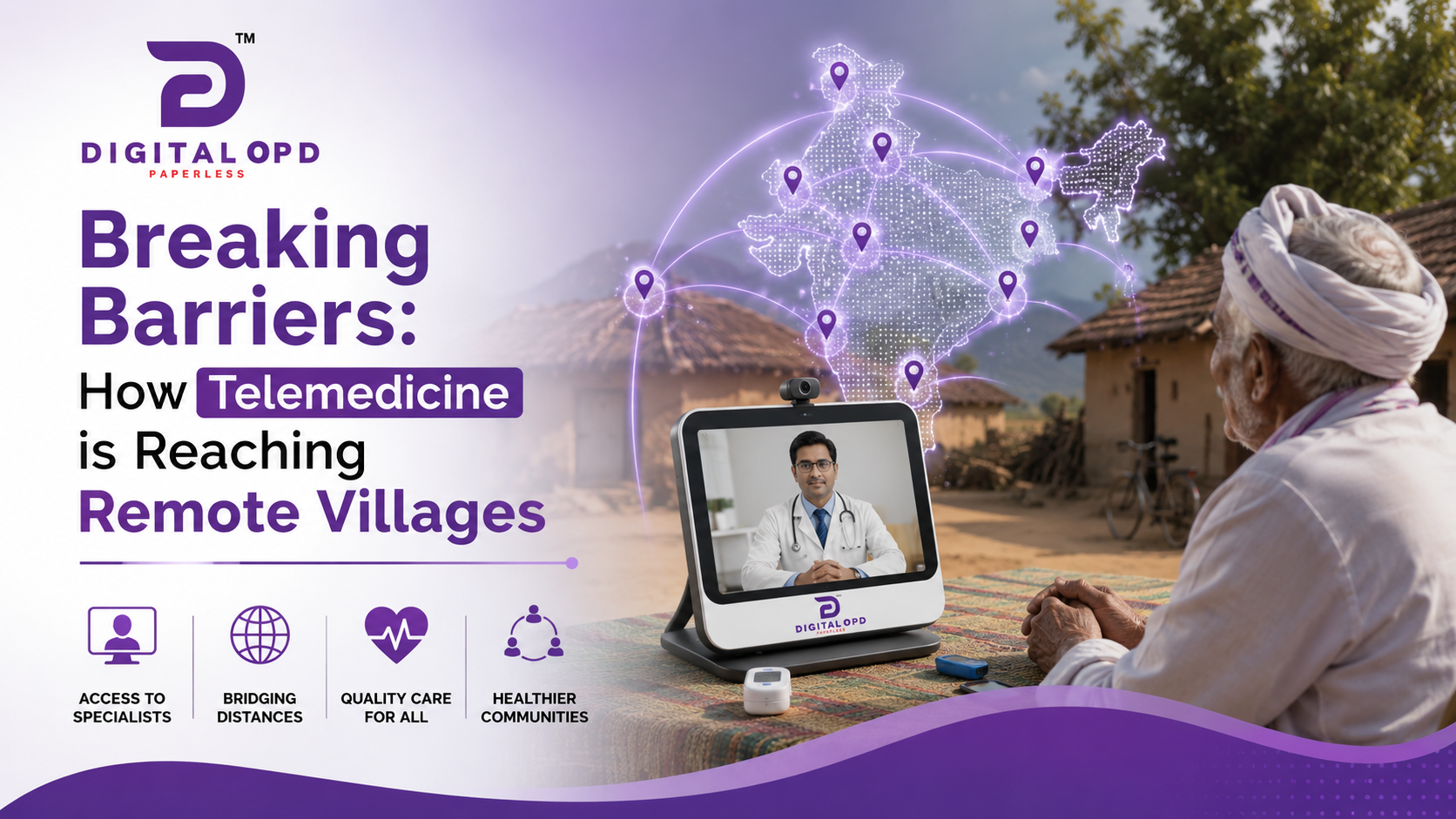
The COVID-19 pandemic accelerated telemedicine adoption in India by years. Today, many hospitals offer a combination of in-person and remote consultations, and patients in rural areas increasingly access specialist care through video-based appointments. The next phase of hospital automation will integrate telemedicine capabilities directly into OPD management systems, creating a unified workflow for both physical and virtual consultations.
This integration will allow hospitals to manage appointments, prescriptions, billing, and follow-ups for telemedicine patients through the same platform used for in-person care, eliminating the operational silos that currently exist.
Smart OPD Management Platforms
The evolution of OPD-specific automation platforms represents a meaningful shift from generic hospital management software to purpose-built outpatient tools. Platforms focused specifically on OPD workflows understand the unique challenges of high-volume patient flow, short consultation windows, and the need for fast, accurate front-desk operations.
Solutions like Digital OPD are designed precisely for this purpose, offering hospitals a complete digital approach to the outpatient journey from the first appointment to billing, prescription, and follow-up. As more Indian hospitals recognize that the OPD is their most visible and most frequently used service, investment in smart OPD management will continue to grow.
Conclusion
Hospital automation is no longer a future possibility for Indian healthcare. It is an active transformation happening across hospitals and clinics in every corner of the country. The benefits are clear, including faster patient flow, fewer errors, better data visibility, improved patient experience, and stronger revenue management. The challenges are real, but they are manageable with the right technology partner, a serious commitment to training, and a phased approach to implementation.
For hospital owners, administrators, and healthcare decision-makers, the question is not whether to automate but where to begin and how to do it effectively. Starting with high-impact, high-visibility areas like OPD management creates immediate improvements that build confidence and momentum for broader automation across the facility. In a healthcare environment that is growing more competitive and more patient-focused every year, automation is what separates hospitals that are merely functional from those that are genuinely excellent.
Frequently Asked Questions
Q1: What is hospital automation and why is it important for Indian hospitals?
Hospital automation refers to the use of digital systems and software to manage clinical, administrative, and operational tasks with reduced manual effort. For Indian hospitals handling high patient volumes, automation improves efficiency, reduces errors, shortens wait times, and creates a more organized and patient-friendly experience across every department.
Q2: How does hospital automation reduce patient waiting time in OPDs?
Automation enables patients to book appointments online, complete pre-registration digitally, and receive real-time queue updates. This eliminates the need for manual registration at the front desk and reduces crowding. Digital token systems organize patient flow more predictably, ensuring that doctors see patients in a structured sequence without unnecessary delays.
Q3: What are the major challenges of implementing hospital automation in India?
The key challenges include the upfront cost of technology, infrastructure limitations in smaller cities, staff resistance to change, data privacy and cybersecurity concerns, and the difficulty of integrating new platforms with existing legacy systems. Addressing these challenges requires a combination of the right technology partner, staff training, and a realistic implementation plan.
Q4: What role does the Ayushman Bharat Digital Mission play in hospital automation?
The Ayushman Bharat Digital Mission (ABDM) is a national initiative that creates a digital infrastructure for health data in India. It enables patients to maintain Ayushman Bharat Health Accounts (ABHA IDs) and share health records securely across registered providers. For hospitals, ABDM compliance means participating in a nationally interoperable health ecosystem that improves continuity of care.
Q5: Which areas of a hospital benefit most from automation?
The outpatient department typically sees the most immediate benefit because it handles the highest daily patient volume. Other high-impact areas include billing and revenue management, pharmacy inventory, laboratory report integration, appointment scheduling, patient communication, and follow-up management. A phased approach starting with OPD automation is often the most practical entry point for Indian hospitals.
Resources
Ayushman Bharat Digital Mission (ABDM): Official government platform for India's national digital health ecosystem and ABHA health account management
Ministry of Health and Family Welfare, Government of India: National health policies, schemes, and healthcare regulatory guidelines relevant to hospital operations
National Accreditation Board for Hospitals and Healthcare Providers (NABH): Standards and accreditation frameworks for hospital quality and patient safety in India
World Health Organization (WHO) India Country Office: Reports and guidance on healthcare systems strengthening, digital health, and patient safety relevant to the Indian context
Indian Council of Medical Research (ICMR): Evidence-based research publications and clinical guidance informing healthcare practices across India
Interlinking Keywords
hospital automation India, OPD management software, digital outpatient department, smart hospital technology, patient queue management system, electronic health records India, ABDM compliance, outpatient workflow automation, hospital digital transformation, clinic management software, digital prescription system, hospital billing automation
Last reviewed by:
Dr. Manthan Tripathi and Editorial Advisory Team, Digital OPD on 27, October 2026.
Disclaimer
This article is intended for informational and educational purposes only. The content does not constitute medical advice, clinical guidance, or a substitute for consultation with a qualified healthcare professional, hospital administrator, or technology implementation specialist. While every effort has been made to ensure the accuracy of the information presented, healthcare regulations, technology capabilities, and government policies are subject to change. Readers are encouraged to verify current guidelines with the relevant authorities before making any operational or clinical decisions. Digital OPD does not accept liability for any decisions made based on the content of this article.