Every hospital and clinic in India depends heavily on its outpatient department. The OPD is often the first point of contact between a patient and the healthcare system, the busiest area for front-office teams, and one of the biggest factors influencing how organized or chaotic a patient's overall experience feels.
Yet many outpatient departments still depend on paper registers, handwritten tokens, manual billing slips, and disconnected processes. As patient volumes continue to increase, these traditional methods can make it difficult for hospitals and clinics to maintain efficient patient flow.
OPD management software is designed to address these challenges. It is a digital system that helps manage the outpatient journey, from patient registration and appointment booking to consultation, digital prescriptions, billing, and follow-up communication.
For hospital owners, clinic founders, and healthcare administrators, understanding what OPD management software does and what to consider before choosing a platform can help improve daily operations and create a more organized patient experience.
This guide explains what OPD management software is, how it works, its key features, its relevance to Indian healthcare, and the factors hospitals and clinics should consider when selecting a suitable solution.
What is OPD Management Software?
OPD management software is a digital platform designed to coordinate the administrative and clinical workflow of an outpatient department.
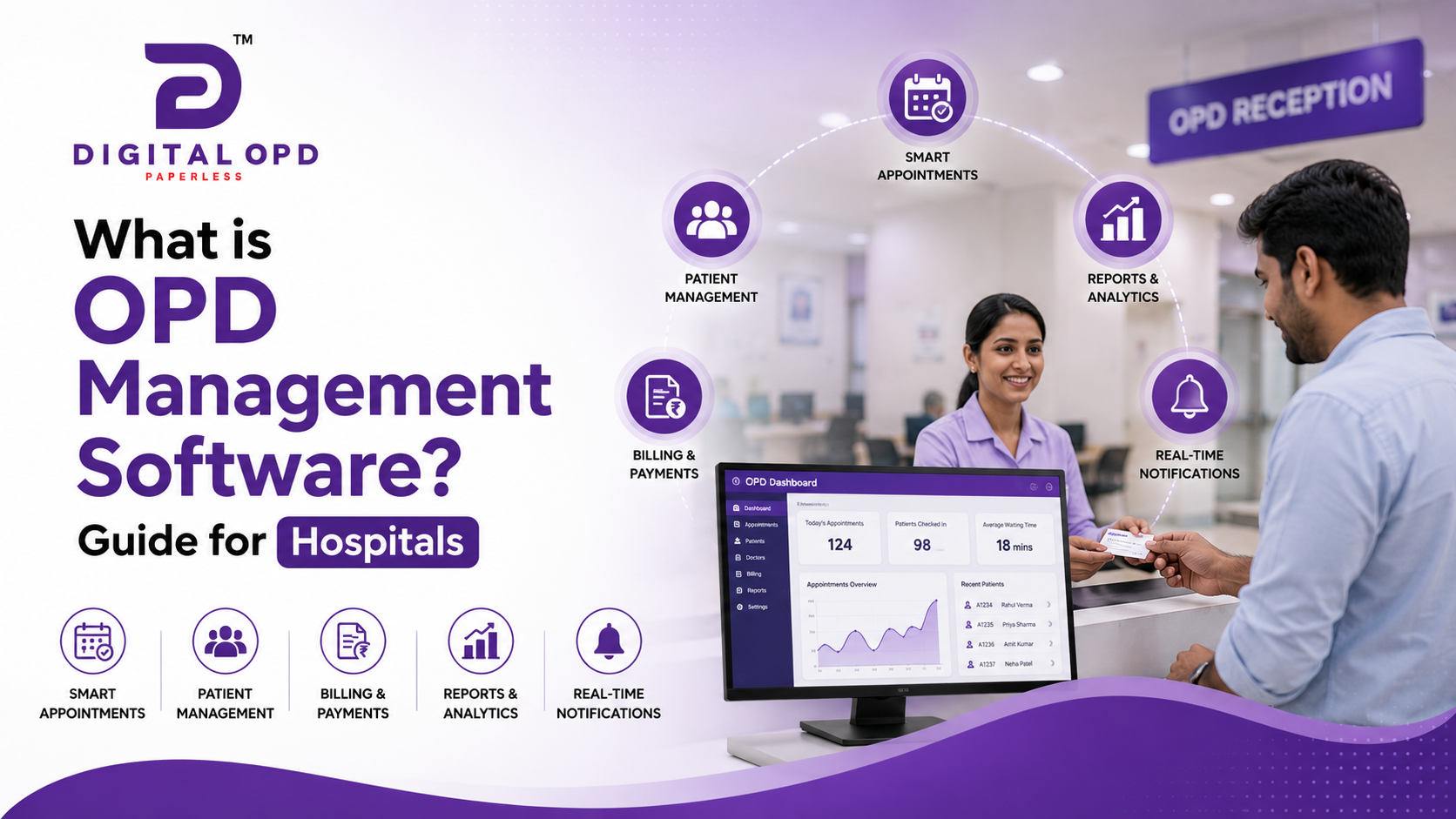
Depending on the platform, it can bring together functions such as patient registration, appointment scheduling, queue and token management, doctor consultations, digital prescriptions, billing, patient communication, and follow-up reminders.
Instead of managing these activities through separate manual processes, hospitals can use a connected digital workflow to manage the outpatient journey more efficiently.
The importance of this becomes clearer when considering the scale of outpatient healthcare in India. The source material estimates that India records approximately 1.2 billion outpatient visits every year, compared with around 28 million inpatient admissions annually. This highlights how important outpatient care is to the overall healthcare system.
With such large volumes, even a small inefficiency at the registration desk or consultation queue can result in significant time loss across hospitals and clinics.
OPD Management Software vs Hospital Management Software
OPD management software and hospital management software are related, but they are not necessarily the same.
OPD management software focuses specifically on outpatient workflows. This typically includes registration, appointment scheduling, queue management, consultation support, prescriptions, billing, and follow-up processes.
A broader hospital management system may include OPD functions as well as inpatient departments, ward management, pharmacy, laboratory services, and other hospital-wide operations.
For single-doctor practices and small to mid-size clinics, a focused OPD management solution may be sufficient. Larger hospitals may use OPD management as one component of a wider hospital management platform.
Why Do Indian Hospitals and Clinics Need OPD Management Software?
The need for OPD management software in India is closely connected to growing patient volumes and the limitations of manual processes.
A front desk handling paper appointment registers, walk-in patients, phone bookings, and manual billing can quickly become overwhelmed during peak hours.
Several operational challenges commonly arise in these environments.
Long and Unpredictable Queues
Without an organized appointment and token system, patients may have limited visibility into how long they will need to wait.
This can result in crowded waiting areas, confusion at the reception counter, and frustration among patients and attendants.
Repeated Data Entry
When patient information is stored primarily in physical files, front-office staff may need to repeatedly enter basic details during every visit.
This can increase administrative workload and consume valuable time that could otherwise be used to support patients.
Billing Delays and Errors
Manual billing often requires staff to compile charges after the consultation has been completed.
This can increase the possibility of missed services, calculation errors, or delays in generating invoices.
Limited Management Visibility
Hospital owners and administrators may struggle to obtain real-time information about patient footfall, average waiting time, doctor-wise consultation volume, or OPD performance.
Without reliable data, identifying operational bottlenecks can become difficult.
Missed Follow-Ups
Patients requiring regular follow-up care may be difficult to track when reminders depend on manual phone calls, paper records, or staff memory.
This can be particularly important for patients managing chronic conditions that require ongoing monitoring.
These challenges become more significant as patient volume increases. Whether it is a large hospital in a metropolitan city or a growing clinic in a Tier 2 or Tier 3 location, the administrative burden can increase quickly when processes are not coordinated.
Core Features of OPD Management Software
A well-designed OPD management system typically combines several connected functions rather than focusing on a single feature.
Patient Registration and Self-Registration
Digital registration allows patient information to be captured electronically and reused during future visits.
Some systems may also support self-registration through kiosks or mobile interfaces. This can reduce pressure on front-desk teams during busy periods and help patients complete basic registration processes more efficiently.
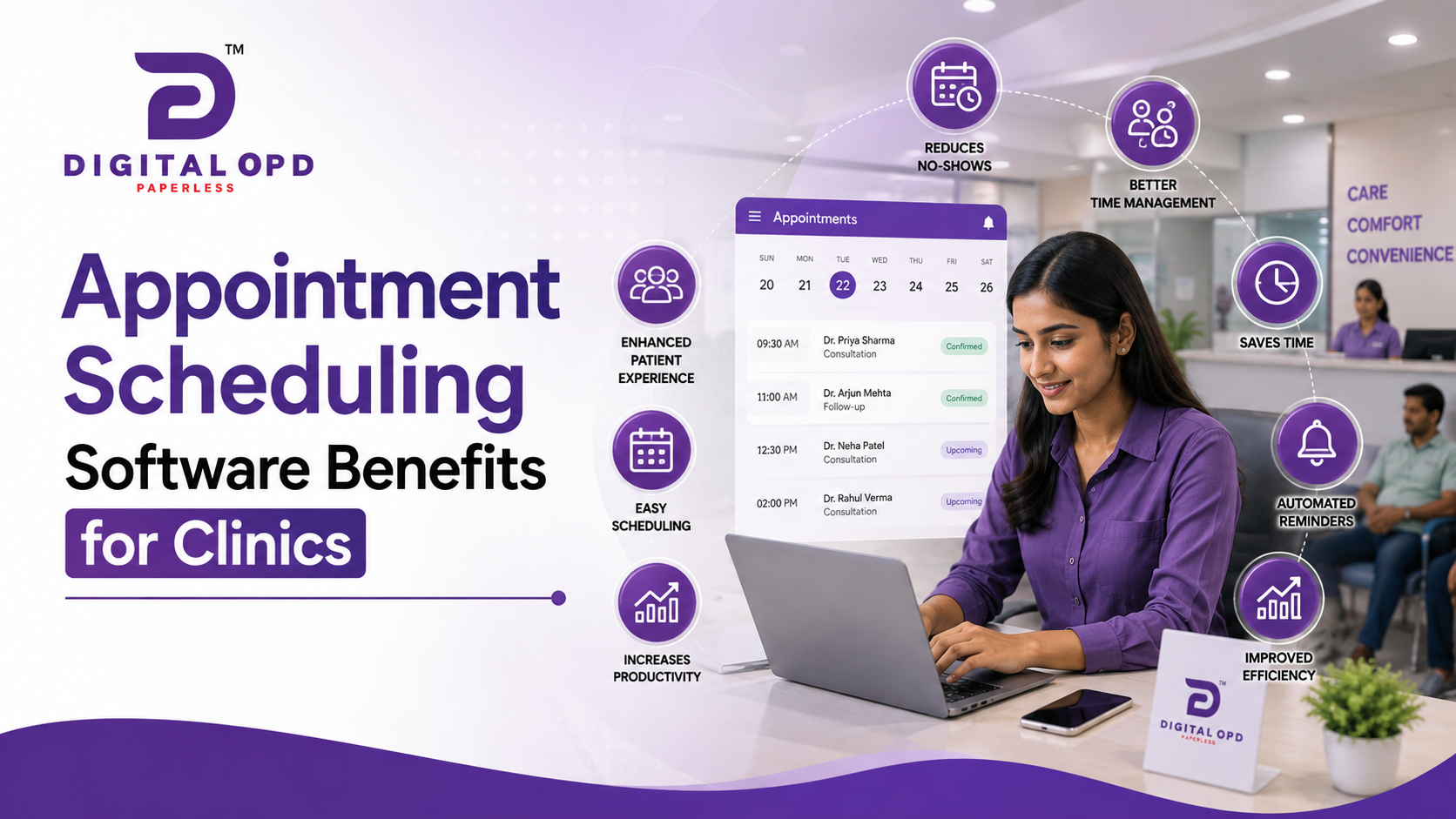
Online Appointment Booking and Scheduling
Online appointment booking allows patients to schedule consultations with specific doctors in advance.
At the same time, the system can help staff manage walk-in patients alongside scheduled appointments.
A unified scheduling view can help reduce double-booking and scheduling conflicts while giving front-office teams a clearer picture of the day's patient flow.
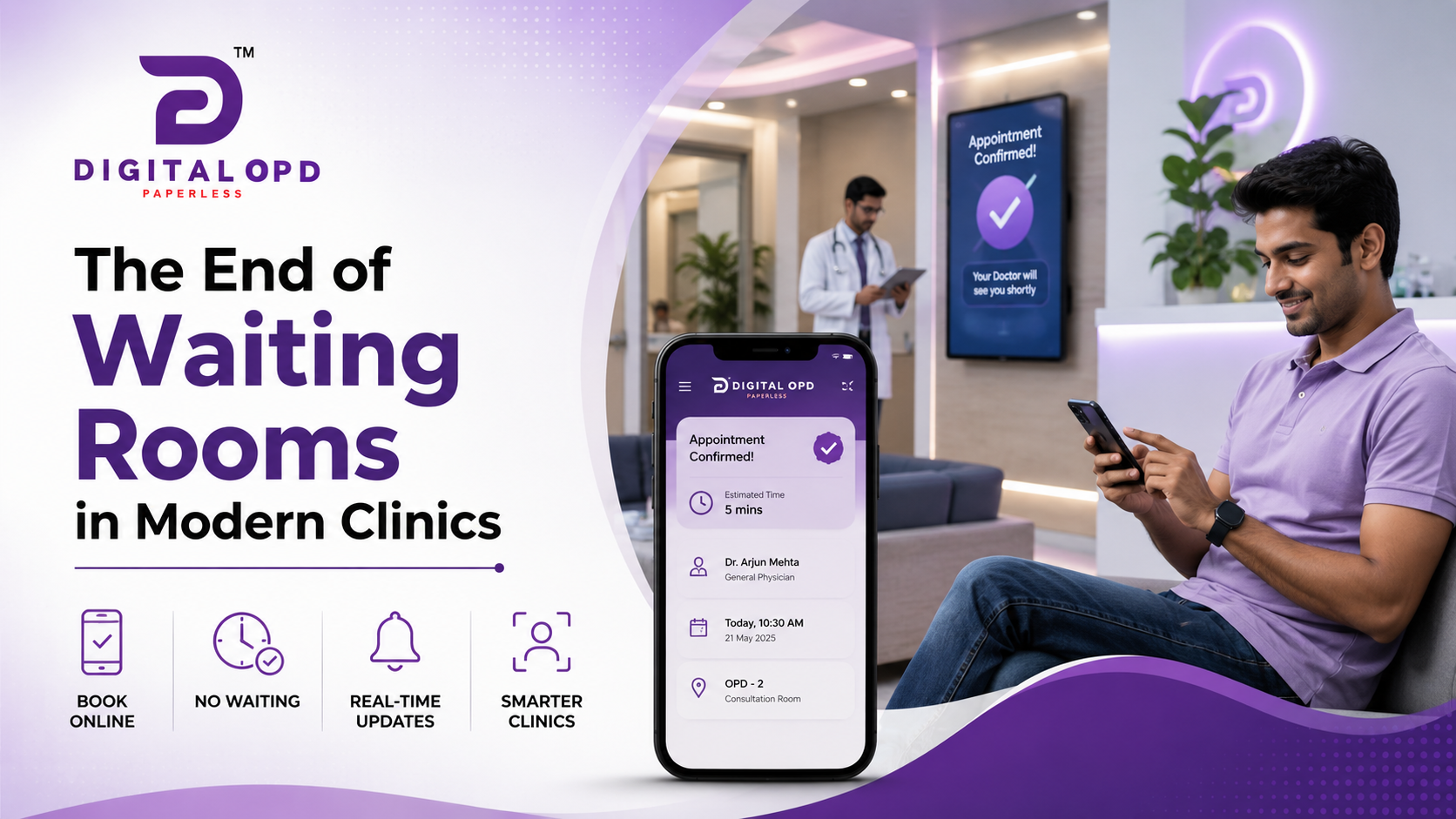
Digital Token and Queue Management
Digital queue management replaces traditional paper tokens or verbal queue numbers with a more structured system.
Depending on the platform, patients may be able to view their queue position through display screens, SMS updates, WhatsApp notifications, or patient-facing applications.
This can help reduce uncertainty and improve the overall waiting experience.
Doctor-Wise OPD Scheduling
Hospitals with multiple doctors and departments need efficient scheduling across different consultation queues.
OPD management software can allow each doctor's queue to be managed independently while giving administrators a combined view of outpatient activity across the hospital.
This can be particularly useful for multi-specialty hospitals where patients may need to interact with more than one department during their healthcare journey.
Digital Prescriptions and e-Prescriptions
Digital prescriptions allow doctors to generate medication instructions electronically during or after a consultation.
They can help reduce issues associated with difficult-to-read handwriting and make it easier for patients to access prescription information later.
Depending on the system, patients may receive prescriptions through digital channels such as WhatsApp or a dedicated patient application.
Integrated OPD Billing
When billing is connected directly to the consultation workflow, invoices can be generated based on completed services rather than requiring staff to compile charges separately.
This can reduce the possibility of missed charges and help shorten the time patients spend completing the billing process.
Follow-Up and Patient Communication
Automated communication can help remind patients about follow-up appointments, laboratory reports, or medication refills.
This can be especially useful for patients with chronic conditions such as diabetes or hypertension who may require regular monitoring and ongoing care.
OPD Analytics and Reporting
Digital OPD systems can provide reports related to patient footfall, average waiting times, doctor-wise consultation volumes, and revenue.
Access to structured operational information can help hospital administrators understand how the OPD is performing without relying entirely on manual data compilation.
ABDM, ABHA, and Compliance Considerations for Indian Hospitals
For healthcare providers operating in India, digital health infrastructure and regulatory considerations are becoming increasingly important when selecting OPD management software.
The Ayushman Bharat Digital Mission, commonly known as ABDM, is India's initiative to develop a connected digital health ecosystem.
Because the OPD is one of the main points where patients interact with the healthcare system, OPD software can play an important role in supporting this digital transformation.
ABHA Creation and Verification
Some OPD platforms allow front-desk teams to create or verify a patient's ABHA, or Ayushman Bharat Health Account, during registration.
This can help integrate digital health identification into the registration workflow rather than treating it as a completely separate administrative process.
Consent-Based Health Record Exchange
Digital health information must be handled with appropriate consent and privacy safeguards.
Hospitals evaluating OPD software should consider whether the system supports appropriate consent management and secure handling of patient health information.
Government Scheme and Empanelment Considerations
Hospitals participating in government healthcare schemes may need to maintain structured digital records and meet relevant operational requirements.
Healthcare organizations should therefore evaluate whether their chosen OPD management system supports their specific compliance and documentation needs.
NABH and NMC Considerations
Organizations such as NABH and the National Medical Commission play important roles in India's healthcare quality and professional ecosystem.
While these organizations do not necessarily require hospitals to use a specific OPD software platform, structured digital records can make documentation, monitoring, and audit-related processes more organized.
Hospitals should always verify current regulatory, accreditation, and compliance requirements applicable to their specific organization before selecting or implementing software.
How OPD Management Software Reduces Waiting Time
One of the most visible benefits of OPD management software is its potential to improve the patient journey.
Consider a traditional outpatient experience. A patient may arrive at the hospital, stand in a registration queue, wait for a paper token, sit in a crowded waiting area without knowing their position, meet the doctor, and then wait again at a separate billing counter.
A connected digital OPD workflow can simplify several of these steps.
Faster Registration
Returning patients can potentially be identified using existing information, such as a registered mobile number or ABHA ID, reducing the need for repetitive data entry.
Better Queue Visibility
Digital queue systems can provide patients with greater visibility into their position and expected consultation timing.
This can help reduce uncertainty and may also reduce physical crowding in waiting areas.
Faster Consultation Documentation
Digital consultation workflows and e-prescriptions can reduce repetitive manual documentation for doctors and staff.
Streamlined Billing
When billing is integrated with consultation workflows, charges can be generated more efficiently, reducing the need for a separate manual compilation process.
For hospitals handling high patient volumes, even small reductions in time per patient can accumulate into meaningful improvements in daily operational capacity.
What to Look for When Choosing OPD Management Software
Not every OPD management platform is designed in the same way. The right solution depends on the hospital's size, specialty mix, patient volume, staffing model, and operational requirements.
Ease of Adoption
The system should be simple enough for front-desk staff, doctors, nurses, and administrators to use consistently.
A platform that requires extensive retraining or disrupts established clinical workflows may face adoption challenges.
Tablet and Mobile Compatibility
Healthcare workflows increasingly use tablets and mobile devices.
Hospitals should evaluate whether the software performs reliably across the devices used by their teams.
For healthcare facilities in Tier 2 and Tier 3 locations, organizations may also want to consider how the system behaves during temporary connectivity interruptions.
Queue and Scheduling Capabilities
The system should be able to manage scheduled appointments and walk-in patients in a coordinated way.
Disconnected queues can recreate the same coordination problems that digital systems are intended to solve.
Billing Accuracy and GST Compliance
Hospitals should ensure that the billing system supports their applicable GST and invoicing requirements.
Ideally, billing should be generated from completed consultations and services rather than requiring extensive manual data entry.
ABDM and ABHA Readiness
Healthcare providers should evaluate whether the system supports relevant digital health requirements and workflows associated with India's evolving digital health ecosystem.
Automated Reporting
Operational reports should be generated efficiently without requiring administrators to manually export, clean, and reorganize data for routine analysis.
Useful reporting should provide clear visibility into patient volumes, waiting times, doctor activity, revenue, and other relevant OPD metrics.
Data Security and Privacy
Since OPD systems handle sensitive patient information, healthcare organizations should carefully evaluate security, access control, privacy practices, data storage, and applicable regulatory requirements.
Who Can Benefit From OPD Management Software?
OPD management software can be useful across different healthcare settings, although the specific requirements may vary depending on the scale of operations.
Single-Doctor Clinics
Small clinics can benefit from digital registration, automated billing, appointment scheduling, and digital prescriptions without requiring complex hospital-wide infrastructure.
Mid-Size Hospitals
Hospitals with multiple departments can use doctor-wise and department-wise queue management to organize patient flow across specialties.
Multi-Specialty Hospitals
Larger hospitals may require role-based access, department-level reporting, multi-doctor scheduling, and coordinated referrals between specialties.
Diagnostic and Specialty Clinics
Specialty clinics such as dermatology, physiotherapy, and pediatric practices may benefit from appointment scheduling, recurring visits, follow-up tracking, and session-based workflows.
Although the requirements vary, the underlying objective remains similar: create a more organized outpatient workflow that can handle growing patient volumes without proportionally increasing administrative workload or patient frustration.
Benefits of Implementing OPD Management Software
Improved Patient Experience
Patients can experience a more organized journey with better appointment scheduling, queue visibility, digital prescriptions, and streamlined billing.
Reduced Administrative Workload
Automation can reduce repetitive data entry and manual processes, allowing staff to focus more on patient-facing activities.
Better Operational Visibility
Real-time dashboards and reports can help administrators understand patient volumes, waiting times, doctor workloads, and other performance indicators.
Improved Patient Communication
Automated reminders and digital notifications can help patients stay informed about appointments, follow-ups, reports, and other relevant healthcare activities.
More Efficient Patient Flow
By connecting registration, scheduling, queue management, consultation, billing, and follow-up, hospitals can reduce fragmentation across the outpatient journey.
The Future of OPD Management in Indian Healthcare
The future of outpatient healthcare in India is increasingly connected to digital transformation.
As patient volumes grow and expectations for convenience increase, hospitals and clinics will need systems that can manage more than basic registration and billing.
The next generation of OPD management is likely to focus on connected workflows that bring together appointments, patient registration, queue management, consultation documentation, digital prescriptions, billing, patient communication, analytics, and digital health infrastructure.
Artificial intelligence, automation, predictive analytics, and improved interoperability may also contribute to the evolution of outpatient management. However, healthcare providers should evaluate these technologies based on genuine operational value rather than adopting technology simply because it is available.
The goal should remain straightforward: make the outpatient experience more organized for patients and easier to manage for healthcare teams.
Conclusion
OPD management software has become an increasingly important tool for hospitals and clinics dealing with growing outpatient volumes.
By bringing together patient registration, appointment scheduling, queue management, consultation support, digital prescriptions, billing, communication, and follow-up, digital OPD systems can help replace fragmented manual workflows with a more coordinated outpatient journey.
For Indian healthcare providers, the decision to adopt OPD management software should go beyond simply choosing a list of features. Hospitals should evaluate ease of use, scalability, queue management, billing capabilities, reporting, mobile compatibility, data security, and alignment with India's evolving digital health ecosystem.
The right solution should make everyday operations easier rather than adding another layer of complexity.
When implemented thoughtfully, OPD management software can help hospitals and clinics handle growing patient volumes more efficiently, reduce administrative friction, improve operational visibility, and create a more organized experience for both patients and healthcare teams.
Frequently Asked Questions
What is OPD management software?
OPD management software is a digital system designed to manage the outpatient journey in a hospital or clinic. It can include patient registration, appointment scheduling, queue and token management, consultation workflows, digital prescriptions, billing, patient communication, and follow-up reminders.
How is OPD management software different from hospital management software?
OPD management software focuses primarily on outpatient workflows such as registration, scheduling, queue management, consultation, prescriptions, and billing. A broader hospital management system may also include inpatient departments, ward management, pharmacy, laboratory services, and other hospital-wide functions.
Does OPD management software support ABDM and ABHA?
Some OPD management platforms designed for the Indian healthcare market support ABDM-related workflows and ABHA creation or verification. Hospitals should verify the specific capabilities and current compliance requirements of a platform before implementation.
Can small clinics use OPD management software?
Yes. OPD management software can be used by single-doctor clinics, specialty clinics, mid-size hospitals, and large multi-specialty hospitals. Smaller facilities may focus on registration, appointments, billing, and digital prescriptions, while larger hospitals may require advanced scheduling, department-wise queues, analytics, and role-based access.
How does OPD management software reduce patient waiting time?
It can reduce waiting time by streamlining registration, improving appointment scheduling, organizing digital queues, providing better visibility into patient flow, simplifying consultation documentation, and connecting billing with completed consultations.
What are the most important features of OPD management software?
Important features can include digital registration, online appointments, queue and token management, doctor-wise scheduling, digital prescriptions, integrated billing, follow-up reminders, patient communication, analytics, reporting, and appropriate digital health integration.
Is OPD management software useful for multi-specialty hospitals?
Yes. Multi-specialty hospitals can use OPD management software to coordinate multiple doctors and departments, manage separate consultation queues, track patient flow, generate department-level reports, and support referrals between specialties.
How can OPD software improve patient communication?
Depending on the platform, OPD software can support appointment confirmations, queue updates, SMS or WhatsApp notifications, follow-up reminders, laboratory report notifications, and digital prescription delivery.
What should hospitals consider before choosing OPD management software?
Hospitals should consider ease of use, scalability, patient volume, queue and scheduling capabilities, billing and invoicing requirements, mobile compatibility, reporting, data security, privacy, digital health integration, and the specific needs of their clinical and administrative teams.
SEO Information
Primary Keyword
What is OPD Management Software
Secondary Keywords
OPD management software, OPD software for hospitals, outpatient department management software, hospital OPD software, digital OPD management, OPD management system, hospital management software, outpatient management system, OPD software in India, digital healthcare software
Long-Tail Keywords
What is OPD management software and how does it work
Best OPD management software for hospitals in India
Features of OPD management software
Benefits of OPD management software for hospitals
How OPD management software reduces patient waiting time
How to choose OPD management software for a hospital
OPD management software with ABHA and ABDM integration
SEO Title
What is OPD Management Software? A Complete Guide for Hospitals
Meta Description
Learn what OPD management software is, how it works, its key features, benefits, ABDM and ABHA considerations, and how hospitals can choose the right OPD solution.
Suggested URL Slug
what-is-opd-management-software-complete-guide-hospitals
Suggested Image Alt Text
OPD management software helping hospitals manage patient registration appointments queues billing and follow-up
AEO Summary
What is OPD management software?
OPD management software is a digital platform that helps hospitals and clinics manage outpatient workflows, including patient registration, appointment booking, queue management, doctor scheduling, consultations, digital prescriptions, billing, patient communication, and follow-up care.
Why do hospitals need OPD management software?
Hospitals use OPD management software to improve patient flow, reduce manual administrative work, organize appointments and queues, streamline billing, improve patient communication, and gain better visibility into outpatient performance.
What are the key features of OPD management software?
Key features typically include digital patient registration, online appointment booking, queue and token management, doctor-wise scheduling, digital prescriptions, integrated billing, follow-up reminders, patient communication, and OPD analytics and reporting.
How does OPD management software improve patient experience?
It can improve the patient experience by reducing repetitive registration, providing better visibility into queues, making prescriptions easier to access, simplifying billing, and enabling automated appointment and follow-up communication.
How does OPD software help reduce waiting time?
OPD software can reduce waiting time by streamlining registration, organizing appointments, managing walk-in and scheduled patients through a unified queue, improving doctor scheduling, and integrating billing with consultation workflows.
Is OPD management software suitable for small clinics?
Yes. Small clinics can use OPD software for appointment scheduling, digital registration, billing, prescriptions, and patient follow-up without requiring a complete hospital-wide management system.
Does OPD management software support ABDM and ABHA?
Some platforms support ABDM-related workflows and ABHA creation or verification. Hospitals should confirm the exact capabilities, integration requirements, and current regulatory expectations before selecting a system.
What is the difference between OPD software and hospital management software?
OPD software focuses specifically on outpatient operations, while hospital management software generally covers a broader range of hospital activities, including inpatient care, wards, pharmacy, laboratory services, and OPD functions.
What should hospitals check before buying OPD management software?
Hospitals should evaluate ease of use, scalability, scheduling and queue management, billing, mobile compatibility, reporting, security, privacy, digital health readiness, and whether the platform fits the hospital's actual workflow.
Key AEO Takeaway
OPD management software is a digital solution that connects outpatient registration, appointment scheduling, queue management, consultations, digital prescriptions, billing, communication, and follow-up in one coordinated workflow. For Indian hospitals and clinics, it can help reduce administrative workload, improve patient flow, provide better operational visibility, and support a more organized outpatient experience.
GEO Information
Core Entity
OPD Management Software
Primary Industry
Healthcare, Hospital Management, Digital Healthcare, and Outpatient Department Management
Geographic Context
India, including metropolitan hospitals, Tier 2 and Tier 3 city hospitals, private hospitals, government healthcare facilities, single-doctor clinics, specialty clinics, and multi-specialty hospitals.
Related Entities
Outpatient Department, Hospital Management Software, Digital OPD, ABDM, ABHA, Ayushman Bharat Digital Mission, Digital Prescriptions, Online Appointment Booking, Queue Management, Patient Flow Management, OPD Billing, Telemedicine, Digital Healthcare
Core Relationship
OPD management software connects the major stages of outpatient care, including registration, appointment scheduling, queue management, doctor consultation, digital prescriptions, billing, patient communication, and follow-up.
Key Features
Digital registration, self-registration, online appointment booking, doctor-wise scheduling, digital token and queue management, e-prescriptions, integrated OPD billing, automated follow-up communication, patient notifications, analytics, and reporting.
Key Benefits
Improved patient flow, reduced administrative workload, better queue visibility, streamlined billing, easier access to prescriptions, improved follow-up management, better operational reporting, and a more organized outpatient experience.
Key Indian Healthcare Considerations
Hospitals evaluating OPD management software in India should consider ABDM and ABHA readiness, consent-based health information exchange, applicable government scheme requirements, data security, privacy, and relevant accreditation and regulatory expectations.
Key Future Trend
The future of OPD management in India is likely to involve increasingly connected digital workflows that integrate appointments, registration, queue management, consultation, prescriptions, billing, patient communication, analytics, and digital health infrastructure.
Key GEO Statement
OPD management software is a digital healthcare solution that helps Indian hospitals and clinics coordinate outpatient registration, appointments, queues, consultations, prescriptions, billing, and follow-up care. By replacing fragmented manual processes with connected digital workflows, it can help healthcare providers improve patient flow, reduce administrative workload, gain better operational visibility, and deliver a more organized outpatient experience.
What is OPD Management Software? A Complete Guide for HospitalsEvery hospital and clinic in India depends heavily on its outpatient department. The OPD is often the first point of contact between a patient and the healthcare system, the busiest area for front-office teams, and one of the biggest factors influencing how organized or chaotic a patient's overall experience feels.
Yet many outpatient departments still depend on paper registers, handwritten tokens, manual billing slips, and disconnected processes. As patient volumes continue to increase, these traditional methods can make it difficult for hospitals and clinics to maintain efficient patient flow.
OPD management software is designed to address these challenges. It is a digital system that helps manage the outpatient journey, from patient registration and appointment booking to consultation, digital prescriptions, billing, and follow-up communication.
For hospital owners, clinic founders, and healthcare administrators, understanding what OPD management software does and what to consider before choosing a platform can help improve daily operations and create a more organized patient experience.
This guide explains what OPD management software is, how it works, its key features, its relevance to Indian healthcare, and the factors hospitals and clinics should consider when selecting a suitable solution.
What is OPD Management Software?
OPD management software is a digital platform designed to coordinate the administrative and clinical workflow of an outpatient department.
Depending on the platform, it can bring together functions such as patient registration, appointment scheduling, queue and token management, doctor consultations, digital prescriptions, billing, patient communication, and follow-up reminders.
Instead of managing these activities through separate manual processes, hospitals can use a connected digital workflow to manage the outpatient journey more efficiently.
The importance of this becomes clearer when considering the scale of outpatient healthcare in India. The source material estimates that India records approximately 1.2 billion outpatient visits every year, compared with around 28 million inpatient admissions annually. This highlights how important outpatient care is to the overall healthcare system.
With such large volumes, even a small inefficiency at the registration desk or consultation queue can result in significant time loss across hospitals and clinics.
OPD Management Software vs Hospital Management Software
OPD management software and hospital management software are related, but they are not necessarily the same.
OPD management software focuses specifically on outpatient workflows. This typically includes registration, appointment scheduling, queue management, consultation support, prescriptions, billing, and follow-up processes.
A broader hospital management system may include OPD functions as well as inpatient departments, ward management, pharmacy, laboratory services, and other hospital-wide operations.
For single-doctor practices and small to mid-size clinics, a focused OPD management solution may be sufficient. Larger hospitals may use OPD management as one component of a wider hospital management platform.
Why Do Indian Hospitals and Clinics Need OPD Management Software?
The need for OPD management software in India is closely connected to growing patient volumes and the limitations of manual processes.
A front desk handling paper appointment registers, walk-in patients, phone bookings, and manual billing can quickly become overwhelmed during peak hours.
Several operational challenges commonly arise in these environments.
Long and Unpredictable Queues
Without an organized appointment and token system, patients may have limited visibility into how long they will need to wait.
This can result in crowded waiting areas, confusion at the reception counter, and frustration among patients and attendants.
Repeated Data Entry
When patient information is stored primarily in physical files, front-office staff may need to repeatedly enter basic details during every visit.
This can increase administrative workload and consume valuable time that could otherwise be used to support patients.
Billing Delays and Errors
Manual billing often requires staff to compile charges after the consultation has been completed.
This can increase the possibility of missed services, calculation errors, or delays in generating invoices.
Limited Management Visibility
Hospital owners and administrators may struggle to obtain real-time information about patient footfall, average waiting time, doctor-wise consultation volume, or OPD performance.
Without reliable data, identifying operational bottlenecks can become difficult.
Missed Follow-Ups
Patients requiring regular follow-up care may be difficult to track when reminders depend on manual phone calls, paper records, or staff memory.
This can be particularly important for patients managing chronic conditions that require ongoing monitoring.
These challenges become more significant as patient volume increases. Whether it is a large hospital in a metropolitan city or a growing clinic in a Tier 2 or Tier 3 location, the administrative burden can increase quickly when processes are not coordinated.
Core Features of OPD Management Software
A well-designed OPD management system typically combines several connected functions rather than focusing on a single feature.
Patient Registration and Self-Registration
Digital registration allows patient information to be captured electronically and reused during future visits.
Some systems may also support self-registration through kiosks or mobile interfaces. This can reduce pressure on front-desk teams during busy periods and help patients complete basic registration processes more efficiently.
Online Appointment Booking and Scheduling
Online appointment booking allows patients to schedule consultations with specific doctors in advance.
At the same time, the system can help staff manage walk-in patients alongside scheduled appointments.
A unified scheduling view can help reduce double-booking and scheduling conflicts while giving front-office teams a clearer picture of the day's patient flow.
Digital Token and Queue Management
Digital queue management replaces traditional paper tokens or verbal queue numbers with a more structured system.
Depending on the platform, patients may be able to view their queue position through display screens, SMS updates, WhatsApp notifications, or patient-facing applications.
This can help reduce uncertainty and improve the overall waiting experience.
Doctor-Wise OPD Scheduling
Hospitals with multiple doctors and departments need efficient scheduling across different consultation queues.
OPD management software can allow each doctor's queue to be managed independently while giving administrators a combined view of outpatient activity across the hospital.
This can be particularly useful for multi-specialty hospitals where patients may need to interact with more than one department during their healthcare journey.
Digital Prescriptions and e-Prescriptions
Digital prescriptions allow doctors to generate medication instructions electronically during or after a consultation.
They can help reduce issues associated with difficult-to-read handwriting and make it easier for patients to access prescription information later.
Depending on the system, patients may receive prescriptions through digital channels such as WhatsApp or a dedicated patient application.
Integrated OPD Billing
When billing is connected directly to the consultation workflow, invoices can be generated based on completed services rather than requiring staff to compile charges separately.
This can reduce the possibility of missed charges and help shorten the time patients spend completing the billing process.
Follow-Up and Patient Communication
Automated communication can help remind patients about follow-up appointments, laboratory reports, or medication refills.
This can be especially useful for patients with chronic conditions such as diabetes or hypertension who may require regular monitoring and ongoing care.
OPD Analytics and Reporting
Digital OPD systems can provide reports related to patient footfall, average waiting times, doctor-wise consultation volumes, and revenue.
Access to structured operational information can help hospital administrators understand how the OPD is performing without relying entirely on manual data compilation.
ABDM, ABHA, and Compliance Considerations for Indian Hospitals
For healthcare providers operating in India, digital health infrastructure and regulatory considerations are becoming increasingly important when selecting OPD management software.
The Ayushman Bharat Digital Mission, commonly known as ABDM, is India's initiative to develop a connected digital health ecosystem.
Because the OPD is one of the main points where patients interact with the healthcare system, OPD software can play an important role in supporting this digital transformation.
ABHA Creation and Verification
Some OPD platforms allow front-desk teams to create or verify a patient's ABHA, or Ayushman Bharat Health Account, during registration.
This can help integrate digital health identification into the registration workflow rather than treating it as a completely separate administrative process.
Consent-Based Health Record Exchange
Digital health information must be handled with appropriate consent and privacy safeguards.
Hospitals evaluating OPD software should consider whether the system supports appropriate consent management and secure handling of patient health information.
Government Scheme and Empanelment Considerations
Hospitals participating in government healthcare schemes may need to maintain structured digital records and meet relevant operational requirements.
Healthcare organizations should therefore evaluate whether their chosen OPD management system supports their specific compliance and documentation needs.
NABH and NMC Considerations
Organizations such as NABH and the National Medical Commission play important roles in India's healthcare quality and professional ecosystem.
While these organizations do not necessarily require hospitals to use a specific OPD software platform, structured digital records can make documentation, monitoring, and audit-related processes more organized.
Hospitals should always verify current regulatory, accreditation, and compliance requirements applicable to their specific organization before selecting or implementing software.
How OPD Management Software Reduces Waiting Time
One of the most visible benefits of OPD management software is its potential to improve the patient journey.
Consider a traditional outpatient experience. A patient may arrive at the hospital, stand in a registration queue, wait for a paper token, sit in a crowded waiting area without knowing their position, meet the doctor, and then wait again at a separate billing counter.
A connected digital OPD workflow can simplify several of these steps.
Faster Registration
Returning patients can potentially be identified using existing information, such as a registered mobile number or ABHA ID, reducing the need for repetitive data entry.
Better Queue Visibility
Digital queue systems can provide patients with greater visibility into their position and expected consultation timing.
This can help reduce uncertainty and may also reduce physical crowding in waiting areas.
Faster Consultation Documentation
Digital consultation workflows and e-prescriptions can reduce repetitive manual documentation for doctors and staff.
Streamlined Billing
When billing is integrated with consultation workflows, charges can be generated more efficiently, reducing the need for a separate manual compilation process.
For hospitals handling high patient volumes, even small reductions in time per patient can accumulate into meaningful improvements in daily operational capacity.
What to Look for When Choosing OPD Management Software
Not every OPD management platform is designed in the same way. The right solution depends on the hospital's size, specialty mix, patient volume, staffing model, and operational requirements.
Ease of Adoption
The system should be simple enough for front-desk staff, doctors, nurses, and administrators to use consistently.
A platform that requires extensive retraining or disrupts established clinical workflows may face adoption challenges.
Tablet and Mobile Compatibility
Healthcare workflows increasingly use tablets and mobile devices.
Hospitals should evaluate whether the software performs reliably across the devices used by their teams.
For healthcare facilities in Tier 2 and Tier 3 locations, organizations may also want to consider how the system behaves during temporary connectivity interruptions.
Queue and Scheduling Capabilities
The system should be able to manage scheduled appointments and walk-in patients in a coordinated way.
Disconnected queues can recreate the same coordination problems that digital systems are intended to solve.
Billing Accuracy and GST Compliance
Hospitals should ensure that the billing system supports their applicable GST and invoicing requirements.
Ideally, billing should be generated from completed consultations and services rather than requiring extensive manual data entry.
ABDM and ABHA Readiness
Healthcare providers should evaluate whether the system supports relevant digital health requirements and workflows associated with India's evolving digital health ecosystem.
Automated Reporting
Operational reports should be generated efficiently without requiring administrators to manually export, clean, and reorganize data for routine analysis.
Useful reporting should provide clear visibility into patient volumes, waiting times, doctor activity, revenue, and other relevant OPD metrics.
Data Security and Privacy
Since OPD systems handle sensitive patient information, healthcare organizations should carefully evaluate security, access control, privacy practices, data storage, and applicable regulatory requirements.
Who Can Benefit From OPD Management Software?
OPD management software can be useful across different healthcare settings, although the specific requirements may vary depending on the scale of operations.
Single-Doctor Clinics
Small clinics can benefit from digital registration, automated billing, appointment scheduling, and digital prescriptions without requiring complex hospital-wide infrastructure.
Mid-Size Hospitals
Hospitals with multiple departments can use doctor-wise and department-wise queue management to organize patient flow across specialties.
Multi-Specialty Hospitals
Larger hospitals may require role-based access, department-level reporting, multi-doctor scheduling, and coordinated referrals between specialties.
Diagnostic and Specialty Clinics
Specialty clinics such as dermatology, physiotherapy, and pediatric practices may benefit from appointment scheduling, recurring visits, follow-up tracking, and session-based workflows.
Although the requirements vary, the underlying objective remains similar: create a more organized outpatient workflow that can handle growing patient volumes without proportionally increasing administrative workload or patient frustration.
Benefits of Implementing OPD Management Software
Improved Patient Experience
Patients can experience a more organized journey with better appointment scheduling, queue visibility, digital prescriptions, and streamlined billing.
Reduced Administrative Workload
Automation can reduce repetitive data entry and manual processes, allowing staff to focus more on patient-facing activities.
Better Operational Visibility
Real-time dashboards and reports can help administrators understand patient volumes, waiting times, doctor workloads, and other performance indicators.
Improved Patient Communication
Automated reminders and digital notifications can help patients stay informed about appointments, follow-ups, reports, and other relevant healthcare activities.
More Efficient Patient Flow
By connecting registration, scheduling, queue management, consultation, billing, and follow-up, hospitals can reduce fragmentation across the outpatient journey.
The Future of OPD Management in Indian Healthcare
The future of outpatient healthcare in India is increasingly connected to digital transformation.
As patient volumes grow and expectations for convenience increase, hospitals and clinics will need systems that can manage more than basic registration and billing.
The next generation of OPD management is likely to focus on connected workflows that bring together appointments, patient registration, queue management, consultation documentation, digital prescriptions, billing, patient communication, analytics, and digital health infrastructure.
Artificial intelligence, automation, predictive analytics, and improved interoperability may also contribute to the evolution of outpatient management. However, healthcare providers should evaluate these technologies based on genuine operational value rather than adopting technology simply because it is available.
The goal should remain straightforward: make the outpatient experience more organized for patients and easier to manage for healthcare teams.
Conclusion
OPD management software has become an increasingly important tool for hospitals and clinics dealing with growing outpatient volumes.
By bringing together patient registration, appointment scheduling, queue management, consultation support, digital prescriptions, billing, communication, and follow-up, digital OPD systems can help replace fragmented manual workflows with a more coordinated outpatient journey.
For Indian healthcare providers, the decision to adopt OPD management software should go beyond simply choosing a list of features. Hospitals should evaluate ease of use, scalability, queue management, billing capabilities, reporting, mobile compatibility, data security, and alignment with India's evolving digital health ecosystem.
The right solution should make everyday operations easier rather than adding another layer of complexity.
When implemented thoughtfully, OPD management software can help hospitals and clinics handle growing patient volumes more efficiently, reduce administrative friction, improve operational visibility, and create a more organized experience for both patients and healthcare teams.
Frequently Asked Questions
What is OPD management software?
OPD management software is a digital system designed to manage the outpatient journey in a hospital or clinic. It can include patient registration, appointment scheduling, queue and token management, consultation workflows, digital prescriptions, billing, patient communication, and follow-up reminders.
How is OPD management software different from hospital management software?
OPD management software focuses primarily on outpatient workflows such as registration, scheduling, queue management, consultation, prescriptions, and billing. A broader hospital management system may also include inpatient departments, ward management, pharmacy, laboratory services, and other hospital-wide functions.
Does OPD management software support ABDM and ABHA?
Some OPD management platforms designed for the Indian healthcare market support ABDM-related workflows and ABHA creation or verification. Hospitals should verify the specific capabilities and current compliance requirements of a platform before implementation.
Can small clinics use OPD management software?
Yes. OPD management software can be used by single-doctor clinics, specialty clinics, mid-size hospitals, and large multi-specialty hospitals. Smaller facilities may focus on registration, appointments, billing, and digital prescriptions, while larger hospitals may require advanced scheduling, department-wise queues, analytics, and role-based access.
How does OPD management software reduce patient waiting time?
It can reduce waiting time by streamlining registration, improving appointment scheduling, organizing digital queues, providing better visibility into patient flow, simplifying consultation documentation, and connecting billing with completed consultations.
What are the most important features of OPD management software?
Important features can include digital registration, online appointments, queue and token management, doctor-wise scheduling, digital prescriptions, integrated billing, follow-up reminders, patient communication, analytics, reporting, and appropriate digital health integration.
Is OPD management software useful for multi-specialty hospitals?
Yes. Multi-specialty hospitals can use OPD management software to coordinate multiple doctors and departments, manage separate consultation queues, track patient flow, generate department-level reports, and support referrals between specialties.
How can OPD software improve patient communication?
Depending on the platform, OPD software can support appointment confirmations, queue updates, SMS or WhatsApp notifications, follow-up reminders, laboratory report notifications, and digital prescription delivery.
What should hospitals consider before choosing OPD management software?
Hospitals should consider ease of use, scalability, patient volume, queue and scheduling capabilities, billing and invoicing requirements, mobile compatibility, reporting, data security, privacy, digital health integration, and the specific needs of their clinical and administrative teams.
SEO Information
Primary Keyword
What is OPD Management Software
Secondary Keywords
OPD management software, OPD software for hospitals, outpatient department management software, hospital OPD software, digital OPD management, OPD management system, hospital management software, outpatient management system, OPD software in India, digital healthcare software
Long-Tail Keywords
What is OPD management software and how does it work
Best OPD management software for hospitals in India
Features of OPD management software
Benefits of OPD management software for hospitals
How OPD management software reduces patient waiting time
How to choose OPD management software for a hospital
OPD management software with ABHA and ABDM integration
SEO Title
What is OPD Management Software? A Complete Guide for Hospitals
Meta Description
Learn what OPD management software is, how it works, its key features, benefits, ABDM and ABHA considerations, and how hospitals can choose the right OPD solution.
Suggested URL Slug
what-is-opd-management-software-complete-guide-hospitals
Suggested Image Alt Text
OPD management software helping hospitals manage patient registration appointments queues billing and follow-up
AEO Summary
What is OPD management software?
OPD management software is a digital platform that helps hospitals and clinics manage outpatient workflows, including patient registration, appointment booking, queue management, doctor scheduling, consultations, digital prescriptions, billing, patient communication, and follow-up care.
Why do hospitals need OPD management software?
Hospitals use OPD management software to improve patient flow, reduce manual administrative work, organize appointments and queues, streamline billing, improve patient communication, and gain better visibility into outpatient performance.
What are the key features of OPD management software?
Key features typically include digital patient registration, online appointment booking, queue and token management, doctor-wise scheduling, digital prescriptions, integrated billing, follow-up reminders, patient communication, and OPD analytics and reporting.
How does OPD management software improve patient experience?
It can improve the patient experience by reducing repetitive registration, providing better visibility into queues, making prescriptions easier to access, simplifying billing, and enabling automated appointment and follow-up communication.
How does OPD software help reduce waiting time?
OPD software can reduce waiting time by streamlining registration, organizing appointments, managing walk-in and scheduled patients through a unified queue, improving doctor scheduling, and integrating billing with consultation workflows.
Is OPD management software suitable for small clinics?
Yes. Small clinics can use OPD software for appointment scheduling, digital registration, billing, prescriptions, and patient follow-up without requiring a complete hospital-wide management system.
Does OPD management software support ABDM and ABHA?
Some platforms support ABDM-related workflows and ABHA creation or verification. Hospitals should confirm the exact capabilities, integration requirements, and current regulatory expectations before selecting a system.
What is the difference between OPD software and hospital management software?
OPD software focuses specifically on outpatient operations, while hospital management software generally covers a broader range of hospital activities, including inpatient care, wards, pharmacy, laboratory services, and OPD functions.
What should hospitals check before buying OPD management software?
Hospitals should evaluate ease of use, scalability, scheduling and queue management, billing, mobile compatibility, reporting, security, privacy, digital health readiness, and whether the platform fits the hospital's actual workflow.