Introduction
The outpatient department is the front door of any hospital or clinic. For most patients, the OPD visit is their first and most frequent interaction with a healthcare facility. It shapes how they perceive the entire institution, whether they return, and whether they recommend it to others.
In India, outpatient departments handle an enormous volume of patients every single day. According to the National Health Profile data published by the Central Bureau of Health Intelligence, government hospitals across India collectively manage hundreds of millions of outpatient visits each year. Private hospitals and clinics add significantly to this number. With such high footfall comes the persistent challenge of overcrowding, long waiting times, disorganized registration processes, communication gaps, and an overall experience that often leaves patients frustrated and exhausted before they even meet their doctor.
Healthcare providers that invest in improving patient experience in their OPD do not just create goodwill. They also benefit from better patient retention, stronger online reviews, higher consultation volume, and a more efficient front office. Improving OPD experience is both a clinical responsibility and a smart business decision.
This guide outlines practical, implementable strategies that hospitals, clinics, and healthcare administrators in India can use to transform their outpatient departments into more organized, patient-friendly environments.
Understanding What Patients Actually Expect from an OPD Visit
Before designing improvements, it is important to understand what patients genuinely want when they visit an outpatient department. Research from the Indian healthcare sector consistently points to four core expectations.
Patients want to spend less time waiting. They want clear communication about how the process works, how long it will take, and what they need to do at each step. They want to feel respected and listened to during their consultation. And they want the administrative process, from registration to billing, to be smooth and free of repeated confusion.
When these expectations are not met, patients do not simply feel inconvenient. Studies published in journals such as the International Journal for Quality in Health Care have shown that poor outpatient experiences directly correlate with lower adherence to treatment plans, reduced patient loyalty, and weaker health outcomes.
For Indian hospitals operating in competitive Tier 1 and Tier 2 cities, understanding these baseline expectations is the starting point for any meaningful OPD improvement initiative.
Reducing Waiting Time: The Single Biggest Factor in OPD Satisfaction
Waiting time is universally cited as the most significant driver of patient dissatisfaction in outpatient settings. Indian patients routinely spend one to three hours waiting to see a doctor even when they have a confirmed appointment. Reducing this experience begins with rethinking how patient flow is managed from the moment someone enters the facility.
One of the most effective approaches is implementing a structured appointment scheduling system that assigns specific time slots to patients rather than simply giving them a token for the morning or afternoon session. When patients are given realistic, slot-based appointments, crowding at the reception area reduces significantly and doctors can maintain a more consistent consultation pace.
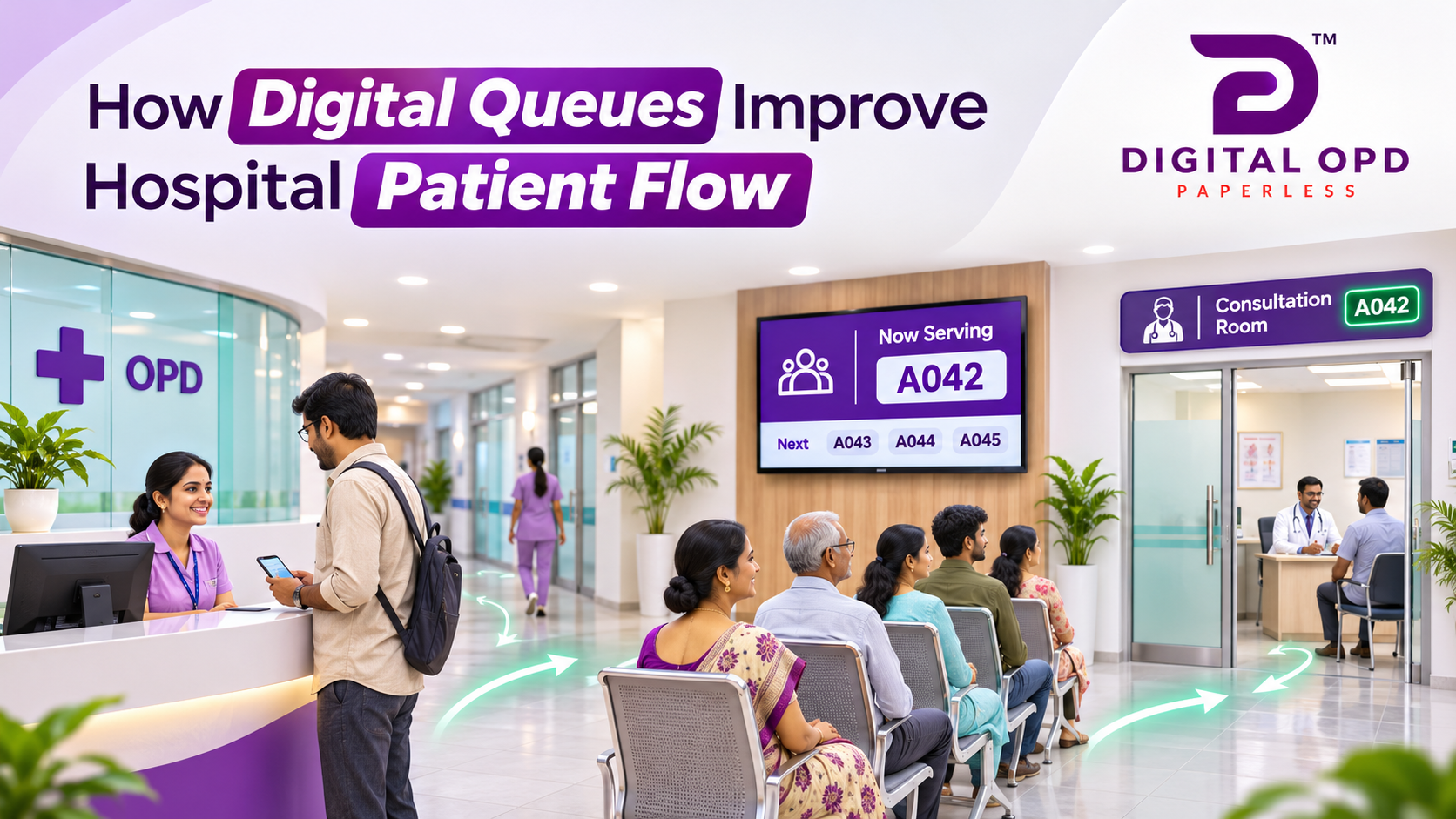
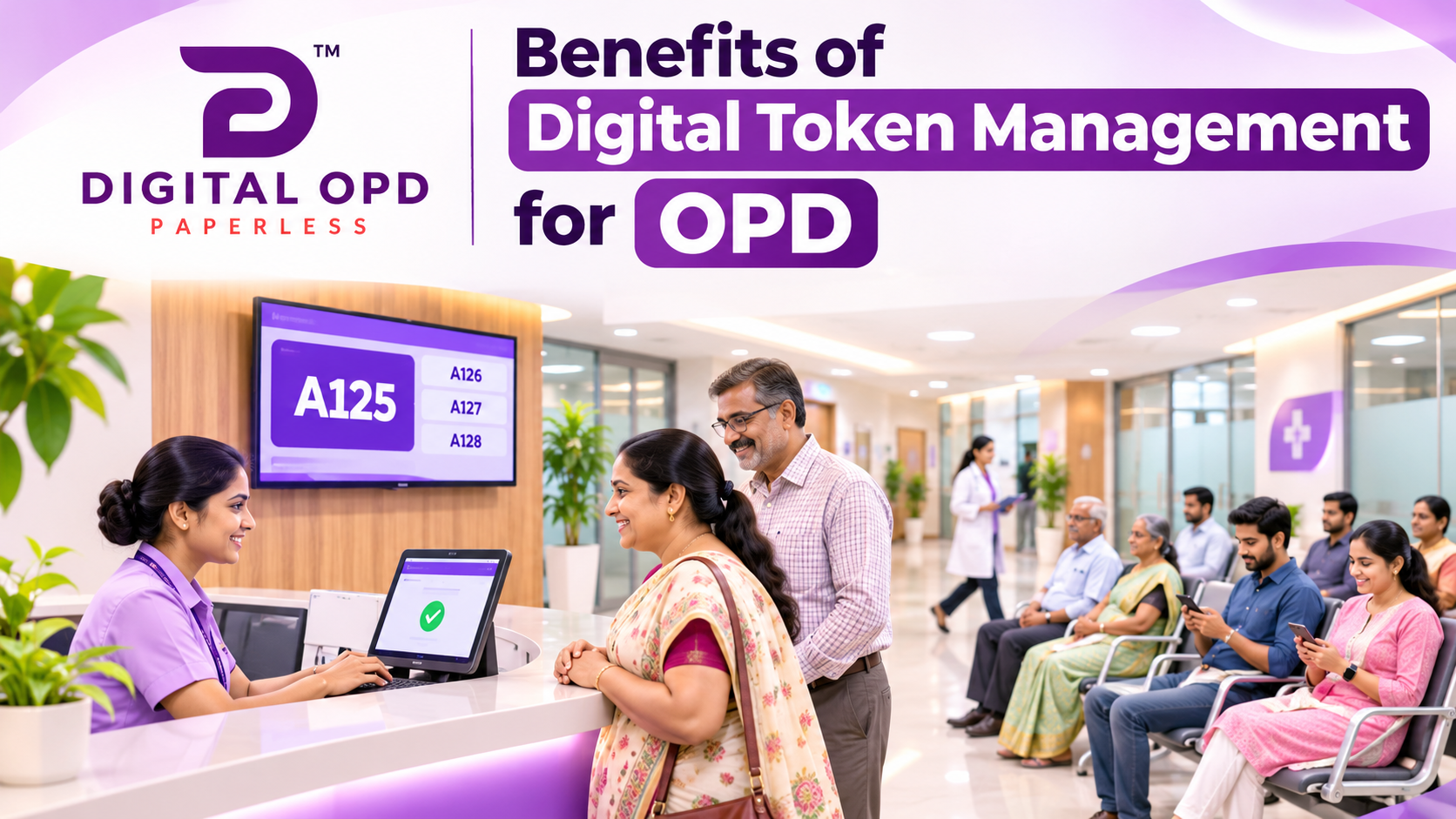
Queue management technology plays a critical role here. Digital token systems allow patients to monitor their position in the queue in real time, either on screens within the facility or through a mobile notification. This eliminates the anxiety of not knowing when one will be called and reduces the number of patients who crowd around the reception desk asking for updates.
Additionally, separating fast-track consultations from complex case consultations helps the OPD handle simple follow-up visits more quickly without delaying patients who need more detailed care. Some hospitals in cities like Pune, Hyderabad, and Ahmedabad have successfully introduced express lanes for routine follow-up patients, reducing average wait time by over 30 percent for that category.
Streamlining Registration and Front-Desk Operations
The registration counter is often where the OPD experience goes wrong. Repetitive data entry, missing patient records, and manual paperwork create bottlenecks that slow down the entire department.
Hospitals that move to digital registration see immediate improvements. Self-registration kiosks or pre-registration through a mobile-friendly portal allow patients to enter their personal and clinical details before arriving at the hospital. By the time the patient reaches the counter, their record is already in the system and the front-desk staff only needs to verify and confirm, rather than entering everything from scratch.
This approach also reduces the chance of errors in patient records, which is a significant concern in settings where names, addresses, and contact details are frequently misspelled or incomplete during rushed manual entry.
A paperless registration process also supports India's Ayushman Bharat Digital Mission, which encourages healthcare providers to link patient records to the Ayushman Bharat Health Account (ABHA) ID. Hospitals aligned with ABDM not only comply with the national digital health vision but also offer patients the advantage of a unified, portable health record.
Improving Communication Throughout the OPD Journey
Communication failures are a silent driver of poor patient experience. Many patients leave the OPD confused about their diagnosis, prescription, next steps, follow-up date, or billing details. This confusion leads to phone calls to the front desk, missed follow-ups, medication errors, and unnecessary anxiety.
Clear, structured communication at every stage of the OPD visit dramatically improves patient confidence and satisfaction. This includes:
Sending automated appointment reminders via SMS or WhatsApp the day before and the morning of the visit.
Displaying real-time queue status updates on screens throughout the waiting area.
Providing patients with a summary of their consultation, including the diagnosis, prescription details, and follow-up instructions, in a written or digital format before they leave.
Offering billing summaries that are clear and itemized, so patients understand exactly what they are being charged for.
Digital OPD platforms that integrate appointment management, queue tracking, e-prescription generation, and post-consultation communication into a single system make this level of structured communication far more achievable for hospitals without requiring a large increase in staff.
Enhancing the Physical Environment and Waiting Area Comfort
The physical environment of the OPD waiting area has a direct psychological impact on patients. Long waits feel significantly shorter and less stressful when the environment is clean, well-organized, and thoughtfully designed.
Basic improvements such as adequate seating, clean restrooms, good ventilation, natural light, and clear signage make a measurable difference to how patients perceive their experience. In many Indian hospitals, especially in secondary care settings, waiting areas are overcrowded and poorly maintained, which amplifies patient frustration even when the clinical care is excellent.
Healthcare administrators should also consider how information is communicated within the OPD. Clear directional signage in both English and regional languages, visible displays showing which doctor is consulting in which room, and informative health education materials in the waiting area all contribute to a sense of order and professionalism that patients associate with quality care.
Hospitals seeking NABH accreditation will find that many of these environmental improvements are already part of the NABH outpatient standards. Aligning OPD improvements with NABH requirements creates a dual benefit: a better patient experience and progress toward national quality certification.
Strengthening the Doctor-Patient Consultation Experience
The consultation itself is the most critical moment in the OPD visit. Even if every other step has been smooth, a rushed or impersonal consultation will leave the patient feeling unheard and dissatisfied.
Doctors in busy OPDs often face the pressure of seeing 50 to 100 patients per session, which inevitably compresses consultation time. While this operational reality cannot always be changed overnight, there are structural improvements that can help doctors make better use of the time they have.
Pre-loaded patient history from previous visits, available on a digital screen before the patient enters the consultation room, allows doctors to review key information in advance rather than spending the first few minutes of every consultation asking for basic details. This alone can save three to five minutes per patient, which over a full session translates to significantly more time for meaningful clinical interaction.
E-prescription systems that allow doctors to generate, store, and share prescriptions digitally also reduce the time spent on paperwork while creating a cleaner, more accurate medication record for the patient. Patients appreciate receiving a legible digital prescription rather than a handwritten one that may be difficult to read at the pharmacy.
Leveraging Technology for Better OPD Management
Technology is no longer optional in the modern outpatient department. It is the foundation of a consistent, scalable, and high-quality patient experience.
Outpatient management platforms designed specifically for the Indian healthcare context bring together appointment booking, patient registration, queue management, consultation workflows, billing, and follow-up communication in a connected system. This eliminates the silos between different functions of the OPD that often cause delays and errors.
Hospitals using such platforms report notable improvements in key performance metrics:
Reduction in average patient waiting time
Decrease in front-desk call volume due to fewer patient queries
Higher patient retention through timely follow-up reminders
Improved billing accuracy and faster payment collection
Better visibility for administrators into daily OPD performance
Digital OPD is built around exactly these operational priorities. It is designed to help hospitals and clinics manage their daily patient flow with greater speed, structure, and control, without requiring complex technical infrastructure or lengthy staff training.
Building a Culture of Patient-Centered Care
Technology and process improvements deliver results only when the entire OPD team is committed to a patient-centered approach. This means front-desk staff who greet patients with courtesy, nurses and technicians who explain procedures clearly, and administrative teams who resolve billing queries efficiently and empathetically.
Training programs focused on communication skills, empathy, and patient handling are an important investment for any hospital looking to improve OPD experience systematically. Many leading hospitals in India have introduced regular patient experience training for their front-office teams, treating it with the same seriousness as clinical training.
Patient feedback mechanisms are equally important. Simple post-consultation satisfaction surveys, available via SMS, QR code, or digital kiosk at the exit, give hospitals real-time visibility into where the experience is working and where it needs improvement. Acting on this feedback, and communicating to patients that their input has led to change, builds trust and loyalty over time.
Conclusion
Improving patient experience in the outpatient department is one of the most impactful investments a hospital or clinic can make. It touches every dimension of healthcare delivery, from operational efficiency to clinical outcomes to institutional reputation. For Indian healthcare providers navigating rising patient expectations and increasing competition, the OPD experience is a defining differentiator.
The strategies outlined in this article, including reducing waiting time, digitizing registration, improving communication, enhancing the physical environment, strengthening consultations, and adopting smart OPD technology, work best when implemented together as part of a cohesive patient experience strategy. Each element reinforces the others, and the cumulative result is an outpatient department that patients trust, return to, and recommend.
Platforms like Digital OPD exist precisely to help healthcare providers in India achieve this transformation, bringing together the tools, workflows, and visibility that modern OPD management demands. When hospitals invest in the outpatient experience, they invest in the foundation of everything their institution stands for.
Frequently Asked Questions
Q1: What is the most common reason patients are dissatisfied with OPD visits in India?
Excessive waiting time is consistently the leading cause of patient dissatisfaction in Indian outpatient departments. Patients report frustration with long queues at registration, unclear information about how long they will wait to see the doctor, and delays caused by manual or paper-based administrative processes. Addressing waiting time through structured appointment scheduling and digital queue management is the most direct way to improve OPD satisfaction.
Q2: How can small clinics and nursing homes improve patient experience without large budgets?
Small clinics can achieve significant improvements through targeted, affordable changes. Introducing a simple appointment booking system, sending SMS reminders before visits, organizing the waiting area with clear signage and adequate seating, and training front-desk staff in patient communication are all cost-effective measures. Digital OPD platforms designed for small to mid-sized practices offer scalable solutions that do not require large upfront investment or complex infrastructure.
Q3: What role does digital technology play in improving OPD patient experience?
Digital technology addresses the most common operational failures in outpatient departments. Online appointment booking reduces walk-in crowding. Digital registration eliminates repetitive data entry. Queue management systems reduce uncertainty for waiting patients. E-prescriptions create clearer medication records. Post-consultation follow-up reminders improve treatment adherence. Together, these tools create a faster, more organized, and more patient-friendly OPD workflow.
Q4: How does the Ayushman Bharat Digital Mission relate to OPD improvement in India?
The Ayushman Bharat Digital Mission (ABDM) encourages all healthcare providers to adopt digital health records linked to a patient's Ayushman Bharat Health Account (ABHA) ID. For OPDs, this means that patient registration, prescription records, and consultation history can be stored and accessed digitally across facilities. Hospitals that align their OPD systems with ABDM standards improve patient experience by reducing repeated paperwork and enabling continuity of care across different providers.
Q5: What is the impact of a poor OPD experience on a hospital's reputation?
A poor OPD experience has measurable consequences for hospital reputation and business performance. Patients who experience long waits, unhelpful staff, or confusing processes are significantly less likely to return or refer others. With the growing use of Google reviews and healthcare review platforms in India, negative patient experiences increasingly translate into lower online ratings, which influence new patient decisions. Hospitals that consistently deliver a positive OPD experience benefit from stronger patient retention, better word-of-mouth referrals, and a more competitive position in their local market.
Resources
Ayushman Bharat Digital Mission (ABDM): Official government initiative for digital health records and ABHA ID integration across Indian healthcare providers.
National Accreditation Board for Hospitals and Healthcare Providers (NABH): Quality standards and accreditation guidelines for outpatient departments in Indian hospitals.
World Health Organization (WHO) India Country Office: Research and reports on patient safety, health system quality, and outpatient care standards.
Central Bureau of Health Intelligence (CBHI): National Health Profile data on outpatient attendance and healthcare utilization across India.
Indian Council of Medical Research (ICMR): Evidence-based research on healthcare delivery, patient outcomes, and health system performance in India.
Interlinking Keywords
patient experience in OPD, outpatient department management, reduce waiting time in hospital, digital OPD solutions, online appointment booking for hospitals, queue management system for clinics, e-prescription software India, NABH accreditation standards, ABDM digital health records, front-desk efficiency in healthcare
Last reviewed by:
Dr. Manthan Tripathi and Editorial Advisory Team, Digital OPD on 10, November 2026.
Disclaimer
The information provided in this article is intended for general informational and educational purposes only and is directed toward healthcare administrators, hospital managers, clinic owners, and healthcare decision-makers. It does not constitute clinical medical advice and should not be used as a substitute for professional medical guidance. Readers are advised to consult qualified healthcare professionals and relevant regulatory authorities before implementing any changes to clinical workflows or patient management systems. Digital OPD does not make any claim regarding specific clinical outcomes resulting from the adoption of outpatient management technologies described in this article.