Introduction
Walk into almost any government or private hospital outpatient department in India on a busy Monday morning, and the picture is familiar. The reception area is crowded, the waiting benches are full, patients are unsure where to go next, and the front-desk staff are managing multiple conversations at once. For millions of patients across the country, this experience is not an exception. It is the norm.
India's healthcare system handles an enormous volume of outpatient visits every single day. According to estimates from the Ministry of Health and Family Welfare, Indian hospitals collectively manage hundreds of millions of OPD consultations annually. The sheer scale of this footfall creates pressure on every part of the outpatient process, from registration and triage to consultation, prescription, and billing.
Digital queue management systems are changing how hospitals and clinics manage this daily challenge. By replacing manual token distribution and unorganized waiting with structured, technology-driven patient flow, these systems are helping healthcare providers create a more efficient, calmer, and more patient-friendly outpatient experience. This article explores how digital queues work, why they matter for Indian hospitals, and what they deliver in practice.
Understanding Hospital Patient Flow and Why It Breaks Down
Patient flow refers to the movement of patients through different stages of their hospital visit, from arrival at the front desk to the completion of consultation and departure. When this flow works well, patients move through each step without confusion, unnecessary waiting, or repeated back-and-forth. When it breaks down, the consequences affect everyone involved.
In most Indian hospitals and clinics, patient flow disruptions are caused by a combination of predictable and preventable problems. High walk-in volumes without appointment systems result in sudden surges at the reception. Manual token distribution creates long physical queues early in the morning. Patients are not informed about their waiting status, which leads to repeated inquiries at the front desk. Doctor availability changes are not communicated in real time, causing delays that cascade through the entire schedule.
These inefficiencies do not just inconvenience patients. They affect the quality of clinical care as well. When a doctor's schedule runs significantly behind, consultation time per patient tends to shrink. When front-desk staff are overwhelmed, the chance of data entry errors increases. When patients wait for extended periods in crowded waiting areas, their stress rises and their overall perception of the hospital declines.
What a Digital Queue Management System Actually Does
A digital queue management system is a technology platform that organizes patient movement through the OPD by replacing physical queuing with a structured digital process. At its core, it assigns each patient a unique digital token at the point of registration, either through an online appointment, a self-service kiosk at the hospital, or a front-desk registration screen.
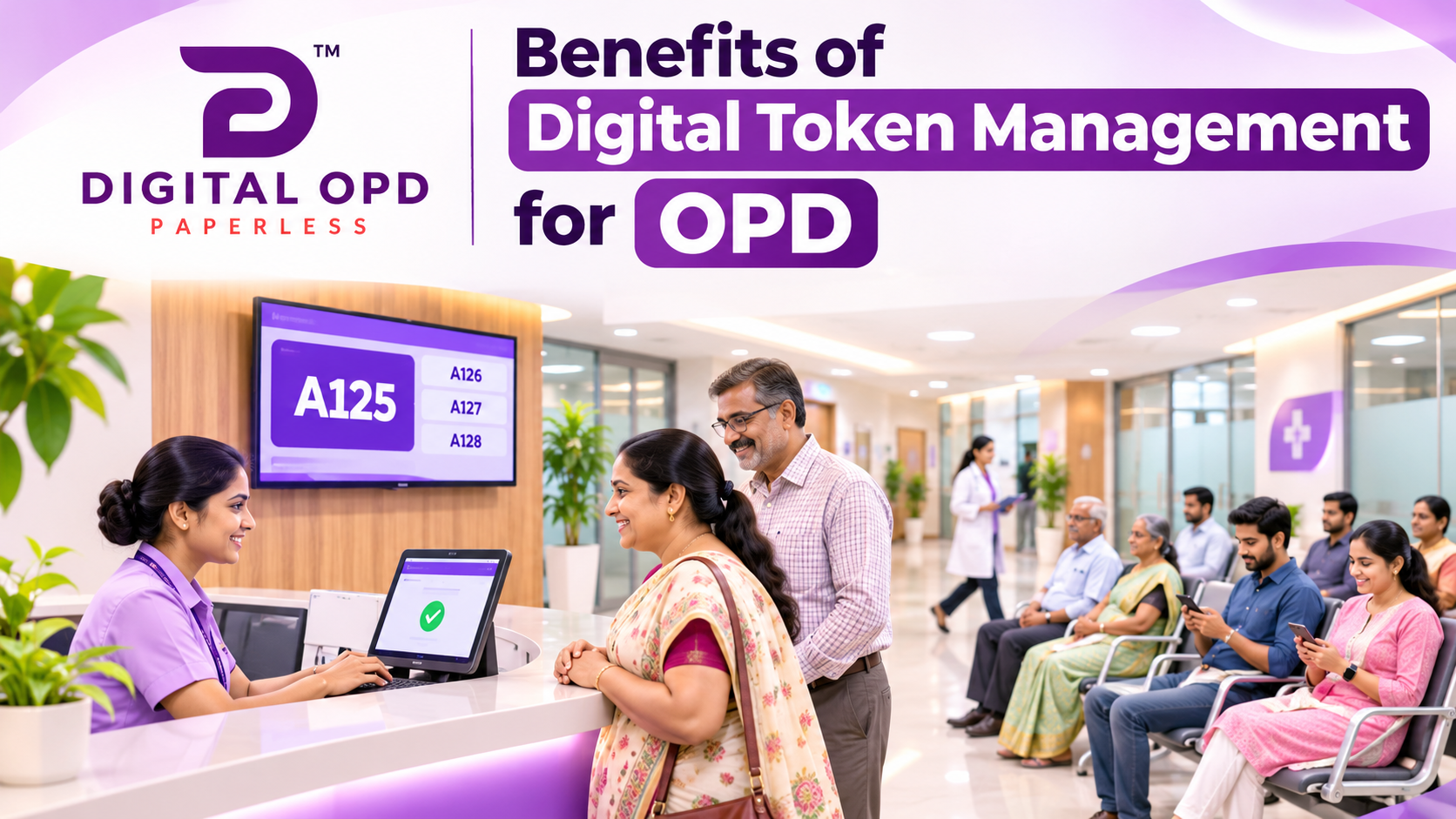
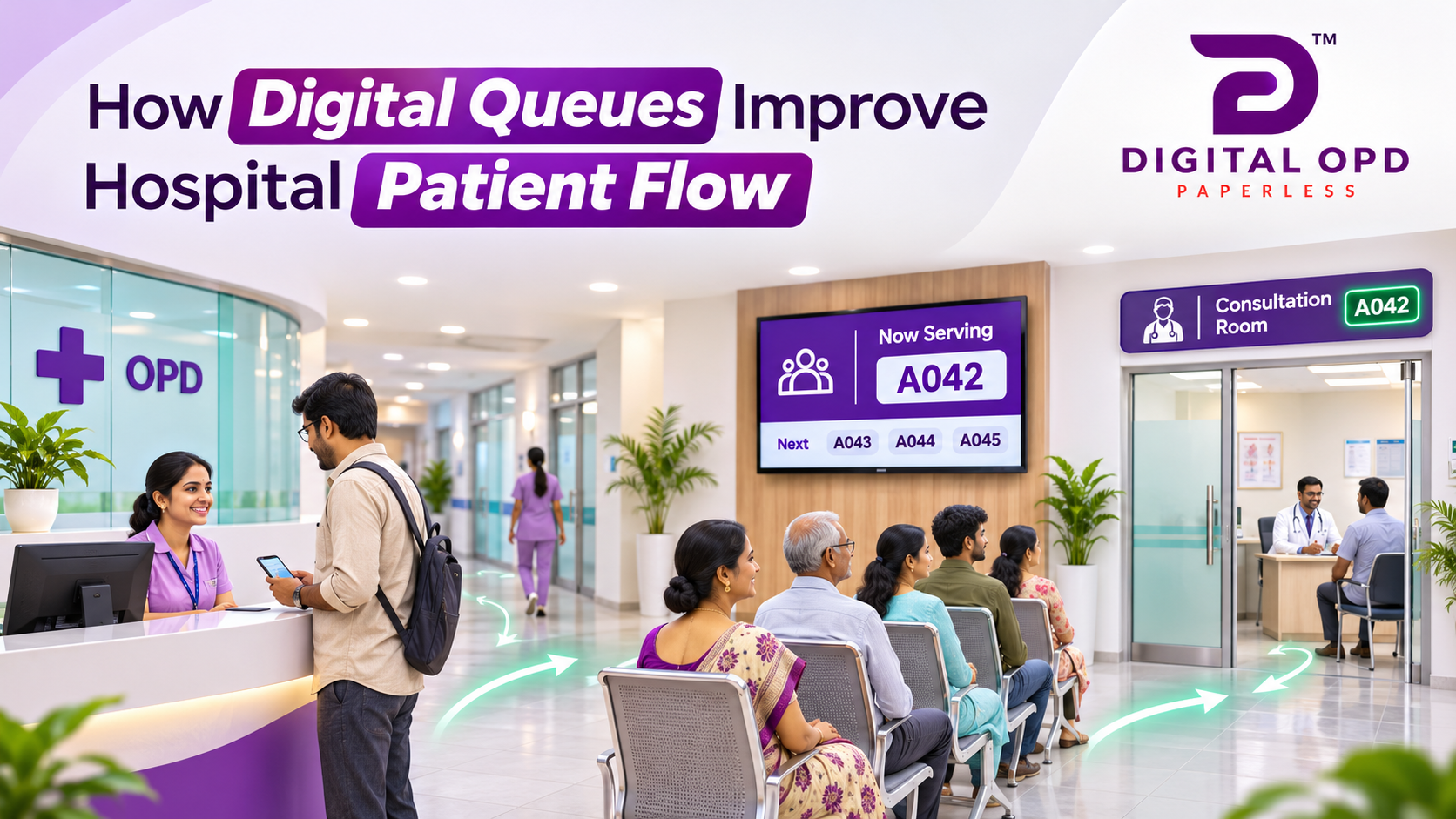
Once a patient receives their digital token, the system does several things simultaneously. It places the patient in the correct queue based on their chosen doctor, department, or service. It tracks the real-time status of each queue and estimates waiting times. It communicates updates to patients through SMS, a mobile app notification, or a display screen in the waiting area. When the patient's turn approaches, they receive an alert, allowing them to remain seated or even step outside rather than standing in a physical line.
For hospital administrators and front-desk teams, the system provides a live dashboard showing queue status, consultation progress, patient volumes, and bottlenecks across different departments. This visibility allows staff to respond to sudden surges, redirect patients, and prevent one busy counter from creating a backlog that affects the entire OPD.
Key Operational Components of a Digital Queue System
A well-implemented digital queue system in an Indian hospital typically includes the following components:
Online appointment booking that integrates with the hospital's OPD schedule and prevents over-booking
Digital token generation at the point of arrival or during pre-registration
Real-time queue status updates delivered to patients via SMS or display screens
Doctor-wise scheduling to separate queues by specialty and prevent mixing of patient types
A front-desk dashboard for staff to monitor, adjust, and manage patient flow in real time
Integration with billing and prescription modules so the patient's OPD journey remains connected from start to finish
How Digital Queues Directly Improve Patient Flow
The connection between digital queue management and improved patient flow is not theoretical. It is operational and measurable. When a hospital implements a digital queue system, improvements in patient flow happen across multiple dimensions.
Reducing Crowding at the Reception
One of the most visible improvements is the reduction in physical crowding at the front desk. When patients can book appointments in advance and receive their token digitally, they do not need to arrive at the hospital early simply to secure a place in line. This distributes patient arrivals across the morning schedule rather than concentrating them in the first thirty minutes of OPD hours. For hospitals in Tier 1 cities like Mumbai, Delhi, and Bangalore, as well as growing Tier 2 cities like Lucknow, Jaipur, and Coimbatore, where OPD volumes are high and space is limited, this single change creates a significantly more organized reception environment.
Eliminating Confusion About Waiting Status
A major source of patient dissatisfaction in Indian hospitals is uncertainty. Patients who do not know how long they will wait or whether they have been skipped tend to become anxious and repeatedly approach the front desk for updates. This interrupts staff, slows down registration, and creates a cycle of frustration. Digital queue systems resolve this by giving patients access to their real-time token status. When a patient knows they are number fourteen in a queue of twenty and can see the counter currently serving number nine, they can sit comfortably and trust the process. This single change has a measurable impact on the atmosphere of the waiting area.
Improving Doctor Schedule Utilization
Digital queue management also improves how efficiently doctors use their consultation time. When patients are called in an organized sequence based on their arrival or appointment time, there are fewer gaps caused by patients who are not ready, have wandered off, or were directed to the wrong counter. The doctor's schedule flows more smoothly, more patients are seen within the same time window, and consultation quality improves because the doctor is not rushing to compensate for earlier delays.
Supporting Staff Efficiency
Front-desk and registration staff in Indian hospitals often carry a heavy operational load. They manage walk-ins, answer phone calls, handle appointment requests, and respond to waiting patients, all at the same time. Digital queue systems reduce the volume of repetitive inquiries and manual tasks that fall on these staff members. When patients receive automatic updates about their queue status, they stop approaching the desk for information. When token assignment is automated, staff can focus on more meaningful tasks such as patient registration accuracy, insurance verification, and discharge coordination.
The Relevance of Digital Queues in the Indian Healthcare Context
India's healthcare digital transformation has been significantly accelerated by initiatives such as the Ayushman Bharat Digital Mission, which promotes the creation of a connected digital health ecosystem across the country. The ABDM framework includes digital patient registration, Health IDs, and appointment management infrastructure, all of which align directly with what digital queue management systems deliver at the hospital level.
NABH accreditation standards also emphasize patient-centered care, organized service delivery, and reduced waiting times as quality benchmarks for Indian hospitals. Hospitals pursuing or maintaining NABH accreditation benefit from the structured and auditable patient flow that a digital queue system provides.
For private hospitals and corporate healthcare chains in India, digital queue management also carries a competitive dimension. Patients in urban markets increasingly compare their hospital experience against the service standards they encounter in retail, banking, and hospitality. A hospital that offers a smooth, organized, and transparent OPD experience earns patient loyalty and word-of-mouth referrals in a way that traditional queuing cannot support.
Common Implementation Challenges and How to Overcome Them
Adopting a digital queue system is not without its challenges, particularly for smaller hospitals or those in semi-urban settings where patient familiarity with digital tools may be lower.
One common concern is patient adoption, particularly among elderly patients or those with limited smartphone literacy. This challenge is best addressed by ensuring that the digital system does not replace physical token distribution entirely but complements it. Patients who prefer to register at the counter should be able to do so, with their token entered into the same digital system. The benefits of real-time updates can then be communicated through display screens in the waiting area rather than only through mobile notifications.
Another challenge is integration with existing hospital management systems. A digital queue system that works in isolation from billing, prescriptions, and registration does not deliver its full value. Healthcare providers considering this investment should evaluate solutions that offer end-to-end OPD integration rather than standalone queue management alone.
Platforms designed specifically for the Indian OPD context, such as those offered through Digital OPD, address these challenges by building queue management into a broader outpatient workflow that includes appointment booking, digital registration, consultation tracking, and billing. This integrated approach ensures that patient flow improvements extend across the entire OPD journey rather than being limited to the waiting area alone.
Conclusion
Hospital patient flow is one of the most practical and high-impact areas where technology can deliver visible, immediate improvement. For Indian hospitals and clinics managing large daily outpatient volumes, digital queue management systems offer a structured, scalable, and patient-friendly solution that reduces crowding, eliminates waiting time uncertainty, improves doctor schedule utilization, and reduces the operational burden on front-desk staff.
As India continues to expand its digital health infrastructure through frameworks like ABDM and quality benchmarks like NABH, the adoption of digital queue management is shifting from a differentiator to a standard expectation. Healthcare providers who implement these systems today are not just improving their OPD operations. They are building the foundation for a more connected, more efficient, and more patient-centered outpatient experience for the future.
Frequently Asked Questions
Q1: What is a digital queue management system in hospitals?
A digital queue management system is a technology-driven solution that organizes patient flow in a hospital or clinic by assigning digital tokens, managing appointment slots, and directing patients to the right department or doctor without physical queues or manual registration.
Q2: How does a digital queue system reduce waiting time in hospitals?
Digital queue systems reduce waiting time by pre-assigning appointment slots, sending real-time token updates to patients, and enabling front-desk teams to manage patient flow more efficiently, which eliminates crowding and reduces idle time between consultations.
Q3: Is a digital OPD queue system suitable for smaller clinics in India?
Yes. Digital queue solutions are scalable and can be implemented in smaller clinics, single-doctor practices, and large multi-specialty hospitals alike. Many platforms in India offer affordable, cloud-based options that require minimal setup and are easy for existing staff to operate.
Q4: What role does ABDM play in digital OPD queue management?
The Ayushman Bharat Digital Mission promotes the adoption of digital health infrastructure across India, which includes tools like digital registration, Health IDs, and appointment management systems that form the foundation of a connected digital queue ecosystem.
Q5: How does digital queue management improve patient satisfaction in Indian hospitals?
It improves satisfaction by reducing unnecessary waiting, keeping patients informed about their turn in real time, minimizing crowding at the reception desk, and creating a more organized and respectful consultation experience overall.
Resources
Ayushman Bharat Digital Mission (ABDM): The official government initiative that promotes digital health infrastructure across India, including appointment booking, patient registration, and Health ID frameworks relevant to OPD digitization.
National Accreditation Board for Hospitals and Healthcare Providers (NABH): The accreditation body whose standards include patient flow management, waiting time reduction, and patient-centered care benchmarks that hospitals across India are assessed against.
Ministry of Health and Family Welfare, Government of India: The central government body responsible for national health policy, outpatient care data, and healthcare quality guidelines that inform OPD management standards.
World Health Organization (WHO) India Country Office: Provides research, policy guidance, and published reports on patient experience improvement, healthcare quality, and digital health adoption across developing health systems, including India.
National Health Portal of India (NHP): A government-managed health information platform that covers digital health tools, telemedicine guidelines, and outpatient care standards applicable to hospitals and clinics across India.
Interlinking Keywords
digital queue management system, hospital patient flow, OPD waiting time reduction, digital token system hospital, outpatient department management, ABDM digital health India, NABH patient experience standards, online appointment booking hospital, front desk efficiency healthcare, smart OPD software India
Last reviewed by:
Dr. Manthan Tripathi and Editorial Advisory Team, Digital OPD on 17, November 2026.
Disclaimer
The information presented in this article is intended for general informational and educational purposes only. It does not constitute medical advice, clinical guidance, or a recommendation for any specific product, platform, or healthcare service. Hospitals, clinics, and healthcare administrators should consult qualified healthcare IT professionals and conduct independent evaluation before implementing any digital queue management or outpatient management solution. References to government initiatives such as ABDM and NABH are made for informational context only. Digital OPD and its content partners do not claim affiliation with or endorsement by any government body unless explicitly stated.