The world of outpatient healthcare is changing rapidly, and queue management is becoming an important part of creating a smarter, faster, and more patient-friendly experience. Traditional waiting rooms have long been associated with crowded spaces, unpredictable wait times, patient frustration, and inefficient workflows.
In 2026, modern clinics are increasingly looking for better ways to manage patient flow and reduce unnecessary waiting. Digital healthcare systems, organized workflows, and smarter outpatient technologies are helping healthcare providers rethink how patients move through the consultation journey.
Queue management is no longer simply about organizing a line of patients. It is becoming a strategic part of the overall patient experience, helping clinics improve coordination, communication, efficiency, and convenience.
For platforms such as DigitalOPD, the evolution of queue management represents a broader shift toward smarter outpatient experiences for modern healthcare providers.
Why Queue Management 2026 Is Becoming a Strategic Advantage
Patient waiting time can have a significant impact on how people perceive a healthcare facility. Even when medical care is excellent, long and unpredictable waiting periods can create frustration and dissatisfaction.
Modern queue management focuses on creating a more organized and transparent patient journey.
Instead of asking patients to sit in a waiting room without knowing when they will be called, digital queue management systems can help provide better visibility into the consultation process.
This shift can benefit both patients and healthcare providers.
Reducing Unnecessary Waiting
One of the primary goals of modern queue management is to reduce unnecessary waiting time.
By organizing appointments, patient arrivals, and consultation workflows more effectively, clinics can create a smoother flow of patients throughout the day.
Patients may spend less time waiting in crowded environments, while healthcare teams can better manage the sequence of consultations.
Improving Patient Experience
A patient-friendly healthcare experience begins before the consultation itself.
Clear communication about appointment status, expected waiting time, and consultation progress can help patients feel more informed and in control.
When patients understand what is happening, uncertainty can be reduced. This can create a more comfortable and predictable outpatient experience.
Supporting Better Clinic Workflows
Effective queue management can also help healthcare providers organize their daily operations.
When patient movement is coordinated efficiently, clinics can better manage appointments, doctor availability, consultation rooms, and staff responsibilities.
This can help create a more organized environment for both patients and healthcare teams.
The Hidden Logic Behind Modern Queue Management
Queue management is not simply about replacing a physical waiting line with a digital one.
The real objective is to rethink the entire patient journey.
A modern queue management system considers how patients enter the healthcare facility, how they register, how appointments are scheduled, how they are informed about their consultation status, and how they move through different stages of outpatient care.
This means queue management can become part of a broader digital healthcare ecosystem.
When patient communication, appointment scheduling, digital registration, and consultation workflows work together, healthcare providers can create a more connected outpatient experience.
From Waiting Rooms to Patient Flow Management
The traditional waiting room model assumes that patients arrive, sit, and wait until their name is called.
Modern patient flow management takes a different approach.
The focus shifts from simply managing a queue to actively managing the movement of patients through the healthcare journey.
This can involve digital appointment scheduling, real-time queue updates, automated notifications, digital check-ins, organized consultation workflows, and better coordination between patients and healthcare staff.
The result is a healthcare environment where patients have greater visibility into the process rather than being left uncertain about when they will receive care.
How Digital Queue Management Can Transform Modern Clinics
Digital queue management can help clinics move toward a more organized and patient-centric model of outpatient care.
Technology can support different stages of the patient journey and help reduce friction between appointments, registration, consultation, and follow-up.
Digital Appointment Scheduling
Patients can schedule appointments in advance, helping clinics better understand expected patient volumes and manage daily workloads.
Organized scheduling can also help reduce overcrowding and improve the distribution of patients throughout the day.
Digital Check-In
Digital check-in systems can help reduce dependency on physical registration counters.
Patients may be able to confirm their arrival through digital systems, allowing healthcare staff to manage patient flow more efficiently.
Real-Time Queue Updates
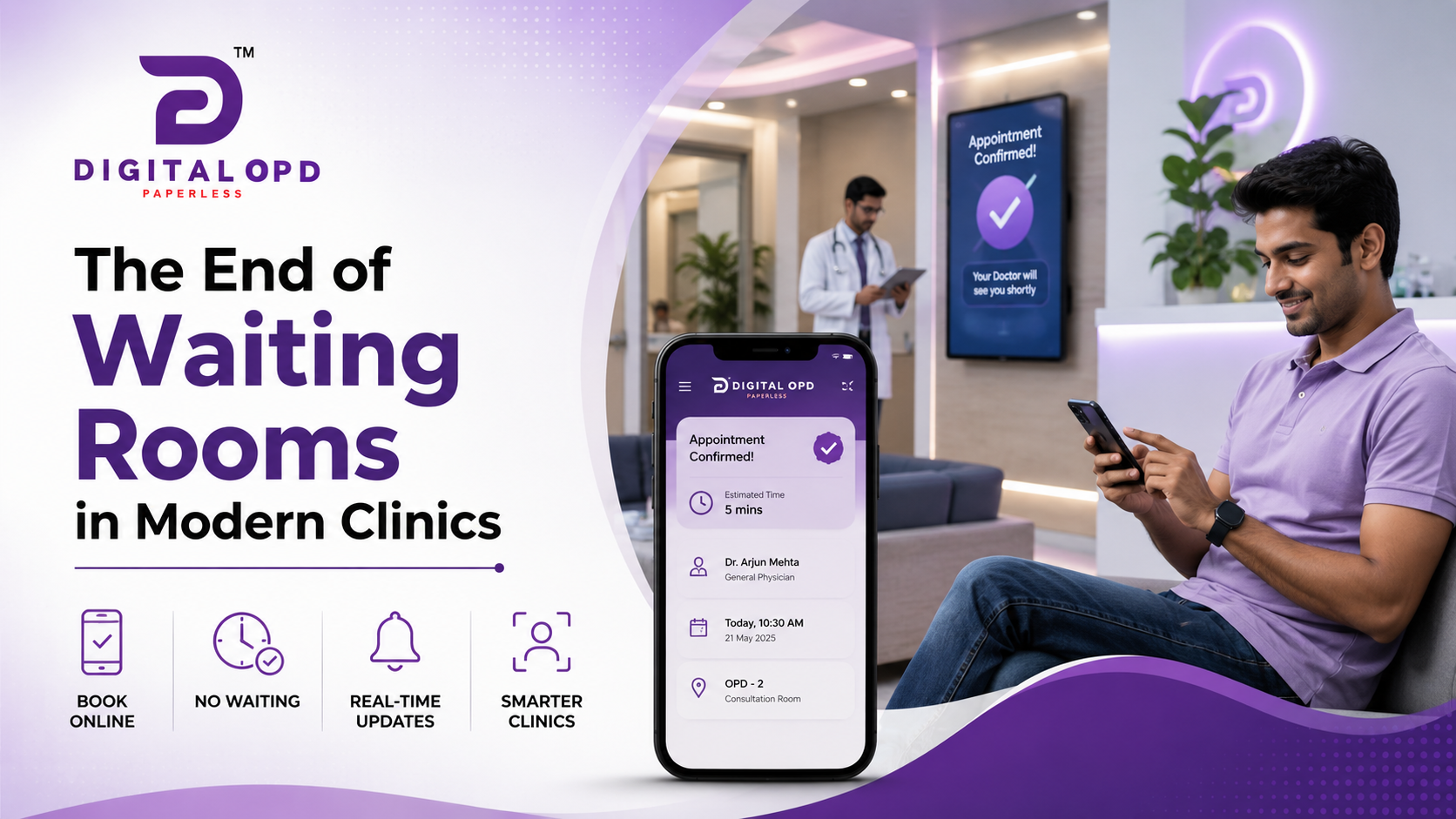
One of the most useful features of digital queue management is the ability to provide patients with updates about their position or consultation status.
This can help reduce uncertainty and allow patients to better understand how long they may need to wait.
Automated Patient Notifications
Digital notifications can help keep patients informed about appointment changes, consultation progress, or when they need to proceed to the consultation area.
Better communication can help create a more transparent and patient-friendly experience.
Better Coordination Between Teams
Queue management can also help healthcare staff coordinate patient movement more effectively.
When different departments and teams have better visibility into patient flow, they may be able to respond more efficiently to changing workloads and consultation requirements.
The End of Traditional Waiting Rooms?
The idea of the waiting room disappearing completely may sound ambitious, but the future of outpatient healthcare is increasingly focused on reducing unnecessary physical waiting.
This does not necessarily mean that every clinic will eliminate waiting areas. Instead, the concept of the waiting room may evolve.
Rather than having patients arrive early and spend long periods sitting in a crowded space, healthcare providers can use digital systems to better coordinate arrival times and patient movement.
Patients may spend less time waiting because the healthcare journey becomes more organized.
The future may therefore be less about eliminating every waiting room and more about eliminating unnecessary waiting.
Why Long Waiting Times Are a Problem for Modern Clinics
Long waiting times can affect both patients and healthcare providers.
For patients, extended waiting can lead to frustration, anxiety, lost time, and dissatisfaction with the overall healthcare experience.
For healthcare providers, inefficient queues can contribute to overcrowding, staff pressure, workflow disruptions, and difficulty managing appointment schedules.
When waiting becomes unpredictable, it can affect the entire outpatient experience.
Patient Frustration
Patients may become frustrated when they do not know how long they will have to wait or why a consultation is delayed.
Clear communication and better queue visibility can help reduce some of this uncertainty.
Overcrowding
When multiple patients arrive at the same time, waiting areas can quickly become crowded.
Better appointment scheduling and patient flow management can help clinics manage patient volumes more effectively.
Operational Inefficiency
Unorganized queues can create additional pressure for administrative and clinical teams.
Digital workflows can help healthcare providers coordinate appointments and patient movement more systematically.
The Role of DigitalOPD in Smarter Queue Management
DigitalOPD represents the broader movement toward digitally enabled outpatient healthcare.
As healthcare providers look for ways to improve the patient experience, digital outpatient platforms can help connect different parts of the healthcare journey.
Queue management can be integrated with broader outpatient workflows to support a more organized experience for patients and healthcare teams.
The goal is not simply to introduce technology for its own sake. The goal is to use technology to make healthcare more accessible, efficient, organized, and patient-friendly.
By combining digital systems with effective healthcare processes, modern providers can work toward reducing unnecessary waiting while improving communication and coordination.
Key Considerations for Implementing Queue Management
Successful queue management requires more than installing a digital system. Healthcare providers must consider how technology fits into their existing workflows and patient needs.
Patient-Centric Design
Queue management systems should be designed around the needs of patients.
The system should be simple to understand, easy to use, and capable of providing clear information throughout the consultation journey.
Reliable Communication
Patients should receive timely and understandable information about appointments, delays, consultation status, and next steps.
Workflow Integration
Queue management should work alongside appointment scheduling, registration, consultation management, and other outpatient processes.
Staff Adoption
Healthcare teams need to understand how the system works and how it can support their daily responsibilities.
Technology is most effective when healthcare staff can use it confidently and consistently.
Flexibility
Every healthcare facility operates differently. Queue management systems should therefore be flexible enough to adapt to different clinic sizes, specialties, patient volumes, and workflows.
How Patients Can Benefit From Smarter Queue Management
Patients are at the centre of modern queue management.
When healthcare providers manage patient flow effectively, patients may experience a more convenient and predictable healthcare journey.
Less Uncertainty
Patients can have greater visibility into their consultation status and expected waiting time.
Better Time Management
Reduced and more predictable waiting can help patients manage their personal and professional responsibilities more effectively.
Improved Convenience
Digital systems can reduce the need for patients to spend unnecessary time in crowded waiting areas.
Better Communication
Patients can receive relevant information about their appointments and consultations through digital communication channels.
How Healthcare Providers Can Prepare for Queue Management in 2026
Healthcare providers looking to improve queue management should begin by understanding the current patient journey.
The first step is to identify where delays occur.
Clinics can examine registration processes, appointment scheduling, patient arrivals, consultation delays, communication gaps, and administrative bottlenecks.
Once these challenges are identified, providers can explore digital tools and workflow improvements that address the specific needs of their facility.
Understand the Existing Patient Journey
Map each stage of the patient's experience from appointment booking to consultation completion.
Identify Waiting-Time Bottlenecks
Determine where patients experience the longest delays and what factors contribute to them.
Improve Communication
Provide patients with timely information about appointment schedules, delays, and consultation progress.
Adopt Digital Workflows
Use appropriate digital tools to improve appointment management, registration, queue visibility, and patient communication.
Measure Performance
Track waiting times, patient flow, appointment delays, and patient feedback to understand whether changes are improving the overall experience.
The Future of Queue Management in Modern Clinics
The future of queue management is likely to involve greater integration between digital technology and healthcare workflows.
Modern clinics may increasingly use connected systems to coordinate appointments, patient arrivals, consultation schedules, and communication.
Artificial intelligence, automation, predictive analytics, and real-time data may also contribute to more responsive patient flow management as healthcare technology continues to evolve.
However, the human element will remain essential.
Technology should not make healthcare feel impersonal. Instead, it should give healthcare professionals more tools to communicate effectively, organize workflows, and focus on delivering quality care.
The most successful queue management systems will likely be those that combine technology with empathy, transparency, and patient-centric design.
Conclusion: Moving Beyond the Waiting Room
Queue Management 2026: The End of Waiting Rooms in Modern Clinics represents a broader shift in how healthcare providers think about the outpatient experience.
The goal is not necessarily to eliminate every physical waiting room. The real objective is to reduce unnecessary waiting and create a more organized, transparent, and patient-friendly healthcare journey.
Digital queue management can help clinics improve patient flow, reduce uncertainty, support better communication, and create more efficient outpatient workflows.
As DigitalOPD and other digital healthcare solutions continue to evolve, queue management is likely to become an increasingly important part of modern outpatient care.
The future of healthcare is not simply about faster technology. It is about using technology intelligently to create better experiences for patients and healthcare providers.
By moving beyond traditional waiting-room models and embracing smarter patient flow management, modern clinics can take an important step toward a more connected, efficient, and patient-centric healthcare system.
Frequently Asked Questions
What is queue management in healthcare?
Queue management in healthcare refers to the systems and processes used to organize patient flow, manage appointments, reduce waiting times, and improve the overall outpatient experience.
Why is queue management important for modern clinics?
Queue management is important because it can help reduce unnecessary waiting, improve patient communication, support better clinic workflows, and create a more organized and patient-friendly healthcare experience.
Can digital queue management reduce patient waiting times?
Digital queue management can help reduce unnecessary waiting by improving appointment scheduling, patient flow, digital check-in, queue visibility, and communication. The actual impact depends on how effectively the system is implemented within the clinic's workflow.
Will waiting rooms disappear completely in 2026?
Not necessarily. The future is more likely to focus on reducing unnecessary waiting rather than eliminating every physical waiting area. Digital systems can help patients spend less time waiting and improve the overall flow of outpatient care.
How does digital queue management improve patient experience?
Digital queue management can improve the patient experience by providing better visibility into appointment status, reducing uncertainty, supporting timely notifications, and helping patients spend less time in crowded waiting areas.
What are the benefits of queue management for healthcare providers?
Healthcare providers can benefit from better patient flow, improved coordination, more organized appointment management, reduced overcrowding, and greater visibility into outpatient workflows.
What is the role of DigitalOPD in queue management?
DigitalOPD represents the broader movement toward digitally enabled outpatient healthcare. Digital outpatient systems can help support organized patient workflows, communication, appointment management, and a more connected patient experience.
What should clinics consider before implementing queue management technology?
Clinics should consider patient needs, existing workflows, communication requirements, staff adoption, system integration, flexibility, data management, and the specific challenges affecting patient flow within their facility.
SEO Information
Primary Keyword
Queue Management 2026
Secondary Keywords
Healthcare queue management, digital queue management, queue management system for clinics, patient queue management, hospital queue management, clinic waiting time management, patient flow management, digital healthcare, smart clinic management, DigitalOPD
Long-Tail Keywords
Queue Management 2026: The End of Waiting Rooms in Modern Clinics
How digital queue management is transforming modern clinics
How to reduce patient waiting time in clinics
Benefits of queue management systems in healthcare
Digital queue management for hospitals and clinics
How technology is improving patient flow management
Future of queue management in healthcare
How modern clinics can eliminate unnecessary waiting times
SEO Title
Queue Management 2026: The End of Waiting Rooms in Modern Clinics
Meta Description
Discover how digital queue management is transforming modern clinics in 2026 by reducing waiting times, improving patient flow, and creating smarter outpatient experiences.
Suggested URL Slug
queue-management-2026-end-of-waiting-rooms-modern-clinics
Suggested Image Alt Text
Digital queue management system helping modern clinics reduce patient waiting times and improve patient flow
AEO Summary
What is queue management in healthcare?
Queue management in healthcare is the process of organizing patient appointments, arrivals, waiting times, and consultation flow to create a more efficient and patient-friendly outpatient experience.
How can digital queue management reduce waiting times?
Digital queue management can reduce unnecessary waiting by improving appointment scheduling, digital check-in, patient flow coordination, real-time queue visibility, and automated notifications. These tools can help patients understand their consultation status while allowing healthcare providers to manage patient volumes more effectively.
Will waiting rooms disappear from modern clinics?
Waiting rooms may not disappear completely, but their role is likely to change. The future of healthcare queue management is focused on reducing unnecessary waiting and improving patient flow. Digital systems can help patients spend less time in crowded waiting areas by coordinating appointments and consultation schedules more effectively.
Why is queue management important for patients?
Effective queue management can make the healthcare journey more predictable and convenient. Patients may benefit from shorter or more predictable waiting times, better communication, greater visibility into consultation status, and reduced uncertainty.
Why is queue management important for healthcare providers?
Queue management can help healthcare providers improve patient flow, organize appointments, reduce overcrowding, coordinate staff workflows, and create a more efficient outpatient environment.
What is the future of queue management in healthcare?
The future of queue management is likely to involve greater integration of digital healthcare platforms, automation, real-time data, predictive analytics, and intelligent patient flow management. The goal will be to combine technology with patient-centric care to create more efficient and human-centered healthcare experiences.