Medication errors are a significant concern in healthcare. A prescription that is difficult to read, incomplete, incorrectly entered, or misunderstood can potentially lead to the wrong medication, incorrect dosage, or other avoidable problems.
As healthcare continues to become more digital, electronic prescribing and digital prescriptions are changing the way doctors, pharmacists, and patients manage medications. By replacing handwritten prescriptions with structured digital records, healthcare providers can improve clarity, reduce transcription-related mistakes, and support safer medication workflows.
The growth of digital healthcare, telemedicine, virtual care, remote care, and online doctor consultations is making digital prescriptions increasingly relevant. As more patients interact with healthcare professionals remotely, having a clear and accessible digital prescription can help create a more connected healthcare journey.
For platforms such as DigitalOPD, digital prescriptions are part of a broader shift toward smarter outpatient experiences that combine technology with organized and patient-friendly healthcare workflows.
What Are Digital Prescriptions?
A digital prescription, also known as an electronic prescription or e-prescription, is a prescription created and transmitted electronically by an authorized healthcare professional.
Instead of relying entirely on handwritten paper prescriptions, digital prescribing systems allow medication information to be entered into a digital platform. Depending on the system, the prescription may include information such as the medicine name, dosage, frequency, duration, and instructions for use.
Digital prescriptions can help make medication information easier to read, store, share, and access. They can also become part of a patient's broader digital healthcare record, supporting better continuity of care when appropriate.
Why Medication Errors Happen
Medication errors can occur at different stages of the healthcare journey. They may happen during prescribing, transcription, dispensing, administration, or communication between healthcare professionals and patients.
Some common contributing factors include unclear handwriting, incorrect medication names, confusion between medicines with similar names, incorrect dosage information, incomplete instructions, communication gaps, and difficulties accessing accurate medication histories.
Not every medication error is caused by a prescription, and digital prescriptions cannot eliminate all medication-related risks. However, digital prescribing systems can help address certain types of errors by improving the way prescription information is created and communicated.
How Digital Prescriptions Can Reduce Medication Errors
Digital prescriptions can support medication safety by making prescription information clearer, more structured, and easier to communicate across the healthcare workflow.
Eliminating Handwriting-Related Confusion
One of the most widely recognized advantages of digital prescriptions is the reduction of errors caused by difficult-to-read handwriting.
Traditional handwritten prescriptions may sometimes be misinterpreted by patients or pharmacy professionals. A digital prescription uses typed or structured information, making medication details easier to read.
Clearer information can reduce the risk of misunderstandings related to medication names, dosage instructions, or frequency of use.
Improving Prescription Accuracy
Digital prescribing systems can encourage healthcare professionals to enter medication information into structured fields.
Depending on the system, this may help standardize information such as medicine names, dosage, frequency, and duration.
Structured prescription information can make it easier to identify missing or incomplete details before a prescription is finalized.
Reducing Transcription Errors
When prescription information is manually copied from one document or system to another, there is a possibility of transcription errors.
Digital prescriptions can reduce the need for repeated manual entry by allowing prescription information to move electronically through connected healthcare workflows.
This can help minimize certain types of errors that may occur when information is repeatedly rewritten or re-entered.
Making Medication Instructions Clearer
Patients need to understand how and when to take their medicines.
Digital prescriptions can provide clear and standardized instructions, helping patients better understand information related to dosage, frequency, and duration.
When instructions are presented clearly, patients may be less likely to misunderstand how their medication should be used.
Supporting Clinical Decision-Making
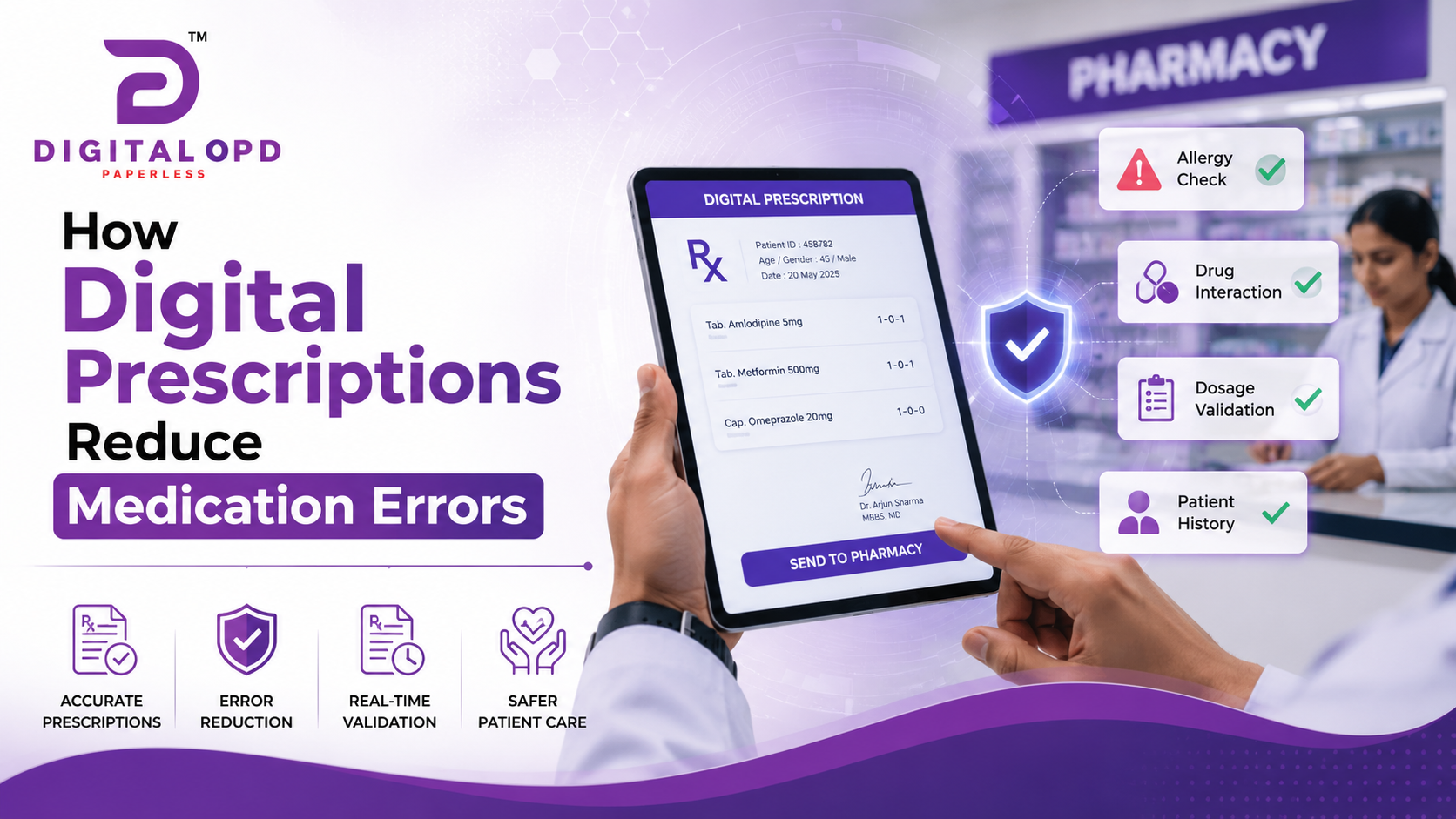
Some advanced electronic prescribing systems may include clinical decision-support features.
Depending on the technology and healthcare setting, these features may provide alerts related to potential drug interactions, allergies, duplicate medications, or other prescribing concerns.
Such systems can provide an additional layer of support for healthcare professionals. However, alerts must be appropriately designed and reviewed by qualified professionals, as excessive or irrelevant alerts can contribute to alert fatigue.
Digital Prescriptions and Telemedicine
The growth of telemedicine has increased the importance of digital prescriptions.
During an online doctor consultation, the patient and healthcare professional may not be physically present in the same location. In such situations, digital healthcare systems can help connect the consultation with prescription management and follow-up processes.
After an appropriate consultation, a healthcare professional may issue a digital prescription when clinically and legally appropriate.
This can help create a more connected experience for patients who use remote care or virtual care services.
However, telemedicine does not automatically mean that every medical condition can be treated remotely or that every medication can be prescribed digitally. Healthcare professionals must follow applicable clinical standards, regulations, and prescribing requirements.
The Role of Digital Healthcare in Safer Medication Management
Digital prescriptions are one part of a larger digital healthcare ecosystem.
When prescription systems are integrated with other healthcare technologies, they can potentially support better coordination between doctors, patients, pharmacists, and healthcare organizations.
This may include digital patient records, online doctor consultations, telemedicine platforms, medication histories, appointment systems, and follow-up workflows.
The objective is to create a more connected healthcare journey where accurate information can be accessed by the right people at the appropriate stage of care.
Better Access to Prescription Information
Digital prescriptions can make medication information easier to access and reference when appropriate.
Patients may be able to view their prescription information digitally, while healthcare professionals may have better access to relevant records depending on the system and applicable privacy permissions.
Improved Communication
Clear digital information can help improve communication between healthcare professionals and patients.
When patients can easily understand their medication instructions, they may be better positioned to follow the prescribed treatment plan.
Better Continuity of Care
Patients often interact with multiple healthcare professionals throughout their treatment journey.
Digital healthcare systems can support continuity by helping maintain organized records of relevant healthcare information, subject to appropriate access controls and privacy requirements.
How Digital Prescriptions Benefit Patients
Digital prescriptions can provide several practical benefits to patients.
Improved Readability
Typed and structured medication information can be easier to read than handwritten prescriptions.
Greater Convenience
Patients may be able to receive and access prescriptions digitally, reducing the need to manage physical paper documents.
Reduced Risk of Misinterpretation
Clear digital information can reduce confusion caused by difficult-to-read handwriting or unclear prescription instructions.
Easier Access During Follow-Up Care
When prescription information is stored digitally, it may be easier to reference during future consultations, depending on the healthcare system being used.
How Digital Prescriptions Benefit Doctors and Healthcare Providers
Digital prescribing can also improve the efficiency of healthcare workflows.
More Organized Prescribing
Digital systems can provide healthcare professionals with structured tools for creating and managing prescriptions.
Reduced Administrative Work
Electronic workflows can reduce some manual paperwork and repetitive prescription-related tasks.
Improved Documentation
Digital prescriptions can create a clearer record of the medication information issued during a consultation.
Better Integration With Digital Workflows
When integrated appropriately, digital prescriptions can work alongside electronic health records, telemedicine platforms, online consultations, and other digital healthcare services.
The Role of Virtual Doctors and Online Doctor Consultations
Virtual doctors and online doctor consultations are becoming increasingly important components of modern healthcare delivery.
For appropriate medical concerns, patients may consult healthcare professionals remotely and receive medical advice without visiting a physical clinic.
When a prescription is clinically appropriate and permitted within the applicable healthcare framework, digital prescribing can make the process more seamless.
This creates a more connected journey:
Online doctor consultation
Clinical assessment
Digital prescription, when appropriate
Medication access
Follow-up care
However, the quality and safety of this process depend on responsible clinical decision-making. Digital convenience should never replace appropriate medical assessment.
Can Digital Prescriptions Eliminate Medication Errors Completely?
No. Digital prescriptions can reduce certain types of medication errors, but they cannot eliminate every possible error.
Medication safety involves many different factors, including accurate diagnosis, appropriate prescribing, correct dispensing, proper medication administration, patient understanding, and adherence to treatment instructions.
Digital systems may also introduce new risks if they are poorly designed or incorrectly configured.
For example, incorrect data entry, selection of the wrong medication from a digital list, software issues, interoperability problems, or excessive clinical alerts can create new challenges.
This is why digital prescribing should be combined with strong clinical processes, professional oversight, appropriate system design, and patient education.
Challenges of Digital Prescriptions
Although digital prescriptions offer important benefits, healthcare providers must address several challenges to ensure safe and effective implementation.
Data Privacy and Security
Prescription information is sensitive healthcare data. Digital systems must use appropriate security and privacy measures to protect patient information.
Technology Dependence
Digital prescribing depends on reliable technology and infrastructure. System outages or connectivity problems may affect access to prescription information.
Digital Literacy
Not every patient is equally comfortable using digital healthcare platforms. Healthcare providers should ensure that digital systems remain accessible and easy to use.
System Integration
Digital prescriptions are most effective when healthcare systems can communicate appropriately with other relevant platforms.
Poor interoperability can create information gaps and reduce the potential benefits of digital workflows.
Human Oversight
Technology should support healthcare professionals rather than replace clinical judgment.
Doctors and qualified healthcare professionals must remain responsible for making appropriate prescribing decisions.
How Healthcare Providers Can Use Digital Prescriptions Responsibly
Healthcare providers can take several steps to improve the safety and effectiveness of digital prescribing.
Use Structured Prescription Information
Medication names, dosages, frequencies, and durations should be entered accurately and clearly.
Review Prescriptions Before Issuing Them
Healthcare professionals should carefully review digital prescriptions before they are finalized and shared with patients.
Maintain Accurate Patient Information
Relevant information such as allergies, existing medications, and medical history should be considered when clinically appropriate.
Educate Patients
Patients should understand how to access their digital prescriptions and how to follow the medication instructions provided by their healthcare professional.
Protect Patient Data
Healthcare organizations should implement appropriate privacy and security measures to protect digital prescription information.
The Future of Digital Prescriptions
The future of digital prescriptions is closely connected to the broader evolution of digital healthcare.
As healthcare systems become more connected, digital prescriptions may increasingly integrate with electronic health records, telemedicine platforms, pharmacies, medication management systems, and patient-facing healthcare applications.
Artificial intelligence and clinical decision-support technologies may also play a role in helping healthcare professionals identify potential medication-related risks. However, these technologies should be viewed as decision-support tools rather than replacements for professional clinical judgment.
The future is likely to focus on creating healthcare systems where prescription information is accurate, accessible, secure, and connected across appropriate stages of the patient journey.
The Role of DigitalOPD in the Future of Outpatient Healthcare
DigitalOPD represents the broader transformation of outpatient healthcare through digital technology.
As healthcare providers look for smarter ways to manage consultations, patient communication, follow-up care, and digital workflows, digital prescriptions can become an important part of the overall outpatient experience.
The goal is not simply to digitize a paper prescription.
The larger objective is to create a connected healthcare journey where patients can move more smoothly from consultation to treatment and follow-up while healthcare professionals have access to accurate and relevant information.
When implemented responsibly, digital healthcare technologies can help create a more organized, efficient, and patient-friendly outpatient experience.
Conclusion: Moving Toward Safer Digital Medication Management
How Digital Prescriptions are Reducing Medication Errors is ultimately about more than replacing paper with technology.
Digital prescriptions can help improve readability, reduce certain transcription errors, structure medication information, support clearer communication, and connect prescribing with broader digital healthcare workflows.
When combined with telemedicine, remote care, virtual doctors, and online doctor consultations, digital prescribing can contribute to a more connected healthcare experience.
However, technology alone cannot guarantee medication safety. Accurate clinical decisions, professional oversight, secure systems, patient education, and responsible implementation remain essential.
The future of digital healthcare will depend on finding the right balance between technology and the human touch. By using digital prescriptions responsibly, healthcare providers can take an important step toward reducing preventable medication errors and creating safer, smarter, and more patient-friendly outpatient care.
Frequently Asked Questions
What are digital prescriptions?
Digital prescriptions are electronic prescriptions created and issued by authorized healthcare professionals using digital systems. They provide structured medication information that can be easier to read, store, and communicate than handwritten prescriptions.
How do digital prescriptions reduce medication errors?
Digital prescriptions can help reduce certain medication errors by eliminating handwriting-related confusion, improving the clarity of medication information, reducing some transcription errors, standardizing prescription details, and supporting clinical decision-making features in some systems.
Can digital prescriptions completely prevent medication errors?
No. Digital prescriptions can reduce some types of errors but cannot eliminate all medication-related risks. Accurate diagnosis, professional judgment, correct dispensing, patient understanding, and appropriate medication use remain essential.
How do digital prescriptions help patients?
Digital prescriptions can make medication instructions easier to read and access. They can also reduce confusion caused by unclear handwriting and support a more convenient healthcare experience.
Are digital prescriptions useful during telemedicine consultations?
Yes. When clinically appropriate and permitted under applicable regulations, digital prescriptions can support telemedicine and online doctor consultations by connecting remote consultations with digital medication workflows.
What role does DigitalOPD play in digital prescriptions?
DigitalOPD represents the broader movement toward digitally enabled outpatient healthcare. Digital prescription workflows can be part of a connected outpatient experience that includes online consultations, patient communication, follow-up care, and organized digital healthcare processes.
Are digital prescriptions secure?
Digital prescriptions can be secure when healthcare providers use appropriate data protection, access controls, privacy practices, and secure digital infrastructure. Healthcare organizations should follow applicable data protection and healthcare privacy requirements.
What are the challenges of digital prescriptions?
Challenges include data privacy, cybersecurity, technology dependence, system integration, digital literacy, interoperability, incorrect data entry, and the need for continued human oversight.
What is the future of digital prescriptions?
The future of digital prescriptions is likely to involve greater integration with electronic health records, telemedicine platforms, pharmacy systems, medication management tools, and clinical decision-support technologies.
SEO Information
Primary Keyword
How Digital Prescriptions are Reducing Medication Errors
Secondary Keywords
Digital prescriptions, electronic prescriptions, e-prescriptions, medication errors, medication safety, digital healthcare, telemedicine, telemedicine India, virtual care, remote care, virtual doctor, online doctor consultation, DigitalOPD
Long-Tail Keywords
How digital prescriptions reduce medication errors
Benefits of digital prescriptions in healthcare
How e-prescriptions improve medication safety
Role of digital prescriptions in telemedicine
How electronic prescriptions reduce prescribing errors
Digital prescriptions and medication safety in India
How online doctor consultations use digital prescriptions
SEO Title
How Digital Prescriptions are Reducing Medication Errors
Meta Description
Discover how digital prescriptions can reduce medication errors, improve prescription clarity, support telemedicine, and create safer digital healthcare workflows.
Suggested URL Slug
how-digital-prescriptions-are-reducing-medication-errors
Suggested Image Alt Text
Digital prescription system helping doctors reduce medication errors and improve medication safety
AEO Summary
How do digital prescriptions reduce medication errors?
Digital prescriptions can reduce certain medication errors by replacing difficult-to-read handwriting with clear, structured electronic information. They can also reduce some transcription mistakes, improve prescription clarity, standardize medication instructions, and, in some systems, provide clinical decision-support alerts for potential medication-related risks.
What are the main benefits of digital prescriptions?
The main benefits of digital prescriptions include improved readability, clearer medication instructions, reduced handwriting-related confusion, better documentation, easier access to prescription information, and integration with digital healthcare and telemedicine workflows.
Can digital prescriptions prevent all medication errors?
No. Digital prescriptions cannot prevent every medication error. Medication safety also depends on accurate diagnosis, appropriate prescribing, correct dispensing, proper medication administration, patient understanding, and professional clinical oversight.
How do digital prescriptions support telemedicine?
Digital prescriptions can connect online doctor consultations and telemedicine services with medication workflows. When clinically appropriate and permitted by applicable regulations, a healthcare professional can issue prescription information digitally after a remote consultation.
What are the risks of digital prescriptions?
Digital prescribing can introduce risks such as incorrect data entry, selection errors, software problems, interoperability issues, cybersecurity concerns, and alert fatigue. Strong system design, professional review, and appropriate safeguards are essential.
Why are digital prescriptions important for digital healthcare?
Digital prescriptions can help connect consultation, treatment, medication management, and follow-up processes within a digital healthcare ecosystem. This can support a more organized and connected patient journey.